What if your most expensive pump is currently grinding itself into obsolescence because of microscopic particles you can't even see? In the high-stakes industrial landscape of Saudi Arabia, the margin for error with your machinery is non-existent. You understand that unscheduled downtime is the primary threat to your facility's profitability, especially when operations are running at peak capacity. We've engineered this comprehensive hydraulic power unit maintenance checklist to help your team eliminate unplanned failures and protect your investment in high-performance hardware.
By following these standardized protocols, you'll ensure your systems meet the mandatory 2026 safety standards while optimizing the lifespan of your pumps and valves. This guide provides a clear roadmap through daily inspection points, advanced fluid analysis requirements, and strategies for managing the unique heat and dust challenges found in the Eastern Province. We're committed to providing the expertise you trust to keep your industrial operations moving forward without interruption.
Key Takeaways
- Identify early warning signs like aeration and foaming during daily visual inspections to prevent catastrophic pump failure and expensive component wear.
- Implement a standardized hydraulic power unit maintenance checklist to ensure every fitting, hose, and seal remains within engineering-grade operational tolerances.
- Master the environmental challenges of the Saudi Arabian climate by optimizing heat exchanger efficiency and monitoring oil viscosity index against extreme ambient temperatures.
- Transition to a predictive maintenance model using quarterly oil analysis and scheduled filter replacements to meet ISO 4406:2021 cleanliness standards.
- Determine the critical indicators that signal when to move from routine in-house maintenance to professional hydraulic repair and custom HPU overhaul services in Dammam.
The Industrial Impact of Proactive HPU Maintenance
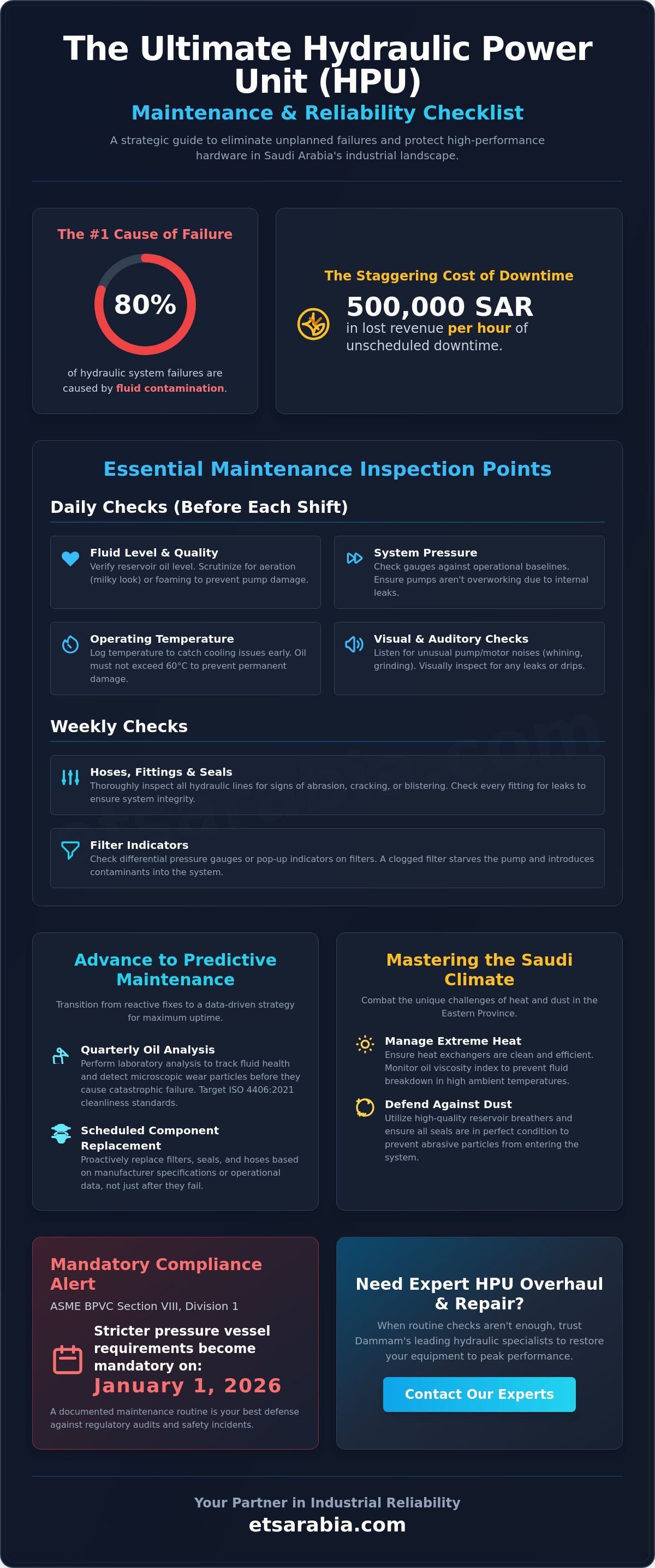
The Hydraulic Power Unit (HPU) serves as the central heartbeat for your most critical industrial machinery. Whether it's powering high-tonnage presses or massive drilling rigs in the Eastern Province, the HPU converts mechanical energy into the hydraulic force that keeps your production lines moving. In heavy-stakes sectors like Oil & Gas and Mining, the HPU's health is directly tied to your facility's bottom line. When this system fails, the cost of downtime is staggering. For large-scale operations, a single hour of lost production can quickly exceed 500,000 SAR in lost revenue and labor overhead. Proactive maintenance on Hydraulic machinery isn't just about technical care; it's a financial strategy to protect your profit margins.
Adopting a hydraulic power unit maintenance checklist marks a decisive shift from a reactive "break-fix" mentality to a modern predictive maintenance framework. This transition is essential for staying competitive in a market where the Saudi Arabian predictive maintenance sector is expected to reach 1,563.6 million USD by 2033. Beyond the economic benefits, a standardized approach ensures your facility remains compliant with evolving safety regulations. Specifically, the 2025 Edition of the ASME BPVC Section VIII, Division 1 becomes mandatory on January 1, 2026. This update places stricter requirements on pressure vessel integrity, making a documented maintenance routine the best defense against regulatory audits and potential safety incidents.
Defining Maintenance Goals for 2026
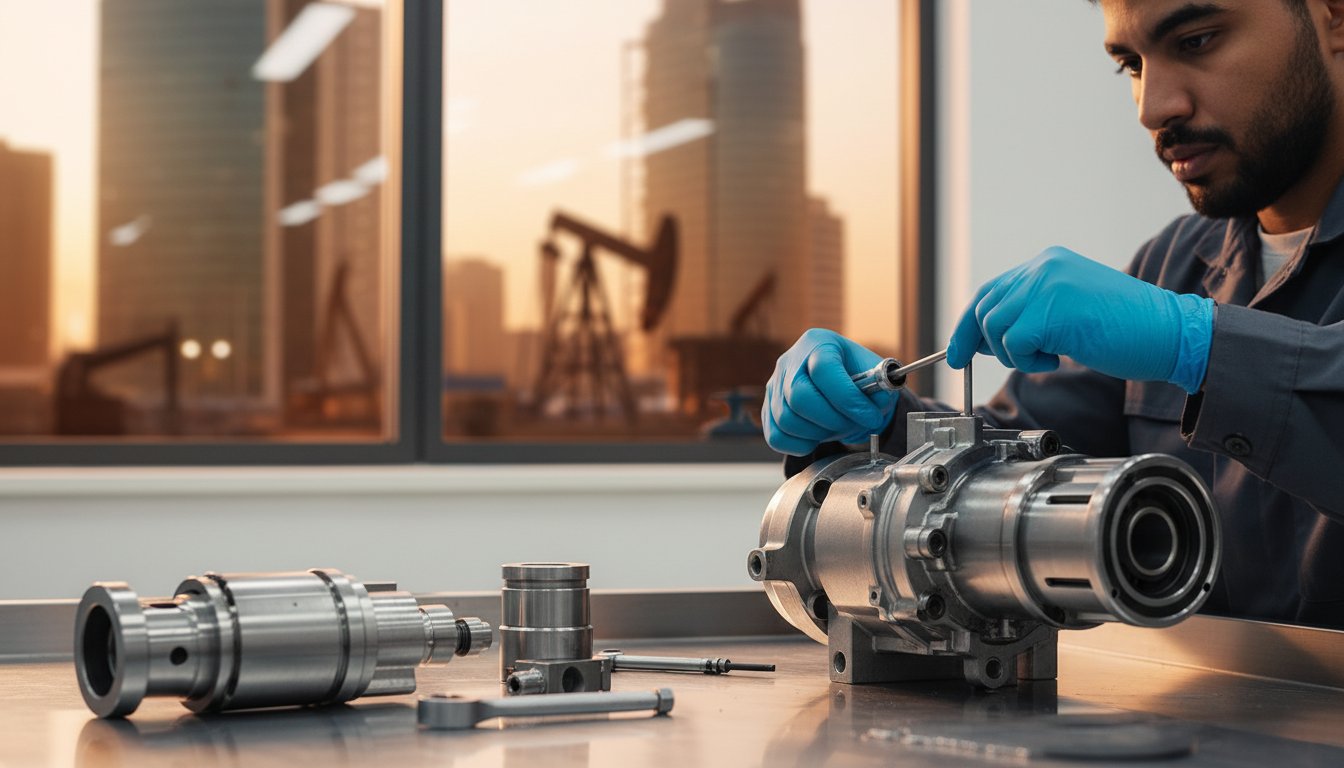
Modern maintenance goals must be data-driven and focused on measurable outcomes. You should establish baseline performance metrics for pressure, flow rates, and operating temperatures during peak loads. Identifying critical-to-process components, such as high-pressure axial piston pumps or directional control valves, allows your team to prioritize resources where they're needed most. By aligning your schedule with manufacturer requirements from brands like Rexroth and Parker, you ensure your equipment operates within its engineered design limits, effectively reducing the risk of catastrophic failure during high-demand cycles.
The Link Between Fluid Health and System Longevity
Industrial data consistently shows that 80% of hydraulic system failures are caused by fluid contamination. The role of hydraulic power units is to maintain the integrity of the entire circuit, not just provide power. Setting strict cleanliness targets based on ISO 4406:2021 standards is the most effective way to prevent premature wear. In the abrasive environments found in Dammam and Jubail, even microscopic particles act as a grinding paste that destroys cylinder seals and pump internals. Utilizing a hydraulic power unit maintenance checklist to track fluid health ensures that your oil remains a lubricant rather than a liability, significantly extending the service life of your expensive hydraulic assets.
Daily and Weekly Hydraulic Power Unit Inspection Points
Consistency is the bedrock of system reliability. While long-term audits are vital, the daily habits of your maintenance team define the lifespan of your HPU. A robust hydraulic power unit maintenance checklist starts with a rigorous walk-around before every shift. Technicians must verify reservoir oil levels and scrutinize the fluid for signs of aeration or foaming. If the oil appears milky or contains surface bubbles, air is entering the system. This leads to spongy actuator response and rapid component wear. Checking system pressure gauges against established operational baselines ensures that your pumps aren't overworking to compensate for internal leakage.
Recording operating temperatures is equally critical. In the Eastern Province or Riyadh, ambient heat can push systems to their limits. Monitoring these levels helps identify early-stage heat exchanger failure before the oil exceeds 60°C. For those operating hydraulic systems in high-temperature environments, maintaining a log of these fluctuations is the only way to catch cooling inefficiencies before they cause permanent pump damage. Small temperature spikes often precede total system failure by several days, giving you the window needed to intervene.
Visual and Auditory Diagnostic Checks
Listen carefully to the pump during operation. Cavitation often sounds like marbles rattling inside the housing, indicating a restricted suction line or a clogged strainer. Aeration, by contrast, produces a high-pitched whine. Both conditions are destructive. Simultaneously, inspect your hydraulic hoses for any signs of blistering, kinking, or external abrasion. In Saudi Arabian facilities, dust accumulation on breather caps can create a vacuum in the reservoir. Ensure they're clean and correctly seated to allow the system to breathe without ingesting contaminants.
Weekly Operational Verification
Weekly inspections should focus on operational fluidity and the integrity of your hydraulic power unit maintenance checklist data. Test directional control valves for smooth actuation; any sticking suggests internal silting or solenoid failure. Check filter indicators for "bypass" mode alerts. These signal that the system is no longer protecting sensitive valves from contaminants. Finally, inspect electrical connections for signs of overheating or corrosion. If you identify persistent leaks or unusual vibrations during these checks, it's wise to contact a partner for professional hydraulic repair services to prevent a total system shutdown.
Periodic and Scheduled Maintenance: Deep System Audits
While daily visual checks provide an immediate safety net, deep system audits represent the true defense against long-term operational decline. A professional hydraulic power unit maintenance checklist must incorporate quarterly deep-dives into system chemistry and mechanical alignment. These audits move your facility from reactive maintenance to a predictive model, ensuring that expensive components like Parker pumps or Rexroth valves reach their full service life. Scheduled replacement of high-pressure and return-line filter elements is a non-negotiable part of this process. Waiting for a bypass light to flicker often means contamination has already reached critical tolerances, potentially violating ISO 4406:2021 cleanliness standards.
Deep audits also include cleaning the reservoir interior to remove accumulated sludge and varnish. These deposits act as catalysts for oil degradation, shortening the lifespan of new fluid. By draining the tank and physically removing contaminants, you ensure the system operates at peak thermal efficiency. Calibrating pressure relief valves and transducers during these intervals is equally vital. Accurate calibration guarantees that your HPU remains within the safety envelopes required by the 2026 ASME BPVC standards, preventing over-pressurization that could lead to catastrophic hose or seal failure.
Advanced Fluid Analysis Techniques
Effective oil analysis requires a representative sample taken while the system is at operating temperature. This ensures that wear metals and contaminants are in suspension rather than settled at the bottom of the tank. When interpreting lab reports, pay close attention to the Total Acid Number (TAN) and water content. A TAN spike indicates the oil is oxidizing and losing its lubricating properties. If water content exceeds 0.05%, your heat exchanger may have a microscopic breach. These metrics determine whether you can simply sweeten the oil with additives or if a full system flush is required to protect your hardware.
Component Testing and Calibration
Mechanical integrity extends beyond the pump itself. You must check accumulator pre-charge pressures using dry nitrogen; incorrect levels lead to erratic pressure spikes and pump cavitation. It is also the ideal time to test the efficiency of any integrated industrial lubrication systems that rely on the HPU for power. Finally, inspect pump-to-motor couplings for precise alignment. Even a minor 0.5mm deviation creates vibration that destroys bearings and seals within weeks. By standardizing these deep audits, you ensure your team delivers the reliable performance guaranteed by ETS protocols.
Managing Environmental Challenges: Heat and Dust in Saudi Arabian Operations
Operating industrial equipment in Dammam or Jubail presents environmental stressors that standard maintenance manuals often overlook. High ambient temperatures, which frequently exceed 50°C during the summer months, drastically alter the viscosity index of your hydraulic oil. As the oil thins, internal leakage increases in pumps and valves, leading to a significant loss of system efficiency and volumetric output. Your hydraulic power unit maintenance checklist must prioritize thermal management to prevent the fluid from reaching its flash point or losing its lubricating properties. Ignoring these geographic factors results in premature component wear that forces expensive, unscheduled repairs.
In the high-dust environments of Saudi Arabia's industrial zones, sand acts as a persistent abrasive that infiltrates even the smallest gaps. This ingress is particularly damaging to pump seals and chrome shafts. By incorporating environment-specific protocols into your maintenance routine, you protect your assets from the "grinding paste" effect created when sand mixes with hydraulic fluid. This proactive approach is the only way to guarantee the 24/7 uptime required by the Kingdom’s Vision 2030 industrial goals.
Cooling System Optimization
For air-blast coolers, sand accumulation between the fins acts as an insulator, effectively blocking heat transfer. You should schedule weekly cleanings using low-pressure compressed air to maintain optimal airflow. In water-cooled units, the primary threat is scale buildup caused by high mineral content in local water supplies. Regularly check cooling water flow rates and inspect heat exchangers for internal fouling that reduces thermal exchange capacity. High operating heat accelerates seal degradation and oil oxidation, leading to varnish buildup that clogs sensitive directional control valves.
Ingress Protection and Filtration
Standard breather caps are often insufficient for the fine particulate matter found in Saudi Arabia. You must upgrade to high-efficiency breathers equipped with desiccant to block both moisture and microscopic dust from entering the reservoir. Implementing a secondary "kidney loop" filtration system allows for continuous offline cleaning, maintaining oil integrity even during heavy production cycles without interrupting the main system flow. Selecting specialized seals and wipers designed for abrasive environments prevents sand from being pulled into the hydraulic cylinders. To ensure your systems are engineered for these extreme conditions, explore our custom hydraulic power units designed specifically for the Saudi industrial landscape.
Professional Hydraulic Repair and Custom HPU Solutions in Dammam
Even with a rigorous hydraulic power unit maintenance checklist, there comes a point where in-house capabilities reach their limit. Complex tasks like resurfacing a chrome shaft or performing a precision overhaul on a Rexroth axial piston pump require specialized machinery and a controlled environment. Attempting these repairs without the proper diagnostic tools often leads to secondary failures and extended downtime. In the industrial hubs of Dammam and Jubail, having a local partner capable of rapid response is the difference between a minor pause and a total production halt. Transitioning to professional services for major overhauls ensures that your equipment is restored to OEM specifications, protecting your long-term capital investment.
Off-the-shelf units often struggle with the thermal loads and fine sand ingress typical of the Eastern Province. Custom-fabricated HPUs, designed specifically for Saudi Arabian conditions, incorporate oversized cooling systems and enhanced filtration from the start. By sourcing genuine components from global leaders like Parker and Rexroth, we ensure that every directional control valve and pump meets the highest reliability standards. This level of customization provides a level of performance that standard units simply can't match in extreme environments. It's about building a system that doesn't just run, but thrives under the Kingdom's unique operational pressures.
Partnering with Emdad Technical Services (ETS)
Choosing ETS means gaining access to 24/7 technical support and rapid on-site troubleshooting. Our Dammam-based facility is equipped for precision fabrication and turnery, allowing us to manufacture or repair custom hydraulic parts with minimal lead times. We don't just act as a supplier; we're a long-term technical partner dedicated to optimizing downtime. This relationship ensures your systems remain efficient, reducing the long-term cost of ownership for your hydraulic assets. Whether you need an urgent pump overhaul or a complete system redesign, our team delivers expertise you can trust to keep your operations moving forward.
Requesting a System Health Audit
If your system isn't meeting the baseline performance metrics established in your hydraulic power unit maintenance checklist, it's time for a professional diagnostic. ETS performs comprehensive health audits, using advanced testing equipment to measure volumetric efficiency and identify internal bypass leaks before they cause a shutdown. We can customize a maintenance contract to fit your specific plant requirements, ensuring your team has the expert backing needed for high-stakes operations. Ensure your systems stay in motion—contact ETS for professional hydraulic support today.
Secure Your Industrial Uptime for 2026
Implementing a rigorous hydraulic power unit maintenance checklist is the most effective way to safeguard your operations against the high costs of unscheduled downtime. We've explored how daily visual inspections and quarterly fluid analysis protect your precision components from the abrasive effects of sand and extreme heat. These proactive steps ensure your facility remains compliant with the latest 2026 ASME and MWAN regulations while maximizing the lifespan of your critical assets. Reliable performance isn't a matter of chance; it's the result of disciplined engineering standards.
Success in the Kingdom's demanding industrial sector requires a partner who understands local challenges. Emdad Technical Services provides the expertise you trust from our strategic location in Dammam. As an authorized distributor of Rexroth and Parker components, we guarantee that every repair uses genuine parts for superior performance. Whether you need custom HPU fabrication for extreme environments or an urgent pump overhaul, our team is ready to respond. Minimize your downtime; schedule a professional HPU maintenance audit with ETS and ensure your operations stay moving forward with confidence.
Frequently Asked Questions
How often should I change the hydraulic oil in my HPU?
You should change your hydraulic oil based on the results of quarterly fluid analysis rather than a fixed hourly schedule. While many industrial systems operate for 2,000 to 4,000 hours between changes, the extreme 50°C temperatures in Saudi Arabia can accelerate oxidation. Always consult your hydraulic power unit maintenance checklist for OEM-specific intervals and monitor the Total Acid Number (TAN) to determine when the fluid has lost its lubricating properties.
What are the signs of cavitation in a hydraulic pump?
Cavitation typically manifests as a distinct rattling sound, often described as marbles or gravel circulating inside the pump housing. You'll also notice excessive vibration and a localized temperature spike at the pump inlet. This condition occurs when vapor bubbles collapse violently against internal components, which can destroy a precision-engineered Rexroth or Parker pump in just a few hours of operation.
Can I mix different brands of hydraulic oil if they have the same viscosity?
You shouldn't mix different brands of hydraulic oil even if their ISO viscosity grades match. Manufacturers utilize proprietary additive packages that may be chemically incompatible with one another. Mixing them can lead to additive dropout, foaming, or the formation of sludge, which compromises the protection of sensitive directional control valves and reduces overall system efficiency.
Why is my hydraulic system overheating even with a cooler?
Your system is likely suffering from internal fouling in the heat exchanger or excessive internal leakage within the pump. In Dammam’s industrial zones, dust accumulation on air-cooler fins can reduce thermal transfer efficiency by 35% or more. If the cooler is clean but temperatures remain high, a component is likely bypassing fluid internally, converting pressure into wasted heat that exceeds the cooler's capacity.
What is the ISO 4406 cleanliness code, and why does it matter?
The ISO 4406:2021 code classifies the level of solid particle contamination in your fluid at three microscopic sizes: 4µm, 6µm, and 14µm. It matters because even particles invisible to the naked eye act as abrasives that destroy valve spools and cylinder seals. Maintaining a target code like 18/16/13 within your hydraulic power unit maintenance checklist is essential for preventing 80% of common hydraulic failures.
How do I check the pre-charge in a hydraulic accumulator safely?
You must isolate the accumulator from the main system pressure and completely bleed the hydraulic fluid back to the reservoir before testing. Use a specialized nitrogen charging kit to check the gas pressure against the manufacturer’s specifications. Never use oxygen or compressed air to charge an accumulator; this creates a high-pressure explosion risk that can lead to catastrophic equipment damage and injury.
What should I do if I find metal shavings in my hydraulic filter?
Stop the system immediately to prevent the debris from migrating into sensitive valves and actuators. Metal shavings are a definitive indicator of internal mechanical failure, usually originating from a pump bearing or a cylinder piston. Continuing to run the HPU will distribute these contaminants throughout the entire circuit, turning a simple pump repair into a multi-component system overhaul.
Does ETS provide on-site hydraulic repair in Dammam Second Industrial City?
Yes, ETS provides 24/7 on-site hydraulic repair services throughout Dammam Second Industrial City and the surrounding Eastern Province. Our strategic location allows our technicians to respond promptly to urgent failures, bringing the diagnostic tools and spare parts necessary to minimize your downtime. We specialize in rapid troubleshooting and repair for high-stakes petrochemical, manufacturing, and mining operations.