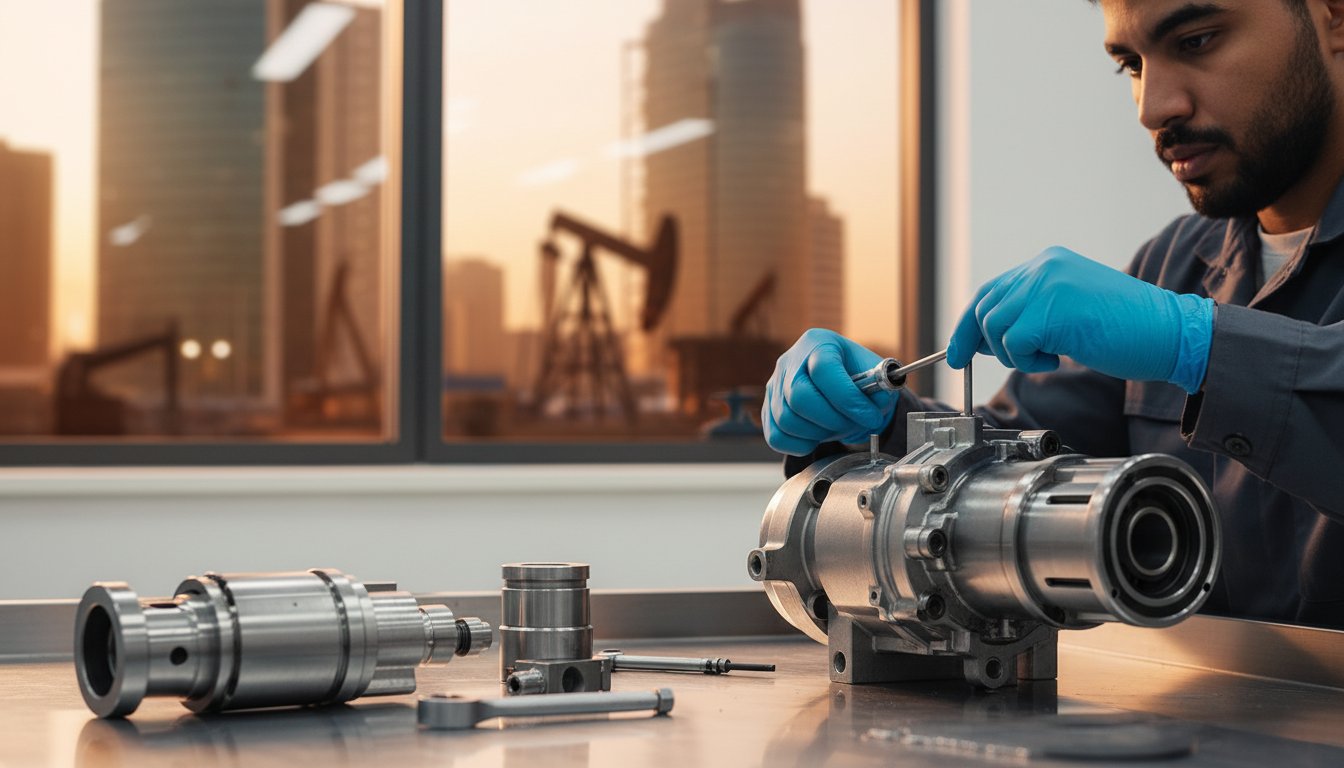
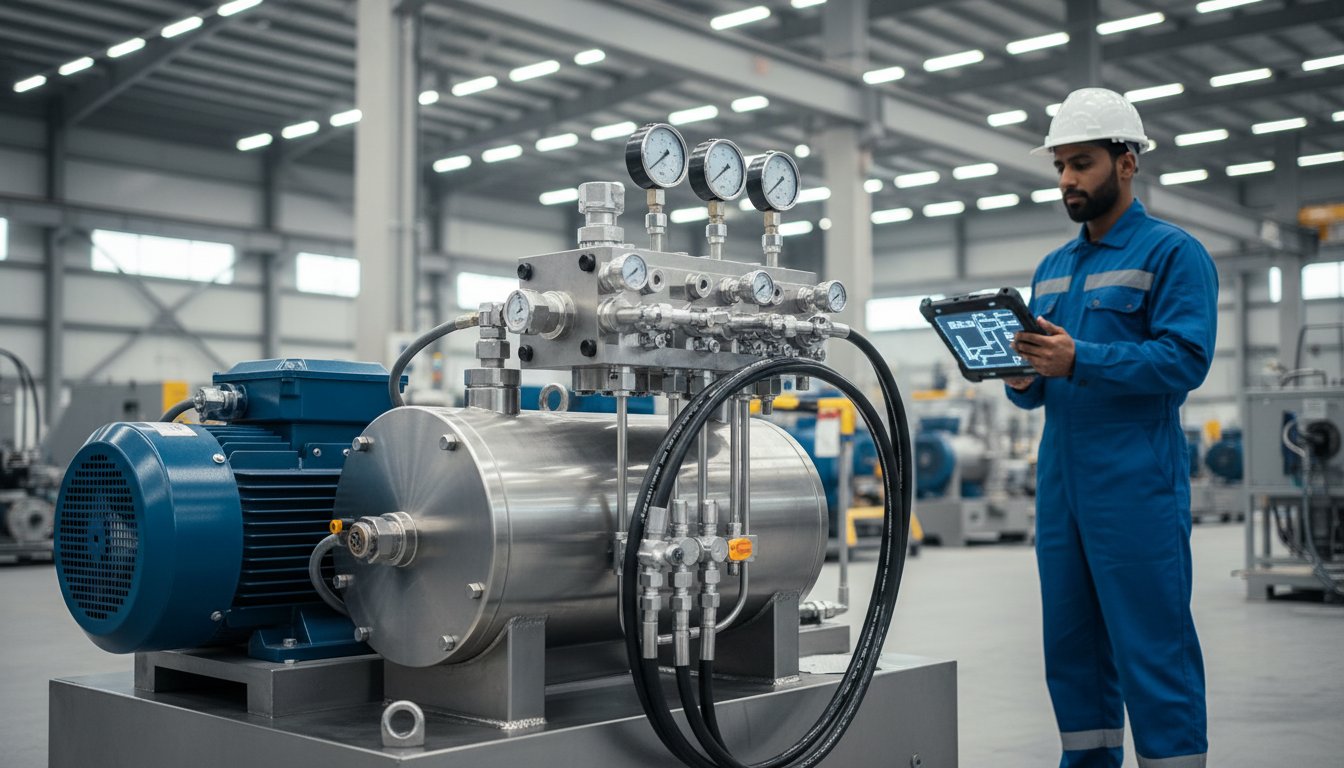
In the demanding industrial landscape of Saudi Arabia, selecting the right equipment is a critical decision that directly impacts operational efficiency and profitability. If you are navigating the complexities of hydraulic systems, trying to decipher technical specifications, or finding that standard units fail to meet your unique requirements, you are not alone. At the heart of any robust fluid power system is the hydraulic power unit (HPU)-the engine that drives your most critical machinery. Understanding its function is essential for minimizing costly downtime and maximizing productivity.
This comprehensive guide is engineered to provide the clarity and expertise you need. We will break down exactly what a hydraulic power unit is, explain how its core components work together to generate and control immense power, and outline the key criteria for choosing the right one for your industrial needs. Gain the confidence to specify the perfect HPU, whether standard or custom-fabricated, and find a reliable partner to ensure your systems are always in motion.
What is a Hydraulic Power Unit (HPU)?
Think of a hydraulic power unit (HPU) as the dedicated heart of any hydraulic system. In the same way an engine powers a car, an HPU is the central component that powers all forms of hydraulic machinery. Its primary function is to convert mechanical energy-typically from an electric motor or diesel engine-into efficient hydraulic power. This conversion process is fundamental to operations across demanding sectors in Saudi Arabia, from oil and gas extraction to large-scale construction.
The HPU accomplishes this by generating two critical outputs: fluid flow and pressure. Fluid flow (measured in litres per minute) determines the speed at which hydraulic cylinders or motors operate, while pressure (measured in bar or PSI) dictates the amount of force they can exert. By precisely managing these two variables, a hydraulic power unit provides the controlled strength needed to power heavy-duty equipment, ensuring your operations remain productive and efficient.
The Basic Principle: Pascal's Law in Action
The immense force generated by hydraulics is governed by a fundamental principle of fluid mechanics: Pascal's Law. This law states that pressure applied to an enclosed fluid is transmitted equally in all directions. An HPU leverages this by using a pump to pressurize hydraulic fluid within a contained system. This pressurized fluid then acts on components like cylinders, multiplying the initial force significantly. It is this core principle that enables compact hydraulic systems to lift multi-ton loads with unparalleled precision and control.
Why Use an HPU Instead of Direct Mechanical Drive?
While direct mechanical drives have their place, hydraulic systems powered by an HPU offer distinct advantages that are critical for modern industrial applications. These benefits ensure enhanced performance, reliability, and efficiency, directly contributing to the reduction of costly operational downtime.
- Force Multiplication & Precise Control: HPUs deliver immense power, allowing for the movement of extremely heavy loads. This power can be controlled with exceptional accuracy, enabling delicate and complex operations that are impossible with purely mechanical systems.
- Flexible System Design: The power source (the HPU) can be located remotely from where the work is performed (the actuator). This flexibility is vital for applications with space constraints, safety concerns, or harsh operating environments, simplifying machine design and maintenance.
- Superior Power Density & Durability: Hydraulic components are renowned for their high power-to-size ratio, packing significant force into a compact footprint. Built for demanding industrial conditions, they offer robust, long-lasting performance and unmatched reliability.
The Core Components of a Hydraulic Power Unit Explained
A high-performance hydraulic power unit is more than a collection of parts; it is a precisely engineered system designed for reliability and power. Its performance hinges on the quality and correct sizing of its core components, which can be grouped into three main areas: the power source, fluid management, and the control and distribution network. Understanding how these elements work in synergy is critical to optimizing performance and minimizing costly operational downtime. The quality of these individual components directly determines the HPU's overall efficiency and service life.
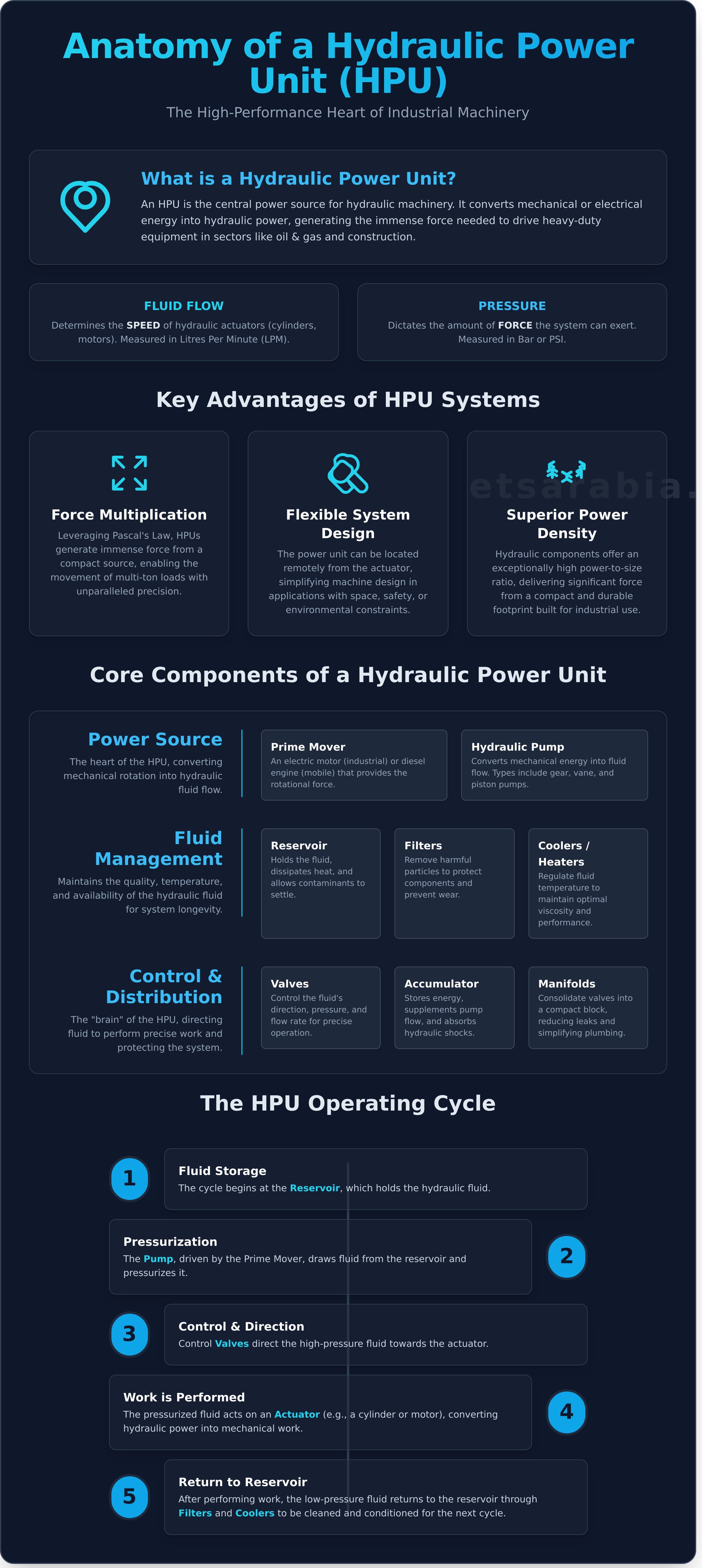
[Diagram illustrating the interconnected components of a hydraulic power unit, showing flow from the reservoir to the pump, through control valves to an actuator, and back through filters to the reservoir.]
Power Source: The Prime Mover and Pump
The heart of the HPU, this section generates the hydraulic power. The prime mover-typically a robust electric motor for industrial applications or a diesel engine for mobile equipment-provides the necessary rotational force. It drives the hydraulic pump (e.g., gear, vane, or piston pump), which converts this mechanical energy into fluid flow. The motor's power (kW) must be precisely matched to the pump's displacement and the system's pressure requirements to ensure optimal efficiency and prevent component overload.
Fluid Management: Reservoir, Filters, and Coolers
Effective fluid management is essential for the longevity and reliability of any hydraulic system, especially in the demanding industrial environments found in Saudi Arabia. Each component plays a vital role:
- Reservoir: The tank does more than just hold fluid; it is engineered to dissipate heat, allow contaminants to settle, and separate entrained air from the oil.
- Filters: These are your system's primary defense, crucial for removing harmful particles that cause abrasive wear, protecting sensitive components, and preventing unexpected failures.
- Coolers & Heaters: In high-temperature climates, coolers are non-negotiable. They prevent fluid from overheating and losing its optimal viscosity, ensuring consistent and reliable performance day after day.
Control & Distribution: Valves and Accumulators
This is the "brain" of the hydraulic power unit, expertly directing the fluid to perform precise work. Key components include:
- Valves: Directional, pressure, and flow control valves manage the fluid's path, force, and speed, allowing for precise command over actuators like cylinders and motors.
- Accumulator: A pressure vessel that stores hydraulic energy. It can supplement pump flow during moments of peak demand or absorb hydraulic shocks, protecting the system from damaging pressure spikes.
- Manifolds: These central blocks consolidate valves into a compact, integrated package. This design significantly reduces potential leak points, simplifies plumbing, and enhances overall system reliability.
How an HPU Works: The Step-by-Step Operating Cycle
At its core, a hydraulic power unit operates on a simple yet powerful principle: moving fluid under pressure to perform work. This process occurs in a continuous, closed-loop cycle, designed for maximum efficiency and reliability. Understanding this cycle demystifies how an HPU converts electrical or mechanical energy into immense hydraulic force, ensuring your critical operations across Saudi Arabia run without interruption. Let's break down the journey of hydraulic fluid through the system.
Step 1: Activation and Fluid Pressurization
The cycle begins when the prime mover-typically an electric motor or diesel engine-is activated. This drives the hydraulic pump, the heart of the system. The pump draws hydraulic fluid from the reservoir, pulling it through a suction filter to remove any large contaminants. As the pump forces this fluid into the system against resistance, pressure builds, effectively storing energy within the fluid and preparing it to do work.
Step 2: Directing Power to the Actuator
This highly pressurized fluid is then directed by a series of control valves. These valves act as the system's brain, opening and closing to send the fluid to the correct location at the right time. The fluid flows to an actuator, such as a hydraulic cylinder or motor. Here, the hydraulic energy is expertly converted into mechanical force-lifting a heavy load, pressing materials, or rotating machinery with precision and control.
Step 3: The Return Loop
Once the actuator has completed its task, the now low-pressure fluid must return to the reservoir to be reused. It flows through a return-line filter, which removes fine contaminants generated during operation, protecting sensitive components from wear. The fluid then rests in the reservoir, where it cools down before being drawn by the pump to begin the entire cycle once more, ensuring consistent thermal stability and performance.
This complete, self-contained cycle repeats seamlessly, providing the consistent and reliable power your industrial applications demand. The closed-loop design of a modern hydraulic power unit conserves fluid and minimizes contamination, which is fundamental to reducing maintenance needs and optimizing operational uptime. This efficient process is what makes hydraulics a cornerstone of heavy industry.
Choosing Your HPU: Standard vs. Custom-Built Solutions
Selecting the right hydraulic power unit is a critical decision that directly impacts operational efficiency, long-term reliability, and total cost of ownership. The choice depends entirely on the specific demands of your application, from required performance to environmental conditions. The two primary paths are pre-engineered standard units and bespoke custom-built solutions. Making the correct choice is essential for maximizing productivity and minimizing downtime, and the expert team at ETS is here to guide you through this vital process.
Standard Hydraulic Power Units
For common industrial tasks, standard HPUs-including micro-units, compact models, and standard configurations-offer a practical solution. Their main advantages are faster availability and a lower initial investment, with costs often starting from a few thousand Saudi Riyals (SAR). However, this convenience comes with trade-offs. Standard units provide limited flexibility and may not be optimized for unique performance requirements, potentially leading to lower efficiency or a shorter service life in demanding applications.
When to Choose a Custom-Built HPU
A custom-built hydraulic power unit becomes essential when your operation faces unique constraints related to space, power requirements, or harsh environmental conditions. This is particularly true for critical applications in Saudi Arabia’s Oil & Gas, Marine, and specialized manufacturing sectors. The benefits are significant:
- Optimized Performance: Engineered precisely for your required pressure, flow, and duty cycle.
- Maximum Efficiency: Components are selected to minimize energy consumption and heat generation.
- Perfect Integration: Designed to fit perfectly within your existing systems and facility footprint.
For systems where failure is not an option, a custom solution guarantees performance and reliability. Discuss your custom HPU requirements with our engineers.
Key Design Factors for Any HPU
Whether choosing a standard or custom model, several core factors must be defined to ensure the unit meets your needs:
- Required Pressure (PSI/Bar) and Flow Rate (GPM/LPM): The fundamental performance metrics that dictate the pump, motor, and valve selection.
- Operational Environment: Consider ambient temperature, contamination risks, and whether the unit will be in a hazardous location requiring ATEX certification.
- Duty Cycle: Defines how often and for how long the unit will operate, which influences component selection and cooling requirements.
HPU Applications in Saudi Arabia's Key Industries
The industrial backbone of Saudi Arabia, from the vast oil fields to the ambitious giga-projects, relies on immense power delivered with precision and control. A custom hydraulic power unit is the engine behind this progress, providing the reliable force needed to operate heavy machinery in the Kingdom's most demanding environments. Ensuring operational continuity is paramount, and the right HPU is critical to achieving this goal and minimizing costly downtime.
Oil & Gas and Petrochemical
In the heart of the Kingdom's economy, HPUs are non-negotiable assets. They provide the immense and reliable force required for critical applications where failure is not an option. This includes powering drilling rigs, operating essential safety systems like blowout preventers (BOPs), and driving large-scale valve actuators in refineries. Given the hazardous nature of these environments, these units must feature robust, explosion-proof designs to guarantee safety and prevent catastrophic operational interruptions.
Construction & Heavy Equipment
As Vision 2030 transforms the nation's landscape, hydraulic power is essential for the machinery shaping our future. HPUs are the workhorses behind heavy lifting equipment such as cranes, excavators, and concrete pumps on major project sites. They also drive earth-moving machinery like bulldozers and material processing equipment like rock crushers. These units are specifically engineered for durability, built to withstand the extreme heat, dust, and rugged conditions of a Saudi construction site, ensuring projects remain on schedule.
Marine & Offshore
Along the strategic coastlines of the Red Sea and the Arabian Gulf, marine operations depend on hydraulic systems that can withstand harsh saltwater environments. A specialized marine-grade hydraulic power unit is vital for:
- Operating deck cranes, winches, and complex mooring systems.
- Powering steering gear for precise vessel maneuverability.
- Actuating large hatch covers and ballast pump systems.
Corrosion resistance is a key design factor, often incorporating stainless steel components and specialized coatings to ensure long-term reliability and safety at sea.
Across these diverse sectors, the common requirement is unwavering performance. Partnering with Emdad Technical Services (ETS) ensures your HPU is engineered to meet the unique challenges of your industry, maximizing productivity and keeping your operations moving forward.
Maintenance and Troubleshooting for Your Hydraulic Power Unit
A custom-built hydraulic power unit is a significant investment in your operational efficiency. To ensure its longevity and reliable performance, a proactive approach to maintenance is essential. Regular upkeep not only extends the life of your equipment but also prevents the sudden failures that lead to costly downtime and emergency repairs, which can impact your entire production schedule in Saudi Arabia's demanding industrial environment. At Emdad Technical Services (ETS), our expertise in hydraulic systems is built on decades of ensuring our clients' machinery operates at peak performance.
Essential Preventative Maintenance Checklist
Implementing a simple, consistent maintenance schedule is the most effective strategy for maximizing the return on your investment. We recommend the following routine checks to keep your system in optimal condition:
- Hydraulic Fluid Analysis: Regularly check fluid levels and clarity. The fluid is the lifeblood of your system; contaminated or degraded oil can cause premature wear on pumps, valves, and seals.
- Filter Inspection and Replacement: Clogged filters restrict flow and allow contaminants to circulate. Adhere to a strict replacement schedule based on manufacturer recommendations or operating hours.
- Temperature and Pressure Monitoring: Keep a log of normal operating parameters. Any sudden spike in temperature or fluctuation in pressure is an early warning sign of a potential problem within the hydraulic power unit.
- Leak Detection: Routinely inspect all hoses, fittings, and seals for any signs of fluid leaks. Even minor leaks can lead to significant fluid loss, reduced efficiency, and environmental hazards.
Common Signs of HPU Failure
Despite diligent maintenance, components can wear over time. Recognizing the early signs of failure allows you to schedule repairs before a catastrophic breakdown occurs. Be vigilant for these common indicators:
- Unusual Noises: Whining, knocking, or grinding sounds from the pump often indicate cavitation, aeration, or internal component wear.
- Excessive Heat: If the system is running hotter than its normal operating temperature, it could signal issues with fluid viscosity, internal leaks, or inefficient cooling.
- Sluggish Performance: A noticeable decrease in speed, power, or responsiveness is a clear sign of reduced hydraulic efficiency, often pointing to pump wear or pressure loss.
If you notice any of these symptoms, it is critical to act promptly. Attempting complex diagnostics without expert knowledge can lead to further damage. Partnering with a specialist like ETS ensures a fast and accurate diagnosis. Experiencing issues? Schedule an expert hydraulic repair service to minimize downtime and restore your system's reliability.
Your Partner for Optimized Hydraulic Power and Performance
As we've explored, the hydraulic power unit is the foundational heart of your industrial machinery, driving performance across critical applications in Saudi Arabia. Understanding its core components and prioritizing proactive maintenance are essential for operational longevity. However, the most vital decision is selecting the right HPU-one perfectly matched to your specific demands to prevent costly interruptions and ensure peak efficiency.
When standard solutions fall short, a custom-engineered approach is the definitive way to minimize operational downtime. As experts in custom HPU fabrication for Saudi industries, ETS leverages strategic partnerships with global leaders like Danfoss and Parker to engineer solutions that deliver unwavering reliability. Our focus is on creating systems that enhance productivity and protect your bottom line.
Don't let an inadequate system compromise your output. Contact ETS to design a custom hydraulic power unit that guarantees reliable performance. Let us be the expert partner that keeps your operations moving forward.
Frequently Asked Questions About Hydraulic Power Units
How do you size a hydraulic power unit for an application?
Sizing a hydraulic power unit correctly is critical for ensuring operational efficiency and longevity. Our engineering team analyzes your application’s specific requirements, including the necessary flow rate (LPM) and pressure (bar) to operate your actuators effectively. We also consider the duty cycle, environmental conditions, and required reservoir size. This detailed approach guarantees the HPU is neither undersized, causing performance issues, nor oversized, leading to unnecessary energy consumption and higher initial costs in SAR.
What is the difference between a hydraulic power unit and a hydraulic pump?
A hydraulic pump is a core component that converts mechanical energy into hydraulic energy, creating fluid flow. In contrast, a hydraulic power unit (HPU) is a complete, self-contained system. It includes the pump, an electric motor or engine, a fluid reservoir, relief valves, filters, and other essential controls. The HPU is the central powerhouse that conditions and delivers pressurized fluid to run an entire hydraulic system, ensuring reliable and controlled power for your machinery.
How often should you change the hydraulic fluid in an HPU?
While general guidelines suggest changing hydraulic fluid every 2,000 to 4,000 operating hours, the optimal interval depends heavily on operating conditions, temperature, and contamination levels. For mission-critical systems in Saudi Arabia's demanding climate, we recommend a proactive approach based on regular fluid analysis. This scientific method accurately determines fluid health, preventing premature changes and protecting components from wear, which is key to minimizing unexpected and costly operational downtime.
What are the safety considerations when operating a hydraulic power unit?
Operating a hydraulic power unit demands strict adherence to safety protocols due to high-pressure fluids. Key considerations include conducting regular inspections for leaks or hose damage, always depressurizing the system before performing maintenance, and using appropriate Personal Protective Equipment (PPE) like safety glasses and gloves. Ensure all guards on rotating parts are securely in place. Proper training for all personnel is essential to prevent serious injury and ensure safe, reliable operation of the equipment.
Can an HPU be designed for use in explosive or hazardous environments?
Absolutely. We specialize in designing and fabricating HPUs for operation in explosive or hazardous environments, such as those found in the petrochemical and oil & gas sectors across Saudi Arabia. These units are engineered with certified explosion-proof (Ex) components, including motors, enclosures, and instrumentation. Our designs strictly adhere to international standards like ATEX and local regulations to guarantee the highest level of safety and compliance for your hazardous area classification.
What information do I need to provide to get a quote for a custom HPU?
To provide a prompt and accurate quote for a custom HPU, our engineers require a clear understanding of your application. Please provide the required system pressure (bar) and flow rate (LPM), details about the actuators (e.g., cylinder bore/stroke, motor displacement), the intended duty cycle, and the operating environment. Information on control preferences (manual, solenoid, or proportional valves) and any special certifications (e.g., ATEX) will also ensure our solution precisely meets your needs.