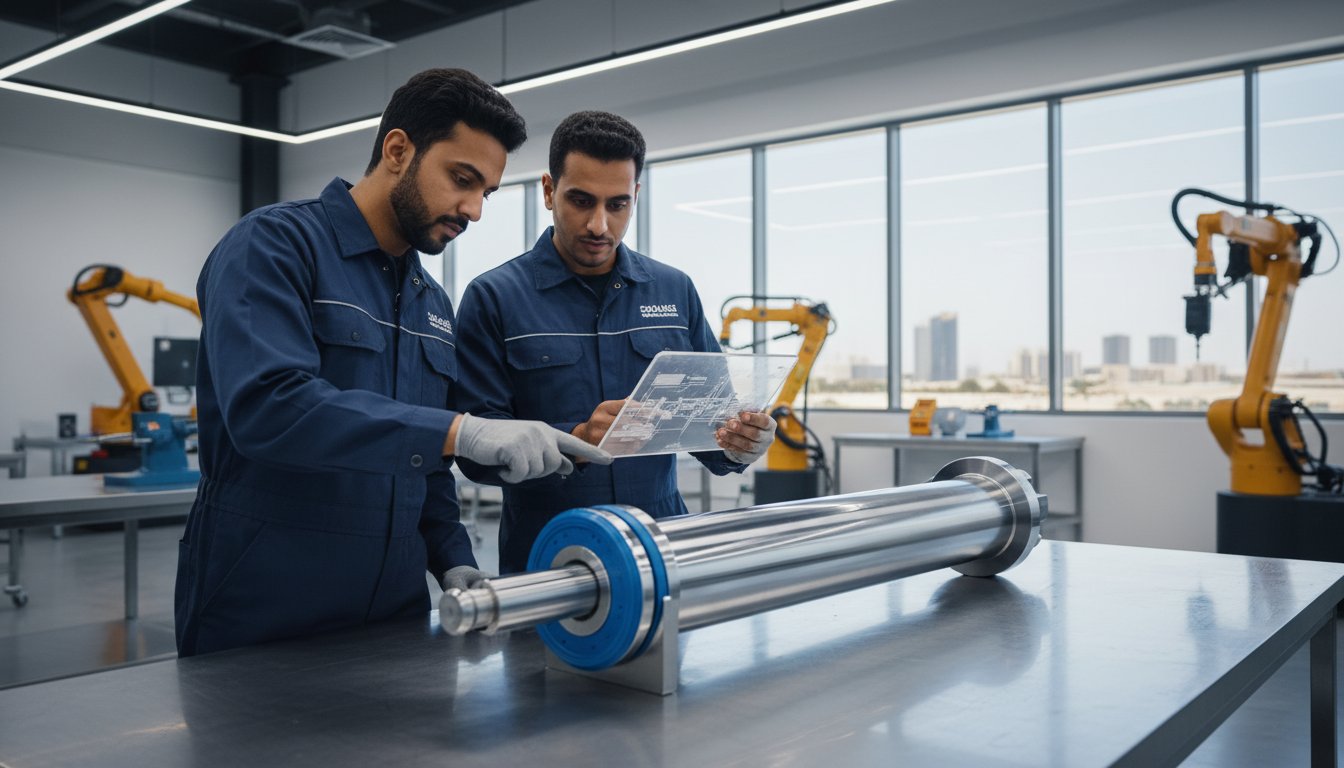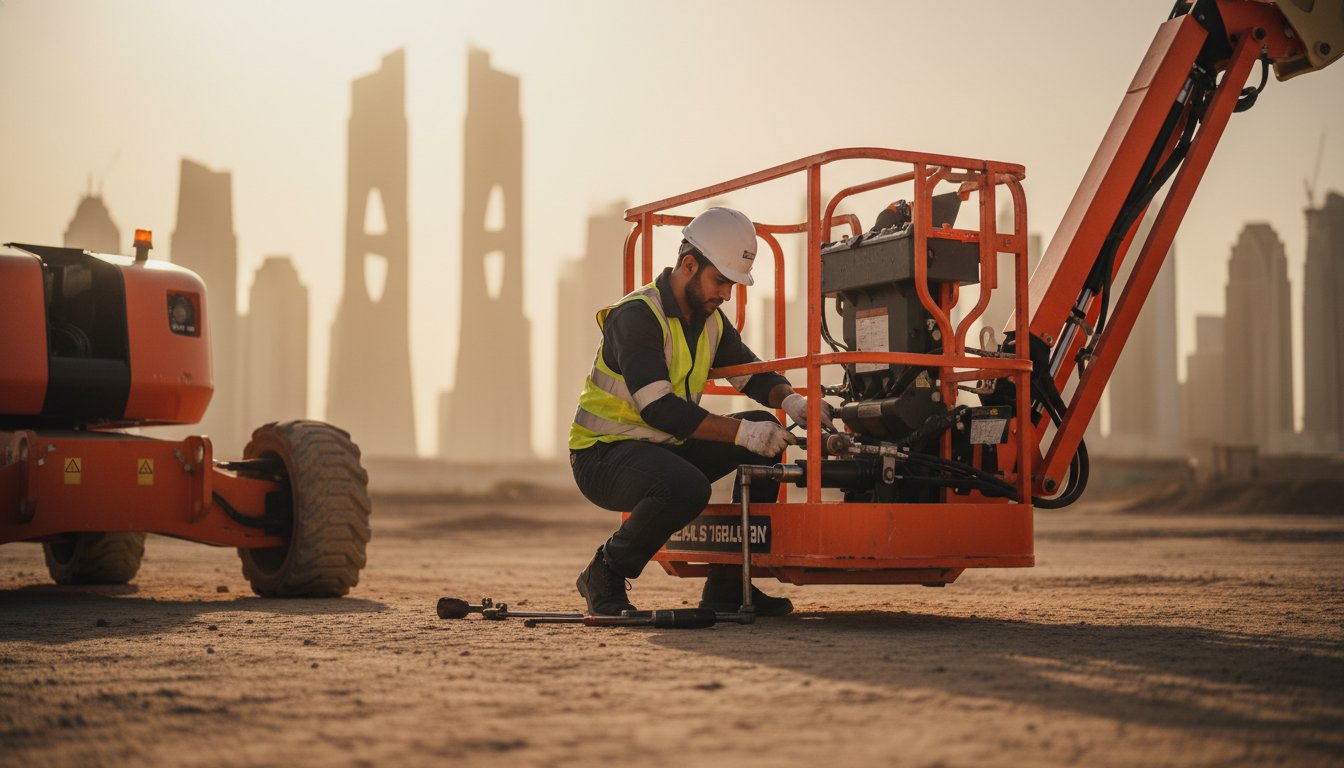
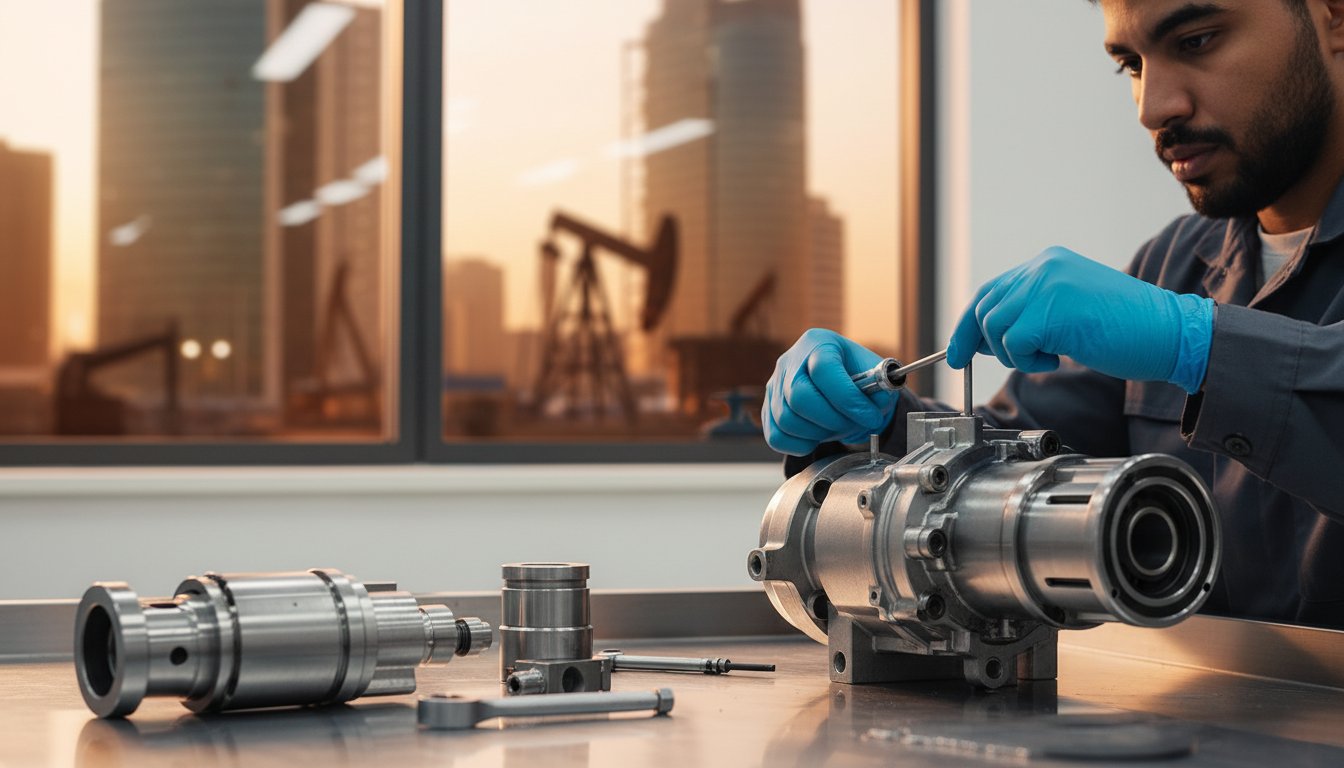
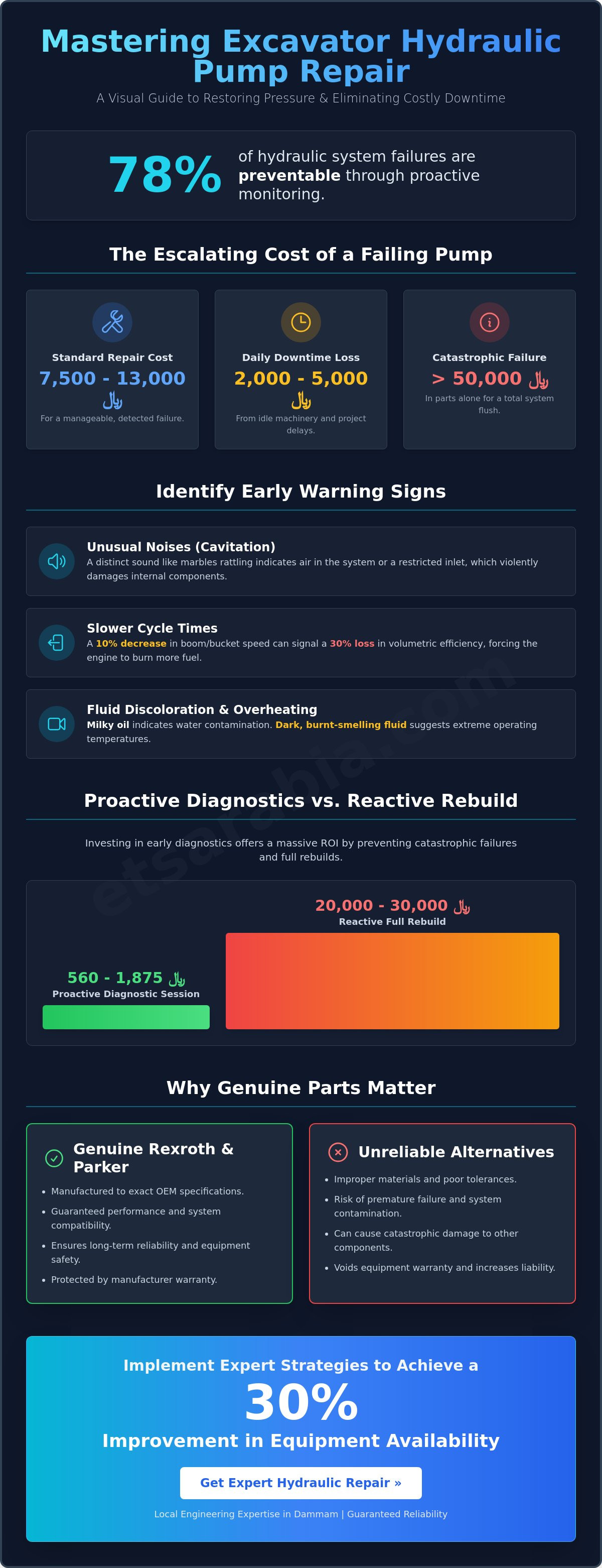
Did you know that over 78% of hydraulic system failures are preventable through proactive monitoring and proper safety measures? For operators in Dammam, a sudden failure is more than a technical glitch; it's a financial drain that can lead to repair costs between 7,500 ﷼ and 13,000 ﷼, plus the massive losses from idle machinery. We understand the frustration of searching for genuine Rexroth or Parker components while your project stalls due to unreliable local service providers.
This guide empowers you to master the excavator hydraulic pump repair process to restore pressure and eliminate costly delays. You'll learn how to navigate the diagnostics phase, evaluate the ROI of rebuilding versus a full replacement, and apply ISO 4413 safety specifications to ensure long-term reliability. By implementing these expert-backed strategies, you can achieve a 30% improvement in equipment availability and keep your operations moving forward. We'll break down the technical requirements and the precision engineering needed to turn a failing pump into a high-performance asset once again.
Key Takeaways
- Identify early warning signs like erratic boom movement and overheating to prevent sudden failures and expensive operational delays.
- Execute precise diagnostic steps, such as case drain tests, to accurately measure internal leakage and determine the best path for restoration.
- Learn why precision lapping and clean-room environments are non-negotiable standards for a professional excavator hydraulic pump repair.
- Protect your machinery by understanding the critical performance differences between genuine Rexroth or Parker parts and unreliable counterfeit alternatives.
- Discover how local engineering expertise in Dammam helps you optimize downtime and restore hydraulic pressure with guaranteed reliability.
Identifying Symptoms and the Real Cost of Hydraulic Pump Failure
A failing pump is a thief. It quietly steals fuel, slows down your operators, and risks contaminating the entire hydraulic circuit with microscopic metal shavings. In the high-stakes construction and mining sectors of Saudi Arabia, ignoring these signals is a gamble you can't afford to win. Pushing a machine to finish a shift when the pump is struggling often leads to catastrophic failure. This transforms a manageable excavator hydraulic pump repair into a total system flush and component replacement that can easily exceed 50,000 ﷼ in parts alone.
Common Warning Signs of Pump Distress
The most immediate indicator of trouble is often acoustic. Cavitation produces a distinct sound similar to marbles rattling in a blender. This happens when air enters the system or the inlet is restricted, causing bubbles to collapse violently against internal components. You should also monitor your cycle times closely. A 10% decrease in boom or bucket speed usually signals a 30% loss in volumetric efficiency. This lag forces the engine to work harder, directly increasing fuel consumption. Understanding foundational Hydraulic pump principles helps technicians recognize that fluid discoloration is another red flag. Milky oil indicates water ingress, while dark, burnt-smelling fluid suggests the pump is running at temperatures that exceed its design limits.
The Economic Impact of Idle Heavy Equipment
Downtime costs in Dammam or Riyadh aren't limited to the repair bill. You must account for the direct costs of idle labor and the indirect costs of project penalties. Current market data shows that annual maintenance and repair costs for heavy equipment average about 15% of the machine's original purchase price. When a pump fails, the daily loss of productivity can range from 2,000 ﷼ to over 5,000 ﷼ depending on the project's scale.
Proactive intervention offers a significantly higher ROI than emergency reactive repairs. A diagnostic session, which typically costs between 560 ﷼ and 1,875 ﷼, can identify wear before it destroys the cylinder block or valve plate. By catching issues early, you avoid the 20,000 ﷼ to 30,000 ﷼ price tag associated with a full axial piston pump rebuild. Rapid response from local experts in Dammam 2nd Industrial City ensures your machinery returns to the field before these hidden costs derail your project's profitability.
Troubleshooting Excavator Hydraulics: A Step-by-Step Diagnostic Guide
Safety is the non-negotiable foundation of every technical intervention. Before you open any high-pressure line, you must implement strict lockout/tagout procedures to ensure the machine cannot be started. Residual pressure in a 350-bar system remains a lethal hazard even after the engine is off. Once the machine is secured, the diagnostic process begins by isolating the pump from the rest of the circuit. This methodical approach prevents you from misdiagnosing a faulty control valve as a pump failure, which is a mistake that leads to wasted capital and extended downtime.
The case drain test is the most reliable method to measure internal wear during an excavator hydraulic pump repair assessment. By measuring the volume of oil returning to the tank directly from the pump housing, you can accurately calculate internal leakage. If this flow exceeds the manufacturer's specified limit, it confirms that internal clearances have widened beyond acceptable tolerances. This data provides the concrete evidence needed to decide between a simple seal replacement or a full internal rebuild. You must also inspect the inlet path with extreme care. Air leaks on the suction side are a frequent cause of cavitation. Even a pinhole leak in a suction hose can introduce enough air to destroy a new pump within hours, while blocked suction strainers starve the pump and cause the violent internal vibrations discussed in the previous section.
Diagnostic Tools for Modern Excavators
Pressure gauges tell you if the system reaches its target, but flow meters reveal if it can maintain that pressure under a working load. Relying on pressure readings alone is a common trap for inexperienced technicians. Thermal imaging cameras have become an essential tool in Dammam's industrial workshops. They allow engineers to detect hotspots on the pump casing that indicate localized internal friction or a failing bearing before a total seizure occurs. Volumetric efficiency is the ratio of actual flow to theoretical flow. A drop in this ratio is the clearest indicator that your pump is losing its ability to perform work efficiently.
Isolating the Pump from the System
Don't condemn the pump without first checking the pilot pressure system. A drop in pilot pressure often mimics pump failure because the control valves won't fully shift, leading to sluggish machine movements. You should also verify the main relief valve settings. If the relief valve is stuck open or set too low, the system won't build pressure regardless of how well the pump is performing. Evaluating the condition of hydraulic seals and external fittings is the final step in the isolation process. Many operators in the Eastern Province find that a professional diagnostic session saves them thousands of riyals in unnecessary parts. If your readings are inconsistent, consulting with an expert hydraulic repair team can provide the technical clarity needed to restore your machine's performance.
The Professional Repair Process: Disassembly, Inspection, and Rebuilds
Professional excavator hydraulic pump repair is a precision engineering task that goes far beyond simple parts replacement. While many local workshops offer quick fixes, a reliable rebuild requires a controlled "Clean Room" environment. Even a single microscopic particle of sand or metal can act like an abrasive, destroying new surfaces within minutes of startup. This is why our process begins with a total teardown and ultrasonic cleaning to ensure every internal component is free from the contaminants that caused the initial failure.
Once cleaned, we focus on the interface between the cylinder block and the valve plate. A perfect seal here is essential for maintaining volumetric efficiency. We use precision lapping machines to restore these surfaces to a mirror finish, often achieving flatness within a few microns. We also inspect the swash plate and piston shoes for specific wear patterns. Scoring on the swash plate usually indicates that the pump has been operating with contaminated fluid or has suffered from the cavitation issues identified in the troubleshooting phase. Every rebuilt unit must conclude its journey on a dynamic test bench, where we simulate real-world loads to verify that the pump meets or exceeds original factory specifications before it leaves the facility.
Critical Component Inspection
Our engineers measure piston-to-bore clearances with micron-level accuracy to ensure they fall within strict tolerances. During this stage, we look for "smearing" on the valve plate. This bronze-colored transfer of metal is a clear indicator of poor oil quality or extreme overheating. We maintain a strict policy against partial rebuilds. Replacing only the damaged parts while leaving old bearings or seals in place is a high-risk strategy that often leads to a second, more expensive failure. By replacing all wear items, including high-quality bearings and seals, we provide the expert-backed reliability our clients expect.
Reassembly and Calibration
Reassembling a pump requires more than just following a manual. For modern load-sensing systems, we must precisely set the "stand-by" and "margin" pressures. These settings dictate how the pump responds to operator commands and ensure the excavator doesn't stall under heavy loads. We use high-quality hydraulic seals and apply exact torque specifications to every internal fastener to prevent vibration-induced failures. This methodical approach ensures that your machine returns to the field in Dammam or Riyadh with its hydraulic pressure fully restored and its operational life significantly extended.
Sourcing Quality Components: Why Rexroth and Parker Parts Matter
The integrity of an excavator hydraulic pump repair depends entirely on the DNA of the replacement parts used. In the Saudi Arabian market, "gray market" or counterfeit components often appear attractive due to lower upfront costs. However, these parts lack the metallurgical precision required to withstand the high-pressure environment of a modern excavator. Using non-genuine parts is a primary cause of premature failure, often leading to secondary damage in expensive industrial lubrication systems that rely on consistent oil flow and pressure. We prioritize genuine Rexroth and Parker components because they are engineered to maintain tight tolerances even under extreme mechanical stress.
Emdad Technical Services (ETS) maintains a robust inventory of precision-engineered parts at our Dammam facility to ensure rapid turnaround times. We understand that waiting weeks for a shipment from overseas is not an option when your project is stalled. By stocking genuine axial piston pump groups and gear pump sets, we provide a reliable alternative to the unreliable local shops that rely on generic, short-lived substitutes. This commitment to quality ensures that every repair we perform delivers long-term stability rather than a temporary fix.
The Performance Gap in Genuine Parts
Material science is the invisible factor that determines how a pump handles the 50°C+ heat of a Saudi summer. Genuine alloys used by Rexroth and Parker are designed to maintain their structural integrity at temperatures that cause inferior "will-fit" parts to warp or score. When you perform a cost-benefit analysis, the ROI of genuine components becomes clear. While a counterfeit part might save you 1,500 ﷼ initially, its failure can cause a total system breakdown costing 25,000 ﷼ or more. Integrating high-quality hydraulic power unit components ensures that your entire system remains stable and efficient throughout its service life.
Maintaining System Integrity
A new pump is only as good as the circuit it powers. You must match the pump to the correct hydraulic hoses and fittings to prevent turbulence and pressure drops. Filtration is equally vital. We recommend using filters with a specific micron rating to protect new internal components from the "built-in" contamination that occurs during the repair process. Furthermore, implementing automatic lubrication can significantly extend the life of pump bearings by ensuring they never run dry. This holistic approach to maintenance preserves the precision of your repair and maximizes machine uptime. If you are ready to restore your equipment with parts you can trust, source your genuine hydraulic components from ETS today.
Expert Hydraulic Repair in Saudi Arabia: The ETS Advantage
Emdad Technical Services (ETS) stands as a premier partner for heavy industry, strategically located in Dammam 2nd Industrial City. Our location allows us to provide a rapid response to the urgent needs of the construction, mining, and petrochemical sectors across the Eastern Province. We don't just swap parts; we provide precision-engineered solutions. Our team of expert engineers is dedicated to optimizing your downtime by delivering high-stakes repairs that meet global technical standards. Whether your project involves a single machine or a fleet of heavy equipment, we ensure your excavator hydraulic pump repair is handled with the highest level of technical proficiency.
Our capabilities extend beyond basic maintenance. We provide comprehensive support that includes everything from individual component rebuilds to the fabrication of custom Hydraulic Power Units (HPUs). Every project we undertake is backed by our commitment to "Reliable Performance Guaranteed." This means that when a pump leaves our facility, it's been tested to perform under the harshest conditions found in Saudi Arabian job sites. We understand that in your industry, a partner's reliability is measured by the uptime they secure for your operations. We don't settle for temporary fixes when your productivity is on the line.
Local Expertise for Global Standards
ETS serves the specific needs of Saudi Arabia’s heavy industry by combining local accessibility with world-class engineering. We offer on-site technical support, bringing our diagnostic expertise directly to your job site in Riyadh, Jeddah, or Dammam. Our engineers understand that every hour of downtime translates into lost revenue and potential project penalties. By providing a local source for genuine Rexroth and Parker components, we eliminate the logistical delays that often plague international supply chains. We position ourselves as a long-term partner, ensuring your systems are always in motion through ongoing technical support and maintenance.
Get Your Excavator Back in Motion
Restoring your machine's performance begins with an accurate assessment. You can schedule a diagnostic session with our Dammam team to identify the root cause of your hydraulic issues before they escalate into catastrophic failures. Our transparent quoting process ensures you understand the ROI of your repair or maintenance plan from the start. Don't let a failing pump stall your progress or compromise your project's timeline. Contact ETS today for expert excavator hydraulic pump repair and experience the reliability that keeps Saudi Arabia's industrial infrastructure moving forward.
Restore Your Machine’s Power and Productivity
Mastering the diagnostic and repair process is essential for any high-stakes operation in Saudi Arabia. We've explored how early symptom detection and precision troubleshooting can prevent the catastrophic failure of your equipment. A professional excavator hydraulic pump repair ensures that your machine regains its original volumetric efficiency while protecting the entire hydraulic circuit from microscopic contamination. Choosing precision lapping and clean room standards over quick fixes is the most effective way to secure a high ROI on your maintenance spend.
As an authorized distributor for global brands like Rexroth and Parker, Emdad Technical Services (ETS) provides the technical depth required for reliable rebuilds. Our facility in Dammam 2nd Industrial City is staffed by expert engineers who specialize in high-pressure industrial systems. We understand that every hour of idle machinery is lost revenue for your project. Minimize your downtime-contact ETS Dammam for expert hydraulic repair today. Our team is ready to provide the fast, reliable solutions that keep your operations moving forward. Trust our expertise to bring your excavator back to peak performance with guaranteed results.
Frequently Asked Questions
How do I know if my excavator hydraulic pump is failing or if it is just a valve?
A case drain test is the most definitive way to distinguish between a pump failure and a faulty control valve. By measuring the oil flow returning to the tank directly from the pump housing, you can accurately calculate internal leakage. If the flow is within factory specs but the machine remains sluggish, the issue likely resides in the main relief valve or pilot system. Our engineers use this data to prevent unnecessary component replacements.
Is it better to repair or replace a hydraulic pump on an older excavator?
The decision depends on the condition of the pump housing and the total ROI for your specific machine. Rebuilding a pump typically costs between 3,000 ﷼ and 28,125 ﷼, which is often 50% less than the price of a brand-new axial piston unit. A new pump can reach up to 56,250 ﷼ for high-capacity models. If the internal scoring is manageable, a professional rebuild offers a superior financial path for older machinery.
How long does a professional excavator hydraulic pump repair typically take?
A standard excavator hydraulic pump repair usually takes between 3 and 7 business days at our Dammam facility. This timeline includes a total teardown, precision inspection, parts sourcing, and final load testing on our dynamic bench. While simple seal changes are faster, complex rebuilds involving lapping and calibration require this window to ensure reliability. We prioritize efficiency to minimize your project's costly operational downtime.
What causes most excavator hydraulic pump failures in Saudi Arabia?
Contamination and extreme heat are the primary drivers of pump failure across the Kingdom. Over 78% of failures are preventable and often stem from fine desert dust bypassing old filters or hydraulic oil degrading in 50°C+ temperatures. High heat reduces oil viscosity, leading to metal-on-metal contact and the "smearing" effect on valve plates. Regular fluid analysis is critical for machines operating in the Eastern Province's harsh environment.
Can I perform a pump rebuild myself in the field?
Field rebuilds are highly discouraged because the environment lacks the "Clean Room" standards necessary for precision hydraulics. Even a single grain of sand can destroy a new cylinder block during the first hour of operation. A professional repair also requires precision lapping machines and a test bench to calibrate "stand-by" and "margin" pressures. Attempting this in the field often leads to immediate secondary failures and wasted capital.
What is the average lifespan of a rebuilt hydraulic pump vs. a new one?
A professionally rebuilt pump using genuine Rexroth or Parker parts can achieve 80% to 90% of the lifespan of a brand-new unit. The key is replacing all wear items, including bearings and seals, rather than performing a partial fix. When calibrated correctly on a test bench, a rebuilt pump provides a reliable, cost-effective alternative that can last for several thousand hours of heavy-duty operation in demanding Saudi environments.
How does proper lubrication prevent pump failure?
Proper lubrication reduces the friction that generates excessive heat within the pump housing. High-quality lubrication systems ensure that internal bearings and piston shoes maintain a consistent oil film, preventing the scoring and metal transfer that leads to seizure. Implementing an automatic lubrication system is a proven strategy to extend component life, as it removes the risk of human error and ensures continuous protection for high-pressure components.
What specific brands of excavator pumps do you repair in Dammam?
Our Dammam workshop specializes in the repair and maintenance of all major global brands, including Bosch Rexroth, Parker, Kawasaki, and Komatsu. We maintain a local inventory of genuine parts for axial piston, gear, and vane pumps to ensure a rapid response. Whether you operate a CAT, Volvo, or Hyundai excavator, our expert engineers have the technical documentation and specialized tools required to restore your hydraulic pressure to factory specifications.