
Is a 50°C heatwave the primary threat to your fleet, or is it the microscopic sand particles currently compromising your hydraulic seals? In Saudi Arabia's industrial hubs like Dammam and Riyadh, every hour your equipment sits idle represents a mounting loss in Saudi Riyal (﷼). You likely agree that in this environment, a standard field patch isn't enough; you need a professional bulldozer hydraulic system service that addresses the root cause of component failure before it triggers a total site shutdown.
You'll learn how precision component matching and strict contamination control deliver zero-leak performance and significantly extend your machinery's lifespan. This article explains how to navigate the new July 3, 2026, high-risk profession regulations while sourcing genuine Rexroth and Parker parts right here in KSA. We preview the latest advancements in rapid pump and cylinder repairs, including the impact of the new hydraulic pump testing facility opened in Dammam on January 2, 2026, to ensure your operations stay in motion. By prioritizing expert diagnostics over quick fixes, you can eliminate costly project delays and keep your heavy equipment performing at peak efficiency.
Key Takeaways
- Understand how hydraulic efficiency directly dictates fuel consumption and blade force in heavy earthmoving operations.
- Discover why sand ingress and heat-induced O-ring hardening are the leading causes of equipment failure in the Saudi desert.
- Learn why a professional bulldozer hydraulic system service in a clean-room environment is essential to prevent contamination during pump overhauls.
- Implement a two-step preventive strategy involving daily visual inspections and scheduled oil analysis to detect internal wear before it causes downtime.
- Access genuine Rexroth and Parker components through localized support near Dammam’s 2nd Industrial City for rapid response times.
The Critical Role of Bulldozer Hydraulic Systems in Heavy Earthmoving
The hydraulic system is the power transmission core of any crawler tractor. It functions as the machine's muscular system, converting engine horsepower into high-pressure fluid energy to move tons of earth and rock. When you invest in a professional bulldozer hydraulic system service, you're protecting the machine's primary ability to generate massive blade force. Without peak hydraulic efficiency, the engine is forced to work harder to compensate for internal pressure losses. This inefficiency leads to a measurable spike in fuel consumption, which can drain thousands of Saudi Riyal (﷼) from your project budget over a single season.
In Saudi Arabia, ambient temperatures frequently exceed 45°C during peak summer months. This extreme heat directly impacts hydraulic oil viscosity, causing the fluid to thin out dangerously. Thin oil fails to provide the necessary lubrication for precision components like Rexroth pumps or Parker valves. It leads to internal bypass, where fluid slips past seals instead of performing work. Maintaining a high pressure-to-productivity ratio is impossible if your system isn't optimized to handle the thermal load of the desert. High-quality services ensure that your oil coolers, seals, and pumps are specifically calibrated for these harsh regional conditions.
Core Hydraulic Circuits in Modern Bulldozers
Modern Bulldozer hydraulic systems rely on three primary circuits to achieve operational goals. The lift circuit manages blade height and provides the downward pressure needed to break hard ground. Tilt and angle circuits offer the precision grading capabilities required for complex infrastructure projects. Finally, the ripper circuit handles high-stress rear attachments, which are essential for fracturing the rocky terrain found in many parts of the Kingdom. Each circuit must function in perfect harmony to ensure the machine remains a versatile and productive asset on the job site.
Why "Good Enough" Repairs Lead to Systemic Failure
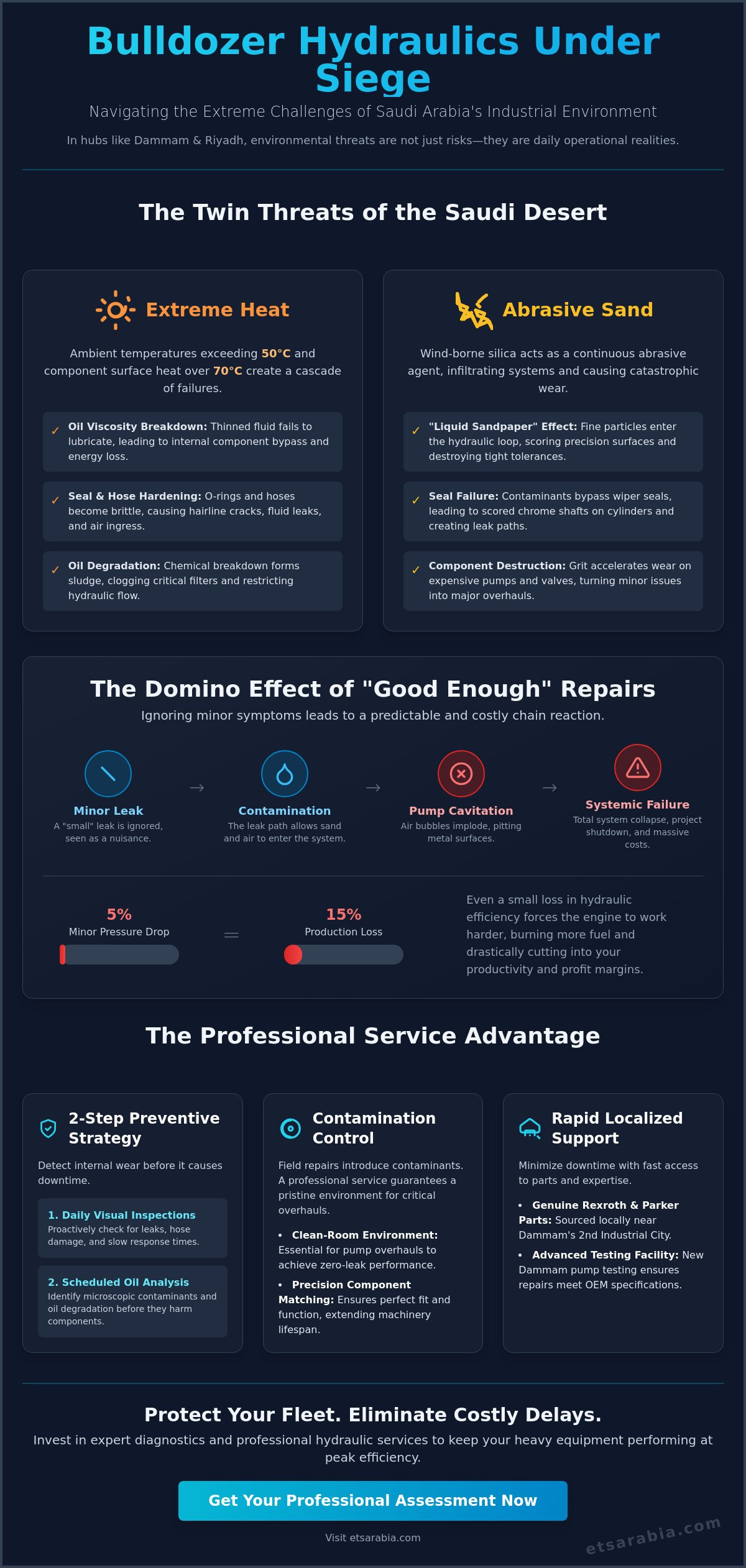
Settling for "good enough" in hydraulic maintenance is a recipe for disaster. In high-resistance earthmoving, even a minor 5% pressure drop can reduce overall production by as much as 15%. Small leaks are never just a nuisance; they are a gateway for contamination. These leaks often introduce air into the lines, leading to pump cavitation. This process creates tiny, high-energy implosions that pit metal surfaces and eventually cause a total system collapse. A slow hydraulic response time is a critical warning sign. Ignoring these symptoms results in hidden costs, including accelerated wear on the engine and transmission as they struggle to overcome hydraulic lag. Professional diagnostics identify these issues before they turn into catastrophic failures.
Common Failure Points in Bulldozer Hydraulics Under Desert Conditions
Dammam's environment is notoriously aggressive toward heavy machinery. Wind-borne silica acts as a continuous abrasive, making sand-ingress the primary cause of seal failure in Eastern Province job sites. When these fine particles bypass the wiper seals, they enter the hydraulic loop and act like liquid sandpaper. This grit scores precision surfaces and destroys the tight tolerances required for high-pressure operations. Without a targeted bulldozer hydraulic system service, these contaminants accelerate internal wear, turning a minor maintenance task into an expensive overhaul.
Heat is the second silent killer. In the Saudi Arabian sun, surface temperatures on metal components can exceed 70°C. This constant thermal cycling causes O-rings and hydraulic hoses to lose their elasticity. They become brittle and "set," leading to hairline cracks that leak fluid and admit air. This degradation isn't limited to rubber components; the hydraulic oil itself breaks down, losing its chemical stability and forming sludge that clogs filters and restricts flow. This oil degradation creates internal wear patterns in hydraulic pumps that are often invisible until a total failure occurs.
Hydraulic Cylinder and Seal Failure
Scored chrome shafts are a frequent sight in desert operations. When sand gets trapped under the seal lip, it carves microscopic grooves into the chrome plating. These scores provide a path for fluid to escape and for more contaminants to enter. To combat this, we recommend choosing high-temperature seals specifically engineered for the Saudi Arabian summer. Seal bypass occurs when internal seals fail to hold pressure, directly causing blade drift and making precision grading impossible.
Pump and Valve Wear
Pump cavitation is often the first sign of a failing system in heavy-duty dozers. It sounds like marbles rattling inside the pump and indicates that air or vapor bubbles are collapsing under pressure. This phenomenon is frequently caused by oil degradation or restricted suction lines. Directional control valves and holding valves are equally vulnerable; a single grain of sand can cause a valve spool to stick, leading to erratic blade movement. Over time, heat causes "varnishing," a thin layer of baked-on oil residue that coats precision-engineered internal components and prevents smooth operation. If you notice jerky movements, it's time to consult with a technical expert to prevent a total pump seizure.
Professional Service vs. Field Repairs: Making the Right Choice
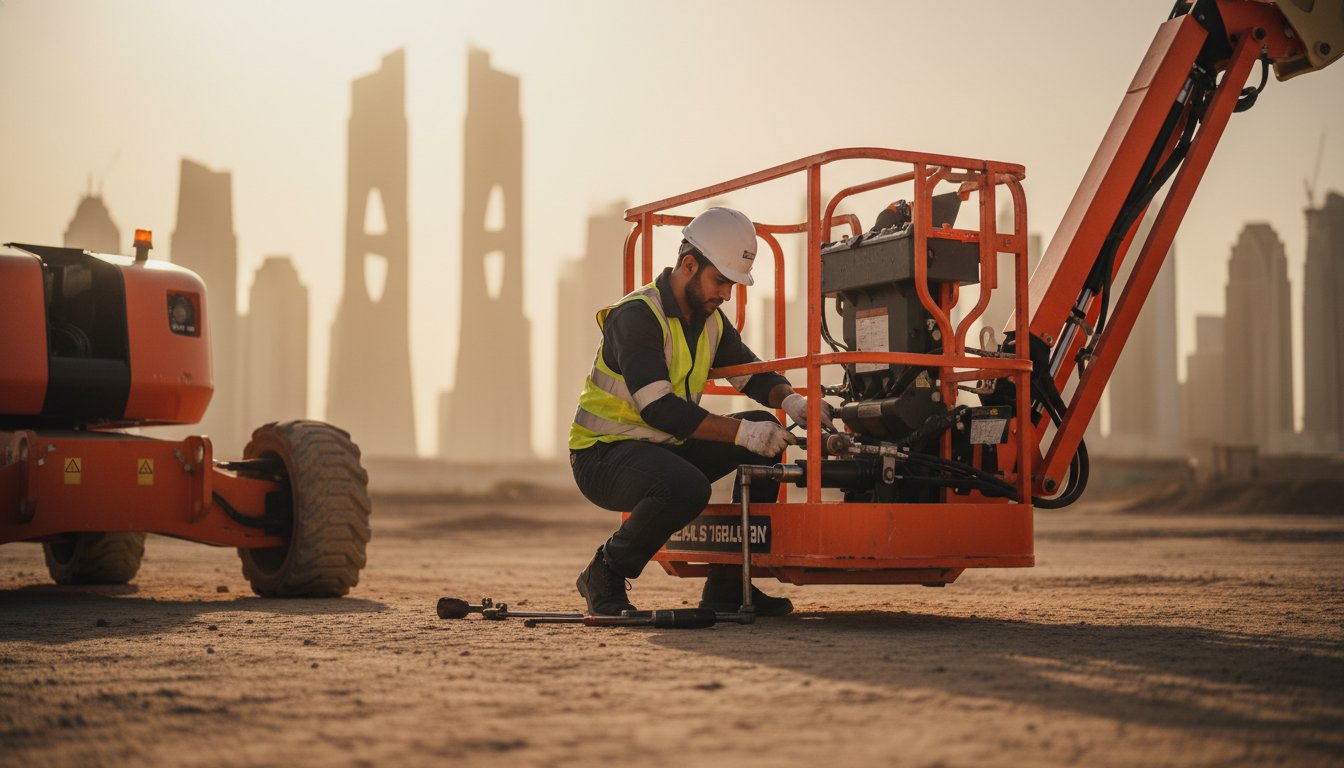
Field repairs are often tempting when a project is behind schedule. However, opening a high-pressure hydraulic circuit in the middle of a dusty site often introduces more contamination than it fixes. A single grain of sand introduced during a field hose change can travel directly to the pump, causing catastrophic internal scoring within minutes. For a comprehensive bulldozer hydraulic system service, a controlled environment is mandatory. Modern systems operate at pressures exceeding 4,000 PSI; at these levels, even microscopic particles lead to rapid component erosion.
Precision testing is another critical differentiator. A field trial involves "fixing" the part and seeing if the machine moves. This trial-and-error approach risks damaging other expensive components if the underlying issue remains. In contrast, a professional bench test simulates real-world load conditions in a safe, monitored setting. This ensures the component meets manufacturer flow and pressure specifications before it's reinstalled. The long-term ROI of professional service far outweighs the cycle of temporary patches, as it eliminates the recurring labor costs and lost productivity associated with repeated failures.
The ETS Workshop Standard
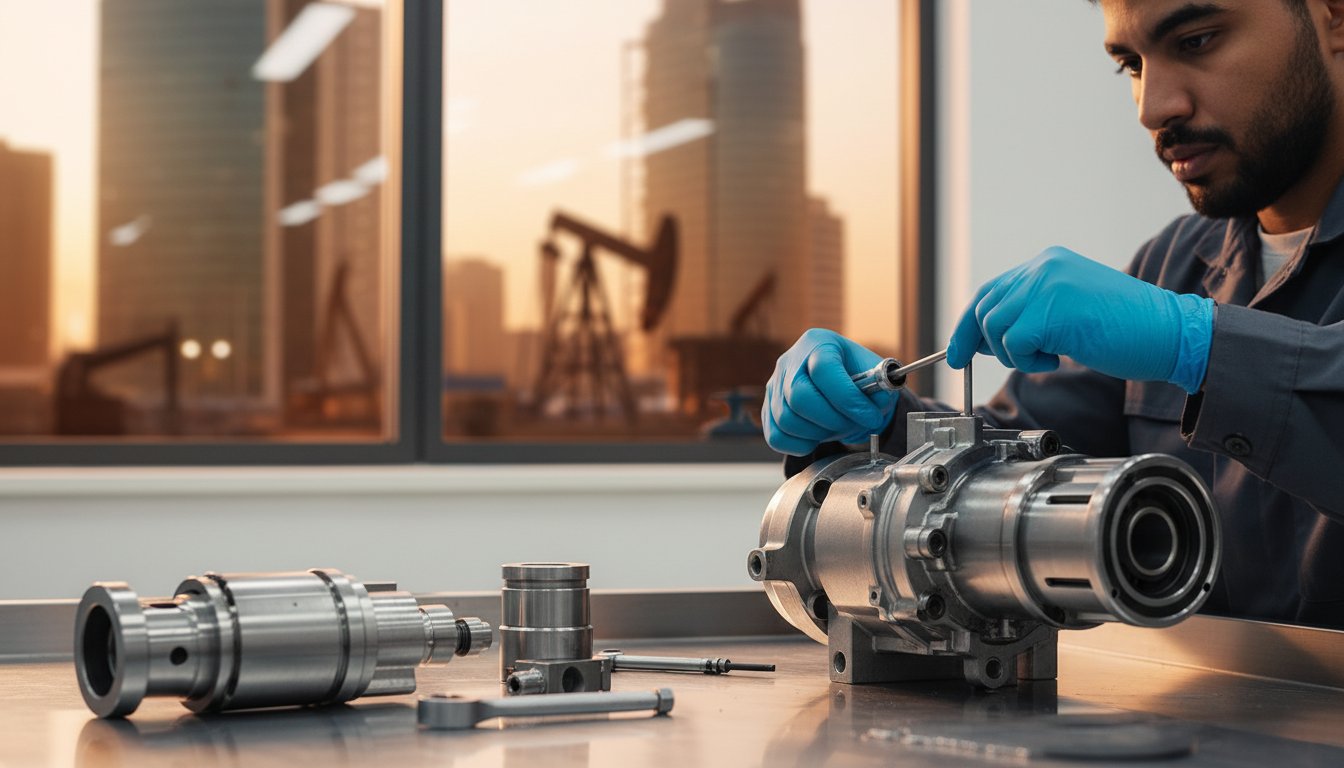
Our facility near Dammam's 2nd Industrial City is designed to restore equipment to original performance levels. Learn how our hydraulic repair services reduce downtime by combining expert diagnostics with high-grade materials. We don't just replace seals; we utilize precision-honed tubes and high-quality chrome shafts to ensure cylinders operate without friction or bypass. Every directional control valve and holding valve undergoes strict calibration to match OEM specifications. This ensures your blade response is snappy and predictable under heavy load.
Comparing Service Outcomes
The reliability of shop-certified repairs provides a level of security that uncertified field patches simply can't match. Professional service includes comprehensive warranties that protect your investment against premature failure. While some managers look to international shipping for specialized parts, our local Dammam support offers a much faster response. We keep operations moving by providing immediate access to Rexroth and Parker components, bypassing the weeks of delays associated with global logistics. This proximity allows us to deliver a fast turnaround that keeps your fleet on the job site. Choosing a certified bulldozer hydraulic system service means you're investing in a solution that lasts, rather than just a temporary fix that might fail tomorrow.
Preventive Maintenance and Troubleshooting for Fleet Managers
Effective fleet management in the Kingdom requires more than just reactive fixes. A rigorous bulldozer hydraulic system service schedule is the only way to prevent the harsh desert environment from eroding your profit margins. By implementing a multi-step preventive strategy, you can identify microscopic wear before it results in a 50,000 ﷼ repair bill. Consistency is key; a machine that isn't inspected daily is a machine waiting to fail.
- Step 1: Daily Visual Inspections. Check all hydraulic hoses, fittings, and cylinder rods for signs of "wetness" or weeping. In sand-heavy regions like Dammam, a small leak acts as a magnet for grit, which eventually bypasses seals.
- Step 2: Scheduled Oil Analysis. Regular laboratory testing of your hydraulic fluid detects metal shavings and chemical breakdown. This is the "blood test" for your equipment, revealing the health of internal components like Rexroth pumps.
- Step 3: Monitor Cycle Times. If your blade lift or tilt speed has slowed by more than 10% compared to factory specs, your pump is likely losing efficiency.
- Step 4: Maintain Lubrication. Ensure your industrial lubrication systems are delivering grease to pivot points, reducing the mechanical strain on the hydraulic circuits.
- Step 5: Operator Feedback. Train your team to report "spongy" controls or erratic movements immediately. These are often the first indicators of air ingestion or fluid overheating.
Troubleshooting Common Dozer Symptoms
Slow blade movement is a frequent complaint. Is it the pump or the filter? Start by checking the filter bypass indicator; a clogged filter is a cheap fix compared to a pump overhaul. If the oil is overheating, inspect the hydraulic cooler for sand blockage and test the relief valves for proper pressure settings. Unusual noises provide clues as well. A high-pitched whine usually indicates aeration, which is air in the oil, while a gravel-like rattling points to cavitation. Both require immediate attention to prevent pump destruction.
Contamination Control Strategies
Changing hydraulic fluid in a dusty environment requires a "closed-loop" approach to prevent airborne sand from entering the reservoir. High-micron filtration is particularly vital for the ripper circuit, which often operates under the highest pressure and stress. High-quality breather caps with desiccant filters are critical in Saudi Arabia because they prevent humid, sand-laden air from being drawn into the tank as fluid levels fluctuate during operation. To keep your fleet in peak condition, schedule a professional diagnostic audit today and ensure your operations remain uninterrupted.
Expert Bulldozer Hydraulic Service at ETS Dammam
Emdad Technical Services (ETS) provides the specialized engineering support necessary to keep the Kingdom's heavy fleets operational. Our facility, strategically located in Dammam near the 2nd Industrial City, is designed for rapid response to high-stakes industrial failures. We maintain deep technical expertise in Rexroth, Parker, and Danfoss hydraulic components, ensuring your machinery is serviced using the exact specifications required by the original manufacturer. By combining global part quality with local technical precision, we eliminate the guesswork often found in general workshops.
We understand that a bulldozer waiting for a single seal is a bulldozer losing money. To address this, we maintain a massive local inventory of high-pressure seals, fittings, and directional control valves. This immediate availability allows us to provide a faster turnaround than competitors who rely on international logistics. Beyond standard repairs, our facility features advanced custom fabrication capabilities for Hydraulic Power Units (HPUs). This ensures that even the most complex, specialized hydraulic requirements of your project can be met right here in the Eastern Province.
Why ETS is the Preferred Partner in Saudi Arabia
Our commitment to "Optimizing Downtime" is more than a slogan; it's a core operational philosophy. We recognize that the industrial sectors in KSA operate on tight margins and even tighter schedules. Our technical support doesn't end when the repair is finished. We provide ongoing engineering guidance to help your team implement the contamination control strategies discussed in previous sections. This long-term partnership approach helps prevent the cycle of temporary fixes, ensuring your equipment delivers a reliable performance for years to come. When you choose ETS, you're choosing a partner that understands the unique pressures of the Saudi Arabian construction and mining landscapes.
Get Your Bulldozer Back in Motion
Don't wait for a total system collapse to address hydraulic inefficiency. If your machine is exhibiting slow blade response or unusual pump noise, contact our Dammam facility for urgent hydraulic diagnostics. Our team can perform a comprehensive audit of your entire earthmoving fleet, identifying potential failure points before they lead to project delays. We offer scheduled preventive maintenance programs tailored to the specific needs of your operation, protecting your investment from the aggressive Saudi climate. Request a consultation for your bulldozer hydraulic service today and ensure your operations stay in motion with expertise you can trust.
Secure Your Fleet’s Future with Precision Engineering
Maintaining a competitive edge in Saudi Arabia's demanding construction sector requires more than just mechanical skill; it demands a strategic approach to equipment health. You've seen how sand ingress and extreme heat can compromise your machinery's core power transmission. By prioritizing a professional bulldozer hydraulic system service over risky field patches, you ensure your fleet handles the high-pressure demands of 2026 project schedules. Protecting your operational budget in Saudi Riyal (﷼) starts with strict contamination control and precision component matching that stands up to the desert's harshest conditions.
As an authorized distributor of Parker and Rexroth, Emdad Technical Services provides the technical engineering and local parts inventory needed to keep your operations moving forward. Our specialized facility in the Dammam 2nd Industrial City focuses on high-pressure industrial hydraulic systems, offering the rapid response times and expert diagnostics your projects demand. We don't just fix failing parts; we optimize your entire hydraulic workflow for long-term reliability and zero-leak performance.
Minimize your downtime-Contact ETS for Expert Bulldozer Hydraulic Service
Let's keep your heavy equipment performing at its peak.
Frequently Asked Questions
How often should I service my bulldozer hydraulic system in Saudi Arabia?
You should perform a comprehensive bulldozer hydraulic system service inspection every 500 operating hours. While standard manuals suggest longer intervals, the extreme 50°C heat and constant sand exposure in the Kingdom necessitate more frequent checks. Scheduled oil analysis every 250 hours helps detect early metal wear. This proactive approach prevents the 15% loss in productivity often seen when systems are neglected.
What are the signs that my bulldozer hydraulic pump is failing?
Watch for three primary indicators: unusual noise, excessive heat, and slow cycle times. A rattling sound often signals cavitation, which destroys internal pump components within hours. If your hydraulic fluid temperature exceeds 85°C, your pump is likely working too hard due to internal leakage. Identifying these signs early saves you from a total system collapse that could cost thousands of Saudi Riyal (﷼).
Can I use general-purpose hydraulic oil for my bulldozer in the KSA heat?
No, general-purpose oils often fail when ambient temperatures hit 45°C. You must use high-viscosity index (HVI) fluids designed for the Kingdom's thermal extremes. Standard oils thin out too much, leading to a loss of lubrication for Rexroth and Parker components. This results in metal-to-metal contact and rapid pump failure. Using the correct fluid ensures your system maintains the pressure required for heavy earthmoving.
Is it better to repair or replace a leaking hydraulic cylinder?
Repairing a cylinder is the more cost-effective choice in 80% of cases. Professional restoration involves replacing seals and potentially installing a new chrome shaft if scoring is present. Replacement is only necessary if the cylinder barrel is cracked or significantly deformed. Choosing professional repair over replacement can save your operation significant capital while restoring the unit to original performance specifications.
What causes the bulldozer blade to drift downward when the controls are neutral?
Downward blade drift is typically caused by internal seal bypass in the lift cylinders or a faulty directional control valve. When the internal piston seal wears out, high-pressure oil leaks into the low-pressure side, allowing the blade to fall. It can also stem from a leaking holding valve that fails to maintain circuit pressure. We use precision testing to isolate the leak and restore your machine's grading accuracy.
How does sand contamination specifically damage bulldozer hydraulics?
Sand acts as a high-speed abrasive that destroys the mirror finish on chrome shafts. Once the shaft is scored, it tears the wiper seals, allowing more silica to enter the hydraulic loop. This contamination causes pitting in pump gears and sticks valve spools, leading to erratic behavior. Our bulldozer hydraulic system service focuses on high-micron filtration and desiccant breathers to block 99% of these airborne particles.
Does ETS provide on-site diagnostics for bulldozer hydraulic issues in Dammam?
Yes, we provide prompt on-site diagnostics for clients located within the Dammam and Jubail industrial regions. Our technical teams arrive equipped with flow meters and pressure gauges to troubleshoot issues directly at your job site. This rapid response helps us identify if a component needs workshop repair or a simple field adjustment. We prioritize speed to minimize your operational downtime during critical project phases.
What is the typical turnaround time for a professional hydraulic pump overhaul?
Professional hydraulic pump overhauls typically require 3 to 5 business days at our Dammam facility. This timeline includes a complete teardown, ultrasonic cleaning, component replacement, and bench testing to manufacturer specs. Because we maintain a large local inventory of Rexroth and Parker parts, we avoid the 14-day delays associated with international shipping. We focus on getting your equipment back to work as quickly as possible.