
A single hour of unplanned downtime in a Saudi petrochemical plant can bleed over 75,000 SAR from your bottom line. You already know that the extreme 45°C heat in industrial hubs like Jubail and Yanbu puts immense pressure on your systems. This often leads to frequent hydraulic hose bursts and complex HPU failures that halt production without warning. It's a constant struggle to find skilled local technical support that responds fast enough to minimize these losses while maintaining a hydraulic maintenance plan for industrial plants that actually works.
Implementing a strategic framework is your most effective defense against these costly interruptions. You'll gain a professional-grade checklist tailored for high-stakes environments that ensures reliable performance and zero unplanned downtime. This guide provides a clear path to optimize your systems and extend your equipment's lifecycle by 35%. We'll show you how to build a dependable partnership with local experts near you who deliver the expertise and speed required to keep your operations moving forward in the challenging Saudi climate.
Key Takeaways
- Identify the hidden financial risks of reactive maintenance, where sudden system failures can result in thousands of SAR in lost production and emergency repair premiums.
- Master a systematic hydraulic maintenance plan for industrial plants structured around the three essential pillars of fluid health, component integrity, and system performance.
- Compare preventive and predictive maintenance models to determine the most cost-effective strategy for your specific industrial machinery and operational demands.
- Implement a professional-grade checklist ranging from daily visual inspections to annual component overhauls to guarantee long-term equipment reliability.
- Learn how local technical support in Dammam provides the rapid response and specialized expertise necessary to optimize downtime and keep your operations moving.
The High Cost of Reactive Maintenance in Industrial Plants
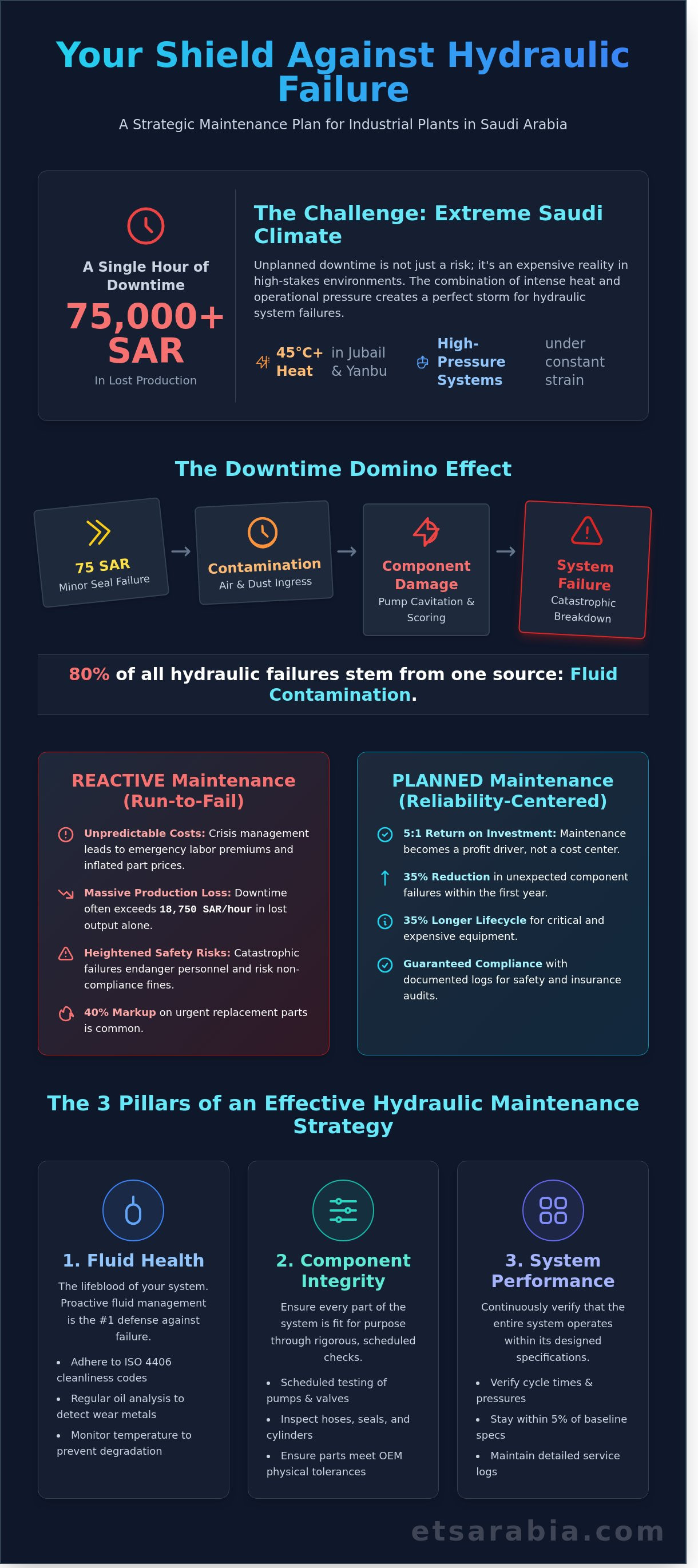
Operating on a run-to-fail basis is the most expensive strategy an industrial facility can adopt. In Saudi Arabia's demanding petrochemical and manufacturing sectors, the cost of unscheduled downtime often exceeds 18,750 ﷼ per hour in lost production alone. This financial drain doesn't include emergency labor premiums or the 40% markup often paid for urgent replacement parts sourced on short notice. Relying on a reactive mindset forces your team into a perpetual state of crisis management. A strategic hydraulic maintenance plan for industrial plants transforms these unpredictable expenses into manageable, planned investments that protect your bottom line.
The shift from viewing maintenance as a cost center to a reliability-centered approach is essential for modern operations. High-value assets like heavy-duty Hydraulic Power Units (HPUs) and custom-engineered cylinders require consistent oversight to maintain peak performance. When you treat maintenance as a strategic priority, you aren't just fixing machines; you're ensuring the continuous flow of your entire production line. This proactive stance safeguards the precision of your hydraulic machinery and extends the service life of expensive components by several years.
The "Downtime Domino Effect"
A single 75 ﷼ seal failure rarely stays a 75 ﷼ problem. It triggers a chain reaction. When a seal fails, it allows air and dust to enter the system, leading to pump cavitation and catastrophic internal scoring. Fluid contamination remains the #1 cause of hydraulic failure, accounting for 80% of all system breakdowns. Moving from reactive to planned maintenance typically delivers a 5:1 return on investment. By implementing a structured hydraulic maintenance plan for industrial plants, facilities can reduce unexpected component failures by 35% within the first year of implementation.
Regulatory and Safety Implications
Safety risks in high-pressure environments are extreme and immediate. A burst hydraulic hose can release fluid at velocities high enough to penetrate human skin, leading to life-altering injuries. In the Kingdom, strict adherence to workplace safety and environmental standards is non-negotiable. Poorly maintained systems are prone to leaks that violate environmental compliance codes and result in heavy fines. Documented maintenance logs are your best defense during insurance audits and safety inspections. They prove a commitment to operational excellence and risk mitigation, ensuring your plant remains compliant with local industrial regulations while protecting your most valuable asset: your workforce.
Core Pillars of an Effective Hydraulic Maintenance Strategy
A hydraulic maintenance plan for industrial plants is a systematic framework designed to prevent unplanned shutdowns through rigorous inspection, fluid control, and scheduled component updates. It isn't just a reaction to leaks; it's a proactive strategy. Reliable performance depends on standardizing your approach using Original Equipment Manufacturer (OEM) guidelines and actual machine hours. In Saudi Arabia's industrial hubs, where ambient temperatures often exceed 45°C, relying solely on generic schedules can lead to premature failure.
The strategy rests on three fundamental pillars:
- Fluid Health: Maintaining chemical stability and cleanliness levels to prevent internal erosion.
- Component Integrity: Ensuring pumps, valves, and cylinders meet physical tolerances through scheduled testing.
- System Performance: Verifying that cycle times and pressures remain within 5% of baseline specifications.
Maintaining detailed technical documentation and service logs is non-negotiable for long-term reliability. These records allow engineers to identify recurring issues and refine maintenance intervals based on actual field data. Accurate logs help facility managers justify the budget for critical spares, potentially saving over 150,000 ﷼ in emergency repair costs and lost production time.
Fluid Management: The Lifeblood of the System
Contaminated oil causes 80% of hydraulic system failures. Industrial plants must adhere to ISO 4406 cleanliness codes, such as 16/14/11, to protect sensitive proportional valves. Regular oil analysis is essential to detect wear metals like iron or copper and identify water ingress before it causes cavitation. Temperature monitoring is equally critical. If fluid temperatures rise above 60°C, the oxidation rate doubles for every 10°C increase, effectively "cooking" the additives. For detailed protocols on managing these variables, consult this guide on Hydraulic System Care & Maintenance.
Component Lifecycle Tracking
Predicting when a part will fail is better than reacting to a burst. Establish a Mean Time Between Failures (MTBF) for critical assets. For example, a high-performance piston pump might have an MTBF of 20,000 operating hours under standard loads. While some facilities use a "visual inspection only" approach for hoses, a safer strategy involves scheduled replacement every 2 to 3 years to prevent high-pressure injection injuries. Tracking seal wear in high-cycle cylinders is also vital; a single failed seal can lead to internal bypass and significant energy loss. If you need assistance establishing these benchmarks, our team provides expert hydraulic auditing services to keep your operations moving forward.
Comparing Maintenance Models: Preventive, Predictive, and Proactive
Establishing a robust hydraulic maintenance plan for industrial plants requires a strategic balance between three distinct methodologies. Each model serves a specific purpose in your operational framework to ensure Expertise You Can Trust. Preventive Maintenance (PM) relies on fixed schedules. You perform tasks like oil sampling or hose inspections regardless of the machine's current state. Predictive Maintenance (PdM) uses real-time data from sensors to catch issues before they escalate. Proactive Maintenance targets the root cause. If a pump fails repeatedly, a proactive approach investigates if the system design itself is the culprit. This logic ensures your systems stay in motion with Reliable Performance Guaranteed.
When to Use Time-Based Preventive Maintenance
PM remains the backbone of industrial reliability because it's simple to implement and manage. Daily visual inspections take less than 15 minutes but identify 72% of external leaks before they cause significant fluid loss. We recommend a calendar-based approach for high-frequency, low-cost tasks. For instance, managing filter changes using pressure differential indicators prevents bypass valves from opening. Replacing a filter at the 80% saturation point protects your system from catastrophic contamination. A standard 1,000-hour interval for hydraulic oil testing ensures your fluid stays within ISO 4406 cleanliness standards, which is vital for facilities in harsh environments like Riyadh or Dammam.
The Rise of Predictive and Proactive Engineering
Modern industrial plants in Saudi Arabia are shifting toward data-driven decisions to optimize downtime. Real-time monitoring of vibration and thermal signatures allows your team to skip unnecessary part replacements. This shift can reduce annual spare parts spend by 19% for a typical manufacturing line. Root cause analysis is where true cost savings occur. Instead of just replacing a blown seal, proactive engineering asks why it failed. In high-heat zones like Jubail, hydraulic fluid often exceeds 65°C, leading to premature seal degradation. Redesigning a faulty cooling circuit or upgrading to high-temp Viton seals can save your facility over 28,000 ﷼ per year in emergency repair costs.
Integrating custom-built Hydraulic Power Units (HPUs) with modern diagnostic ports is a game-changer for a hydraulic maintenance plan for industrial plants. These ports allow for "live" testing without breaking into the circuit, keeping the system closed and clean. To get the best ROI, use this mix:
- Preventive: Daily visual checks and weekly lubrication.
- Predictive: Vibration sensors on critical pumps and thermal imaging on heat exchangers.
- Proactive: Quarterly fluid analysis and redesigning components that show recurring failure patterns.
Choosing the right mix depends on equipment criticality. A primary production press deserves predictive sensors, while a simple hydraulic lift might only need a monthly PM check. This strategic allocation of resources ensures you're not over-maintaining healthy machines while neglecting the ones that drive your revenue.
The Industrial Hydraulic Maintenance Checklist: Daily to Annual Tasks
A robust hydraulic maintenance plan for industrial plants relies on a disciplined schedule. Consistency prevents the 75% of system failures caused by fluid contamination and heat stress. High-stakes environments require more than just reactive fixes; they demand a structured approach to every component from the reservoir to the actuator.
The Daily Walk-Around: Critical Checkpoints
Operators should start every shift with a visual and auditory sweep. Listen for pump noise. Cavitation often sounds like rattling marbles, while aeration creates a high-pitched scream. Both conditions destroy pump internals within hours. Check for "weeping" at fittings and manifold blocks. A leak of just one drop per second results in over 1,500 liters of wasted oil annually. This waste costs upwards of 12,000 ﷼ in fluid replacement alone. Monitor heat exchanger performance and ensure cooling water flow is consistent. If the system temperature exceeds 60°C, oil oxidation doubles for every 10°C increase.
Environmental Stress Factors in Saudi Arabia
Facilities in Dammam and Jubail industrial zones face unique atmospheric challenges. Fine sand and silica dust act like liquid sandpaper if they bypass filtration. We recommend using high-efficiency 3-micron breathers to manage dust ingress. Extreme ambient temperatures, which frequently hit 50°C in the summer, accelerate seal hardening. Standard Nitrile seals often fail 35% faster in the Eastern Province than in temperate climates. Coastal plants must also prioritize corrosion prevention. Salt air leads to pitting on cylinder rods, which eventually shreds internal seals during the stroke. Regular application of protective coatings or using stainless steel rods is a necessity for long-term reliability.
The Annual System Audit
Once a year, your team must perform a deep-dive audit to ensure the system meets its original design parameters. Calibrate all pressure gauges and relief valves. This step is vital for plant safety and prevents over-pressurization. Open the hydraulic reservoir to inspect for sludge or varnish buildup. Varnish acts as an insulator, trapping heat and causing valves to stick. Finally, evaluate the performance of your Danfoss or Rexroth components against their original technical specifications. If a pump's volumetric efficiency has dropped by more than 10%, it's likely time for a professional overhaul to prevent a total production halt.
ETS provides the technical expertise and rapid response times needed to keep your heavy machinery in motion. Contact our expert team to optimize your maintenance schedule and reduce costly downtime.
Implementing Your Plan with ETS: Reliability Guaranteed
Executing a robust hydraulic maintenance plan for industrial plants requires more than just a checklist; it demands a partner who understands the high stakes of Saudi Arabian industrial operations. Emdad Technical Services (ETS) serves as a seamless extension of your internal maintenance department. We provide the technical depth and specialized tools that most plant-side teams lack. By integrating our expertise into your daily operations, you shift from a reactive mindset to a controlled, reliability-centered strategy. Our Dammam-based facility ensures that your plant never waits days for a critical component or expert advice.
We've built our reputation on local technical support that understands the specific environmental challenges of the Eastern Province, such as extreme ambient temperatures and saline air conditions. Our engineers don't just supply parts; they optimize your entire system architecture to ensure peak performance. Unplanned downtime can cost a facility upwards of 50,000 SAR per hour; our rapid response is a financial necessity to protect your bottom line.
On-Site Technical Support and Emergency Repair
The ETS "prompt repair" philosophy is designed to eliminate the 15% to 20% productivity loss typically associated with hydraulic failures. Our engineers assist in developing custom maintenance schedules that align with your specific production cycles and load requirements. When emergencies happen, we provide rapid response services across Dammam and surrounding industrial cities to get you back online. Choosing professional cylinder and pump refurbishment over low-quality generic repairs can extend component life by up to 300%. We use precision testing benches to ensure every repaired unit meets original OEM specifications before it returns to your floor.
A Partner Beyond the Sale
Our commitment to your plant's success extends far beyond a single transaction. We maintain a deep inventory of hoses, fittings, and seals from global leaders like Parker, Rexroth, and Danfoss to ensure immediate replacement. If your legacy equipment is no longer viable, our team specializes in custom HPU fabrication. We replace outdated, unreliable systems with modern, energy-efficient power units tailored to your specific pressure and flow requirements. This proactive approach reduces the risk of catastrophic failure in systems that are 10 years or older. We focus on tangible outcomes, such as reducing costly interruptions and maximizing your plant's total output.
- Guaranteed Supply: Immediate access to genuine parts from Parker, Rexroth, and Danfoss.
- Custom Engineering: Bespoke HPU design to replace legacy systems that are no longer supported.
- Local Expertise: Dammam-based support for 24/7 reliability and fast onsite arrival.
- Life Extension: Professional refurbishment that restores components to "as-new" condition.
Don't wait for a major breakdown to evaluate your system's health. It's time to secure the long-term reliability of your infrastructure with experts who understand the local market. Request a professional hydraulic system audit from ETS today to identify hidden vulnerabilities before they stop your production line.
Secure Your Operational Future with Precision Maintenance
Transitioning from reactive repairs to a proactive strategy isn't just a technical upgrade; it's a vital financial decision for Saudi Arabian facilities. Adopting a comprehensive hydraulic maintenance plan for industrial plants helps operators avoid the high costs of emergency parts sourcing and unplanned labor. A structured checklist ensures every valve and seal receives attention before a failure occurs, potentially extending equipment life by over 5 years. Emdad Technical Services (ETS) supports your reliability goals through our strategic location near Dammam 2nd Industrial City. We combine local agility with global quality as an authorized distributor for Rexroth and Parker. Whether you require precision repair or custom HPU fabrication, our technical team delivers results that protect your bottom line. Don't let avoidable equipment failures drain your SAR budget or stall your production schedule.
Optimize your plant downtime with ETS expert hydraulic services and keep your operations moving forward with confidence.
Frequently Asked Questions
How often should I perform a fluid analysis for my industrial hydraulic system?
You should perform a fluid analysis every 3 to 6 months for most industrial systems. In the harsh environments of Saudi Arabia, we recommend a quarterly schedule to catch contamination early. Regular testing prevents 80% of hydraulic failures by identifying particulates before they damage pumps. This proactive step is a cornerstone of any effective hydraulic maintenance plan for industrial plants.
What are the most common signs of hydraulic system failure in a manufacturing plant?
The most common signs include knocking noises, fluid temperatures exceeding 65°C, and sluggish cycle times. If your system takes 15% longer to complete a cycle than it did last month, you're likely facing internal leakage. You'll often notice foam in the reservoir or scorched fluid odors. These indicators signal that your components are nearing the end of their service life and require immediate professional attention.
Can I use generic seals and hoses for high-pressure industrial applications?
You shouldn't use generic seals for systems operating above 210 bar because they lack the required burst pressure ratings. Generic components often fail 40% faster than certified alternatives in high-heat environments. We provide precision-engineered hoses that meet specific SAE standards to ensure your safety. Investing in quality parts reduces the risk of sudden blowouts that cause expensive unscheduled downtime and costly repairs.
What is the ideal operating temperature for industrial hydraulic fluid?
The ideal operating temperature for most industrial hydraulic fluids is between 45°C and 60°C. When temperatures exceed 82°C, the fluid's oxidation rate doubles for every 10-degree increase. This rapid degradation destroys seal elasticity and leads to 70% of premature pump wear. Maintaining this range ensures your system operates at peak efficiency while protecting expensive internal components from thermal stress and viscosity loss.
How does dust and sand in Saudi Arabia affect my hydraulic maintenance plan?
Fine silica dust in Saudi Arabia acts as an abrasive that can shorten component life by 50% if not managed. Your hydraulic maintenance plan for industrial plants must include high-efficiency 3-micron breathers and more frequent filter changes. We've seen local systems fail in under 1,000 hours when standard breathers are used. Upgrading to desiccant breathers keeps both sand and humidity out of your reservoir.
Should I repair or replace a leaking hydraulic cylinder?
You should repair the cylinder if the cost of refurbishment is less than 60% of the price of a new unit. If the chrome rod is bent more than 0.5mm per meter or the barrel is deeply scored, replacement is the safer choice. A professional reseal and hone can extend life by 2,000 operating hours. This decision often depends on the current lead times for new parts in the Saudi market.
How can I reduce the noise level of my hydraulic pumps?
You can reduce noise by eliminating air leaks in the suction line and ensuring the pump-motor coupling is aligned within 0.05mm. Aeration causes a high-pitched whine, while cavitation sounds like marbles rattling inside the pump. Installing dampening brackets or flexible hoses can also lower decibel levels by 10 to 15 dB. Addressing these issues prevents the vibration that leads to 30% of fitting failures in industrial settings.
What are the benefits of an automatic lubrication system for my plant equipment?
An automatic lubrication system ensures that bearings receive small, precise amounts of grease every 30 minutes while the machine is running. This method reduces grease consumption by 25% and extends bearing life by up to 4 times compared to manual greasing. It's a reliable solution that eliminates the human error responsible for 50% of bearing failures. You'll see a return on investment through reduced labor costs and fewer parts replacements.