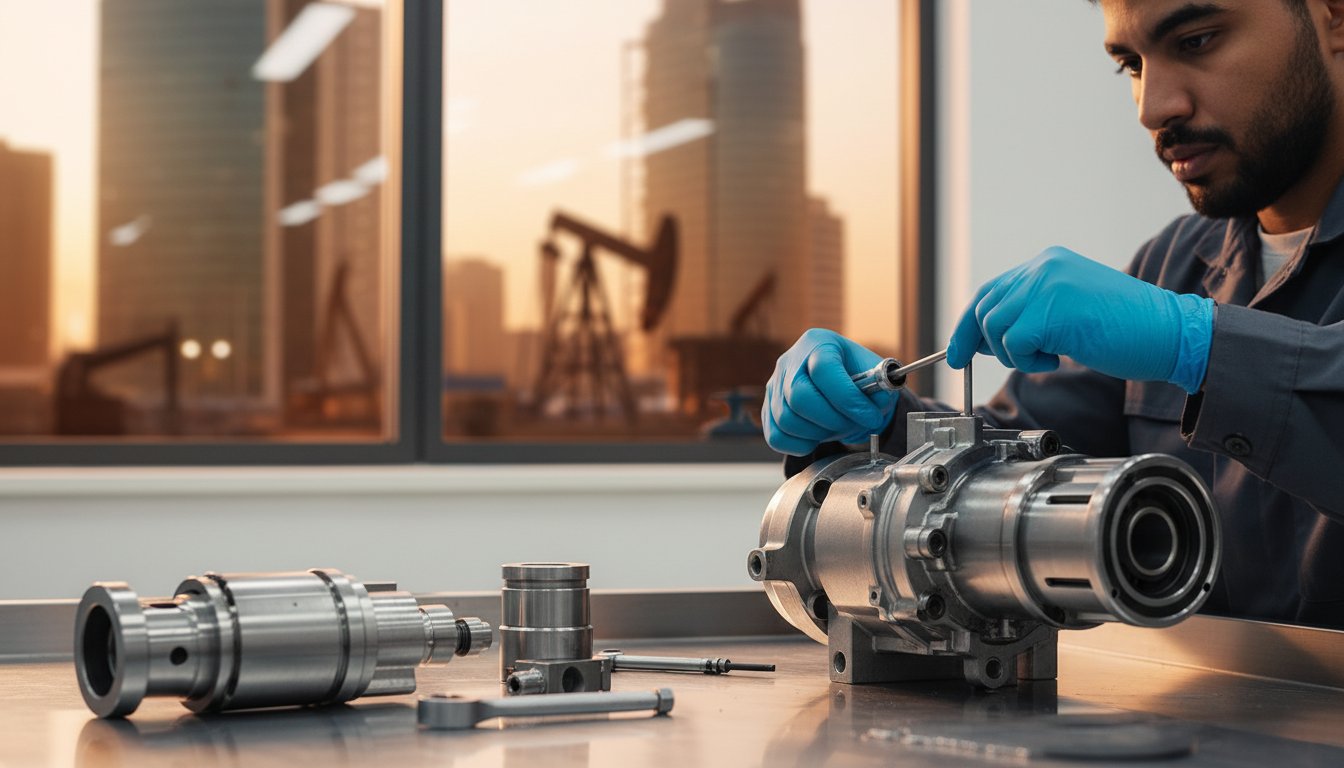
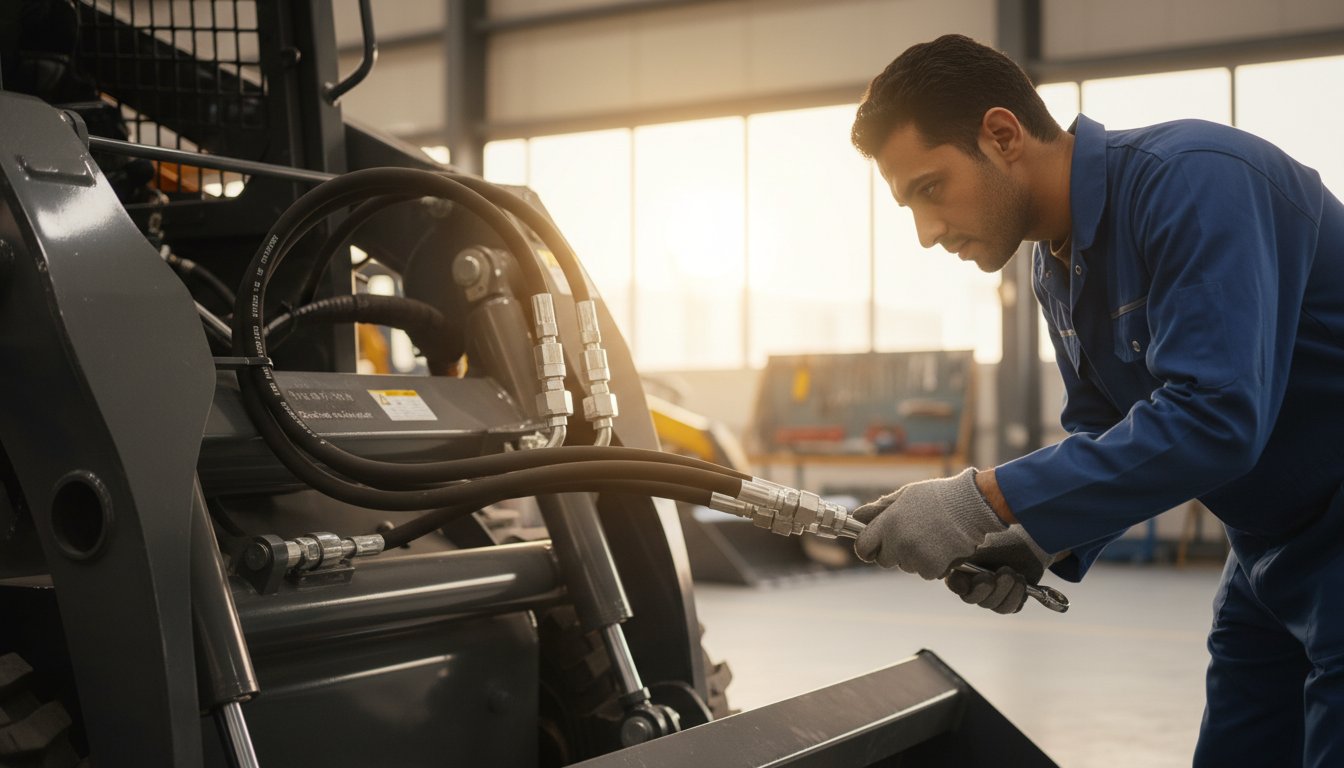
In the demanding environment of Saudi Arabian construction and industrial sites, unexpected equipment downtime is a critical threat to productivity and profitability. A sudden hydraulic failure in your skid loader can halt an entire project, leading to costly delays and significant repair bills. The frustration of seeing a vital piece of machinery sit idle while you search for reliable answers-or worse, a qualified local technician-is a scenario every project manager wants to avoid. This uncertainty not only impacts your current job but also your bottom line.
This complete guide is engineered to provide the solution. We will demystify the complex hydraulic system that powers your skid loader, equipping you with the knowledge to operate it with maximum efficiency. You will learn to confidently identify common problems by their warning signs, preventing minor issues from escalating into major failures. Discover expert-backed maintenance tips designed to extend your equipment's life, maximize uptime, and significantly reduce long-term operating costs. Our goal is to ensure your operations keep moving forward, powered by reliability and expertise.
What is a Skid Loader? The Ultimate Compact Workhorse
A skid loader is a compact, rigid-frame, engine-powered machine renowned for its exceptional power-to-size ratio and maneuverability. Its value proposition is simple yet powerful: delivering immense lifting and pushing capability in confined spaces where larger equipment cannot operate. This versatility is further amplified by a universal mounting system that supports a vast array of attachments, transforming the machine for countless tasks. The core design, as detailed on this comprehensive Skid-steer loader resource page, has made it an indispensable asset across Saudi Arabia’s most demanding industries.
Core Components of a Skid Loader
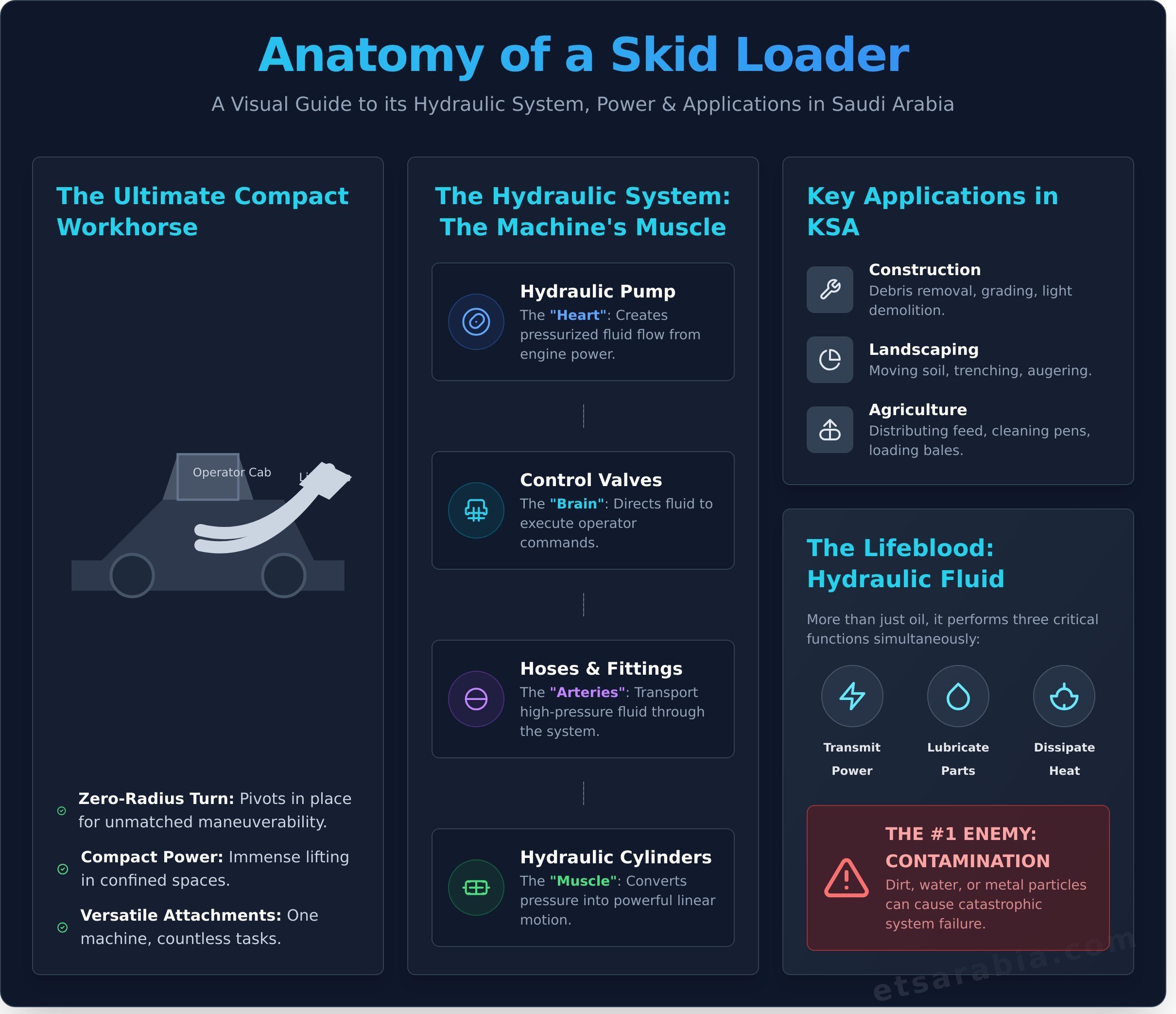
Understanding the essential components is the first step toward effective maintenance. The machine is built around a robust chassis housing a powerful engine and a protective operator cab. Its primary working structure consists of two lift arms, which are powered by the machine's most critical system: the hydraulic system. This system acts as the lifeblood, generating the immense force required to operate the lift arms and power the attachments with precision and reliability.
Understanding Differential 'Skid' Steering
The machine's signature agility comes from its unique 'skid' steering mechanism. Unlike conventional loaders with articulated steering, a skid loader has fixed wheels on each side. To turn, the operator varies the speed of the wheels on one side relative to the other, causing the machine to skid or pivot. This enables an incredible zero-radius turn, allowing the loader to rotate within its own footprint. This capability is essential for optimizing productivity on crowded job sites.
Key Applications in Local Industries
Across the Kingdom of Saudi Arabia, the skid loader proves its worth daily in a variety of critical sectors. Its adaptability ensures that one machine can perform multiple roles, maximizing operational efficiency and reducing the need for excess equipment.
- Construction: On bustling project sites from Riyadh to NEOM, it is used for light demolition, efficient removal of debris, and precise grading and backfilling tasks.
- Landscaping: Essential for both large-scale public works and private developments, it excels at moving soil and materials, trenching for irrigation systems, and augering holes for fencing or planting.
- Agriculture: On farms throughout the Kingdom, it handles daily duties such as distributing feed, cleaning barns and pens, and loading hay bales or other materials, streamlining agricultural operations.
The Heart of the Machine: The Skid Loader Hydraulic System Explained
If the engine provides the power, the hydraulic system delivers the immense strength that defines a skid loader. This system is the muscle, converting engine power into usable force through the simple but powerful principle of pressurized fluid. Understanding its function is critical to maximizing performance and preventing costly operational downtime. A skid loader effectively operates two primary hydraulic circuits: one dedicated to the drive system for movement and steering, and a separate work circuit that powers the lift arms, bucket, and auxiliary attachments. The health of this entire system directly dictates the machine's efficiency, lifting capacity, and overall reliability on any job site in Saudi Arabia.
Key Hydraulic Components and Their Functions
To properly maintain the system, it is essential to understand its core parts. Each component plays a specific, vital role in delivering reliable power:
- The Hydraulic Pump: Driven by the engine, this is the heart of the system. It creates a continuous flow of hydraulic fluid, generating the pressure needed to perform work.
- Hydraulic Cylinders: These are the actuators that convert hydraulic pressure into powerful linear motion, responsible for raising and lowering the lift arms and tilting the bucket.
- Hoses and Fittings: These are the vital arteries and veins, transporting high-pressure fluid between the pump, valves, and cylinders. Their integrity is non-negotiable.
- Control Valves: Directed by the operator's controls, these valves act as the system's brain, precisely routing fluid to the correct cylinders or attachments to execute a command.
How Hydraulics Power Lift Arms and Attachments
When an operator moves a joystick or foot pedal, it activates a specific control valve. This valve opens a pathway, directing pressurized fluid from the pump into a hydraulic cylinder. As the cylinder fills, it extends a piston rod, forcing the lift arms to raise or the bucket to tilt. The immense force generated by this process is what allows a compact machine to lift heavy loads. This power demands respect and proper training; following established Skid Steer Loader Safety protocols is crucial for all operators. Similarly, the auxiliary hydraulic circuit uses the same principle to power attachments like breakers, augers, or trenchers, making the skid loader an incredibly versatile tool.
The Critical Role of Hydraulic Fluid
Hydraulic fluid is far more than just oil; it is the lifeblood of the system. It serves three critical functions simultaneously: transmitting power, lubricating moving components to reduce wear, and dissipating heat to prevent overheating. Using the correct fluid, typically specified by an ISO viscosity grade, is essential for system protection. However, the system's greatest enemy is contamination. Even microscopic particles of dirt, water, or metal shavings can damage precision-machined surfaces within pumps and valves, leading to reduced performance and catastrophic failure.
Common Skid Loader Hydraulic Problems & Warning Signs
The hydraulic system is the heart of your skid loader, powering its lift and tilt functions. Proactively identifying warning signs is the most effective strategy to prevent catastrophic failures, which inevitably lead to significant downtime and repair costs that can run into thousands of Saudi Riyals. An observant operator is your first line of defense in maintaining peak operational efficiency. Ignoring these symptoms will only result in more extensive damage and longer, more costly interruptions.
Symptom 1: Slow or Weak Hydraulic Performance
A noticeable decrease in the speed or lifting power of your machine is a primary indicator of a hydraulic issue. This sluggishness can often be traced back to several root causes. Before assuming a major component failure, perform these initial checks:
- Low Hydraulic Fluid: Check the system's sight glass or dipstick. The fluid level should be within the manufacturer's recommended range.
- Contaminated Fluid or Clogged Filters: Inspect the fluid's condition. If it appears milky (indicating water contamination) or has a burnt smell, it requires immediate replacement along with the filters.
- Air in the System: If the machine’s movements are jerky or erratic, it often signals aeration. This requires bleeding the system to remove trapped air.
Symptom 2: Visible Hydraulic Fluid Leaks
Never underestimate a hydraulic fluid leak, regardless of its size. Even a small drip signifies a breach in a high-pressure system that will only worsen over time. Common failure points include worn-out seals around cylinders, cracked or abraded hoses, and loose fittings. These leaks not only compromise the performance of your skid loader but also create serious safety and environmental hazards on the job site. A prompt inspection and repair are essential to ensure a safe working environment and prevent component failure from fluid starvation.
Symptom 3: System Overheating
Operating a hydraulic system at excessively high temperatures is a guaranteed path to premature component failure. Overheating rapidly degrades the hydraulic fluid, diminishing its lubricating properties and causing irreparable damage to seals, hoses, and even pumps. Key causes include operating with low fluid levels, a dirty or obstructed oil cooler, or consistently pushing the machine beyond its rated load capacity. In the extreme heat of regions like Dammam, it is critical to ensure the oil cooler fins are kept clean of dust and debris and to consider work-cycle management during the hottest parts of the day to prevent thermal breakdown.
Preventive Maintenance for Peak Hydraulic Performance
The hydraulic system is the heart of your skid loader, powering every lift, push, and turn. Proactive, preventive maintenance is not an expense; it is the single best investment you can make to reduce costly, unscheduled downtime. A disciplined approach to hydraulic care ensures your equipment operates at maximum efficiency, safeguarding your productivity and profitability. A well-maintained machine is a reliable and profitable machine.
Daily Pre-Operation Checks
Before starting any job, your operator should perform a quick but thorough walk-around inspection. This simple routine can catch minor issues before they escalate into major failures. Focus on these key areas:
- Visual Leak Inspection: Carefully check for any signs of fluid leaks around hydraulic hoses, fittings, and cylinders. A small drip can indicate a failing seal or loose connection that requires immediate attention.
- Hydraulic Fluid Level: Verify the hydraulic fluid level in the reservoir is within the manufacturer's recommended range. Low fluid levels can lead to pump cavitation and overheating, causing severe damage.
- Oil Cooler Cleanliness: Ensure the hydraulic oil cooler is clean and free of dirt, mud, or debris. A blocked cooler cannot dissipate heat effectively, leading to oil degradation and component failure.
Regular Service Intervals
Adhering to a strict service schedule is critical for the longevity of your skid loader's hydraulic system. While your owner's manual provides the definitive schedule, most manufacturers recommend changing hydraulic fluid and filters every 500 to 1,000 operating hours. For operations in demanding environments like those found across Saudi Arabia, consider more frequent service.
Taking periodic hydraulic fluid samples for professional analysis can provide invaluable insight into the health of your system, detecting contaminants and wear particles long before a failure occurs. Regularly checking and tightening fittings is another crucial step to prevent leaks and maintain system pressure.
Hose and Seal Inspection
Hydraulic hoses and seals are wear items that require vigilant inspection. Look for signs of aging and potential failure, such as cracks, blistering, abrasions, or brittleness on the hose covers. Any hose showing these symptoms is a liability.
Replacing a hose proactively is a controlled, low-cost procedure compared to the catastrophic failure of a hose under load, which results in significant downtime, expensive fluid loss, and potential safety hazards. Don't wait for a failure to react. Need high-quality replacement parts to ensure reliable performance? Explore our hydraulic components.
When to Call for Expert Hydraulic Repair in Saudi Arabia
While daily checks and routine fluid changes are essential for your skid loader's health, it is critical to recognize the line between standard upkeep and complex hydraulic repair. The high-pressure systems in modern machinery demand specialized knowledge and equipment. Attempting advanced DIY repairs without proper training can lead to catastrophic component failure, costly collateral damage, and severe safety hazards, including high-pressure fluid injection injuries. Protecting your investment and your operators means knowing when to trust a professional.
Signs You Need a Professional Technician
If you observe any of the following warning signs, it is time to halt operations and contact a specialist. Ignoring these symptoms can turn a manageable repair into a complete system overhaul.
- Persistent Performance Loss: Your machine feels weak, slow, or unresponsive even after you have performed basic maintenance like changing filters and fluid.
- Major Component Failure: Obvious leaks, cracks, or complete failure of critical parts such as the main hydraulic pump, drive motors, or the main control valve.
- Unusual Noises: A distinct whining, grinding, or knocking sound from the hydraulic pump area often indicates cavitation or internal mechanical failure that requires immediate attention.
The ETS Advantage: Specialized Skid Loader Hydraulic Service
At Emdad Technical Services (ETS), we provide expert solutions that go beyond simple parts replacement. Our approach is designed to restore your equipment to peak operational efficiency with minimal disruption.
- Deep Expertise: Our technicians are specialists in industrial hydraulics, possessing the in-depth knowledge required to service complex systems accurately.
- Advanced Diagnostics: We utilize state-of-the-art diagnostic tools to pinpoint the root cause of a failure, saving you time and money by ensuring we fix the right problem the first time.
- Quality Parts: We maintain a comprehensive inventory of genuine and high-quality aftermarket parts, enabling fast turnarounds and reliable, long-lasting repairs.
Emergency Hydraulic Support in Dammam
We understand that in Saudi Arabia's demanding industrial environment, equipment downtime directly translates to lost revenue and project delays. That is why our team is structured to provide prompt and efficient repair services across Dammam and the Eastern Province. We are committed to getting your essential machinery back to work quickly and safely. Facing a hydraulic issue? Schedule an expert consultation with ETS today.
Maximize Your Skid Loader's Performance with Expert Hydraulic Care
Understanding your skid loader's hydraulic system is fundamental to leveraging its full power on the job site. As we've covered, proactive maintenance and vigilance for warning signs like fluid leaks or slow operation are not just best practices-they are essential strategies to prevent costly operational downtime and extend the life of your valuable machinery.
When preventive measures are not enough and you require expert intervention, your operations in Saudi Arabia cannot afford to wait. For any complex hydraulic issue with your skid loader, trust the specialists at Emdad Technical Services (ETS). We provide prompt service for businesses in Dammam and across the Eastern Province, utilizing specialized hydraulic system diagnostics and an extensive inventory of high-quality hydraulic hoses, pumps, and seals to resolve problems efficiently.
For expert skid loader hydraulic repair and parts in Saudi Arabia, trust ETS. Contact us today. Keep your fleet in peak condition and ensure your projects always stay on schedule.
Frequently Asked Questions About Skid Loader Maintenance
How often should I change the hydraulic fluid in my skid loader?
For optimal performance and to prevent premature wear, we recommend changing the hydraulic fluid in your skid loader every 1,000 operating hours or annually, whichever comes first. However, the manufacturer's service manual is the definitive guide. Operating in severe conditions, such as the high-dust environments in Saudi Arabia, may necessitate more frequent changes. Regular fluid analysis can also help determine the ideal change interval for your specific usage, ensuring system reliability and minimizing downtime.
What type of hydraulic oil is best for a skid loader in a hot climate like Saudi Arabia?
In the extreme heat of Saudi Arabia, it is crucial to use a hydraulic oil with a high viscosity index (HVI). We recommend multi-grade hydraulic fluids, such as an ISO VG 46 or ISO VG 68, as they maintain stable viscosity across a wide temperature range. This stability ensures proper lubrication and efficient power transmission even when ambient temperatures are high, protecting your skid loader's components from excessive wear and potential overheating.
Can a small hydraulic leak cause major damage?
Yes, absolutely. A seemingly minor hydraulic leak is a critical issue that demands immediate attention. It leads to fluid loss, which can cause the system to overheat and the pump to cavitate, resulting in catastrophic failure. Furthermore, a leak point allows contaminants like sand and dust to enter the system. This contamination is the leading cause of premature wear on pumps, cylinders, and valves, leading to costly repairs and significant operational downtime.
What is the most common cause of hydraulic pump failure in a skid steer?
The single most common cause of hydraulic pump failure is fluid contamination. Particulates such as dirt, metal shavings, and water in the hydraulic oil act as an abrasive, accelerating wear on the pump's precise internal components. This leads to reduced efficiency, internal leakage, and eventual seizure. Ensuring fluid cleanliness through regular filter changes and using proper fluid handling procedures is the most effective strategy to guarantee the longevity and reliability of your skid loader's hydraulic pump.
Is it more cost-effective to repair or replace a hydraulic cylinder?
The decision to repair or replace a hydraulic cylinder depends on the extent of the damage. For minor issues like leaking seals or a slightly bent rod, a repair is often the most cost-effective solution, potentially costing 1,000 SAR to 2,500 SAR. However, if the cylinder barrel is cracked, scored, or the rod is severely damaged, replacement is the more reliable long-term choice. A new cylinder can cost upwards of 6,000 SAR, but it guarantees performance and avoids future downtime associated with a compromised repair.
How can I tell if my skid loader's hydraulic system is overheating?
An overheating hydraulic system will present several clear warning signs. You will likely notice a significant loss of power and sluggish hydraulic functions. Listen for a high-pitched whining sound from the pump, which indicates it is struggling. A visual or sensory check can also be revealing; the hydraulic fluid may appear dark or have a burnt smell, and the exterior of the reservoir will be excessively hot to the touch. Addressing these symptoms promptly is essential to prevent permanent component damage.