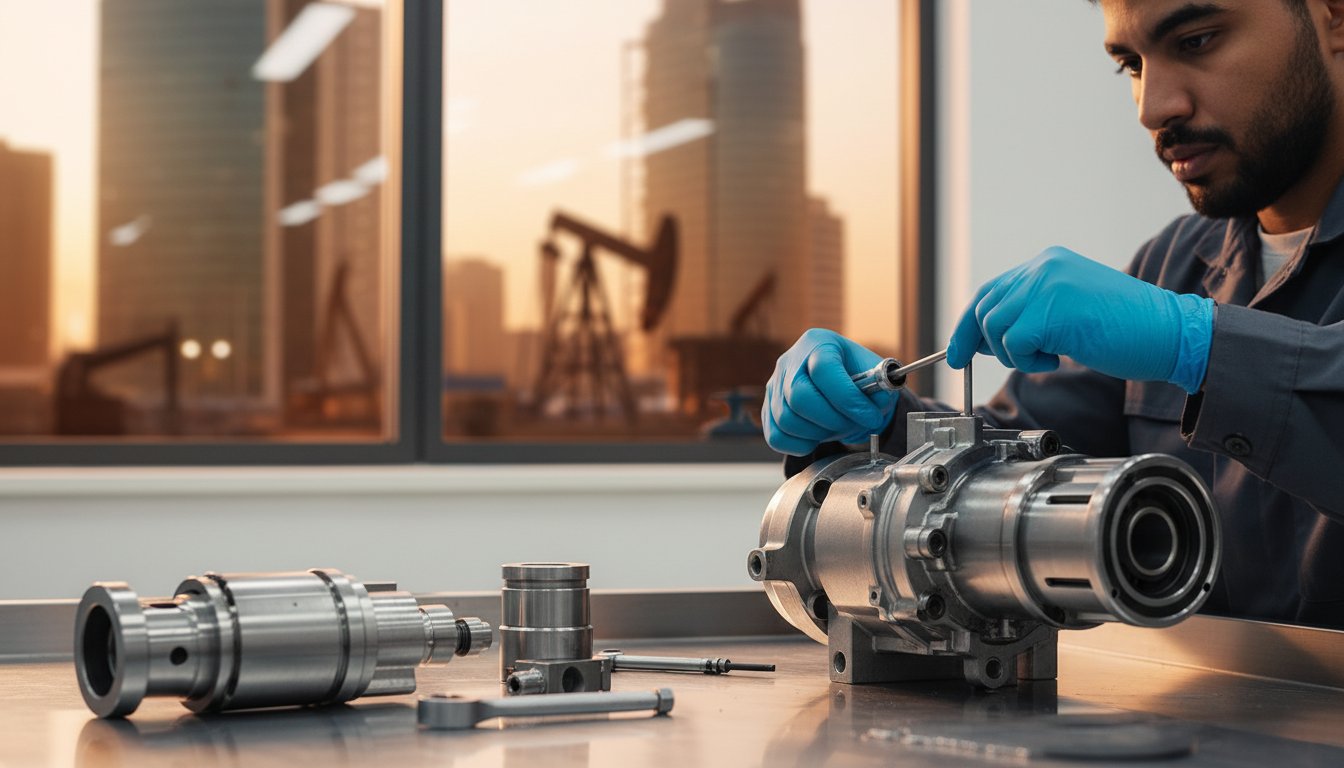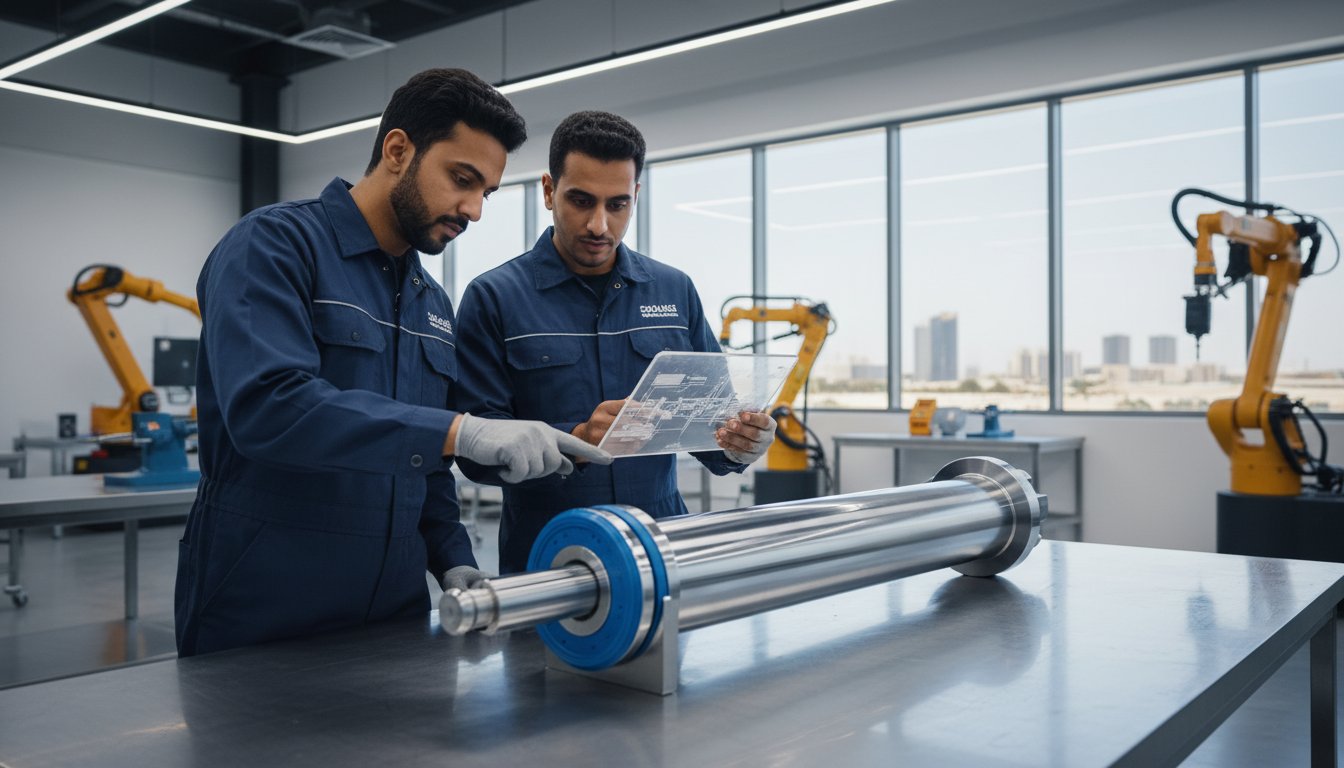
A project lead in Dammam recently watched a 15,000 SAR contract margin evaporate because a single hydraulic seal failed under the 49°C midday sun. This wasn't just a minor mechanical glitch; it was a preventable failure that stalled an entire construction crew for six hours. You already know that in the harsh industrial environments of Saudi Arabia, consistent skid loader hydraulic maintenance is the only thing standing between a productive shift and a bankrupting repair bill. Fine sand and extreme heat are relentless enemies, but they don't have to be terminal for your fleet's performance.
We've developed this professional guide to help you master the essential steps required for peak machine health. You'll gain the expertise to implement a rigorous inspection routine that guarantees reliable performance and significantly extends the lifespan of your expensive pumps and cylinders. We'll walk through the specific fluid standards, filtration cycles, and cooling system audits that keep your operations moving forward while reducing long-term repair costs by up to 30% annually.
Key Takeaways
- Understand how proactive care protects the "heart and muscles" of your machinery to prevent expensive operational interruptions in Saudi Arabia’s demanding industrial climate.
- Learn to perform daily visual inspections that catch "weeping" seals and hose dampness before they lead to catastrophic system failure.
- Master the correct procedure for fluid changes and discover why filter replacement is the most vital step in effective skid loader hydraulic maintenance.
- Identify critical warning signs like sluggish arm response or pump "whining" to diagnose issues early and minimize your total repair costs.
- Determine when to transition from DIY checks to professional services like hydraulic cylinder honing at ETS Dammam to ensure long-term reliability and safety.
The Critical Role of Hydraulic Maintenance for Skid Steer Loaders
Your skid loader's hydraulic system acts as both the heart and the muscles of the machine. It converts engine power into the fluid force required to lift, tilt, and drive. Without a rigorous approach to skid loader hydraulic maintenance, these high-pressure systems quickly degrade. Proactive care is the only reliable way to reduce operational downtime and ensure your equipment remains an asset rather than a liability on the job site.
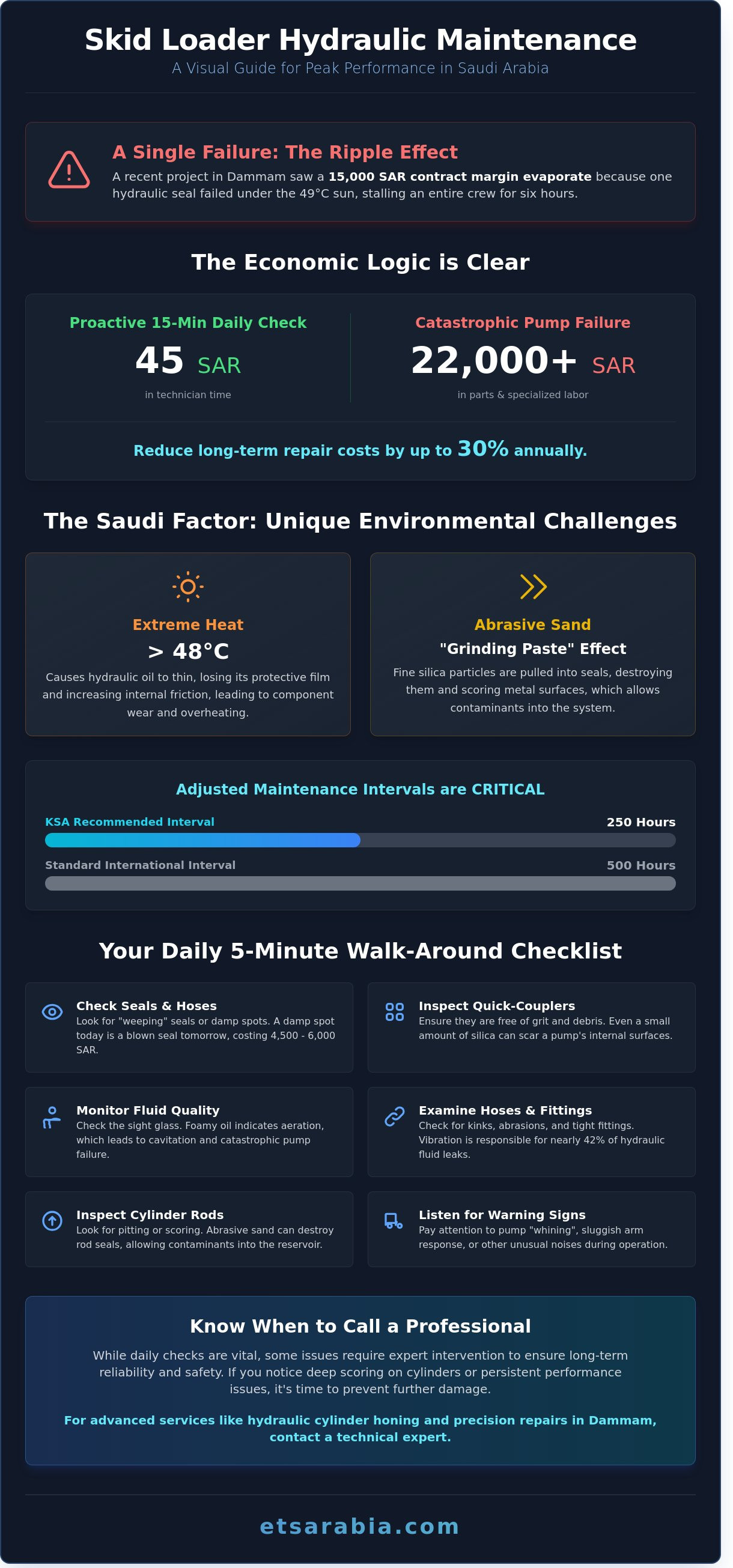
The economic logic is clear and compelling. A daily 15-minute visual inspection and fluid check costs approximately 45 ﷼ in technician time. Contrast this with a catastrophic hydraulic pump failure, which can easily cost upwards of 22,000 ﷼ in parts and specialized labor. ETS supports the Saudi industrial sector by providing the technical expertise and high-quality components required to prevent these financial shocks. We focus on keeping your operations moving through precision-engineered solutions and prompt support.
Understanding Your Skid Steer Hydraulic System
A standard skid loader relies on a sophisticated closed-loop system. This network includes high-pressure pumps, control valves, and heavy-duty cylinders that must work in perfect synchronization. While the drive system handles movement, the auxiliary hydraulic circuit is what powers high-demand attachments like breakers or trenchers. This skid-steer loader overview highlights how these components must maintain absolute pressure integrity. If a seal leaks or a valve loses its seat, your lifting capacity drops instantly, rendering the machine ineffective for heavy-duty tasks.
The Saudi Factor: Heat and Sand Challenges
Operating machinery in Saudi Arabia presents unique environmental hurdles that demand specialized attention. In regions like Dammam or Jubail, ambient temperatures frequently exceed 48°C during summer months. This extreme heat significantly affects hydraulic oil viscosity, causing it to thin and lose its protective film. When oil thins, internal friction increases, leading to rapid component wear and potential system overheating.
The abrasive nature of desert sand adds another layer of risk to your equipment. Fine silica particles settle on hydraulic cylinder rods and are pulled into the seals during every stroke. This creates a "grinding paste" effect that destroys seals and scores metal surfaces. Because of these aggressive factors, standard international maintenance intervals are often insufficient for KSA. We recommend skid loader hydraulic maintenance checks at 250-hour intervals rather than the 500-hour cycle used in milder climates to guarantee reliable performance and long-term durability.
Daily Skid Loader Hydraulic Inspection Checklist
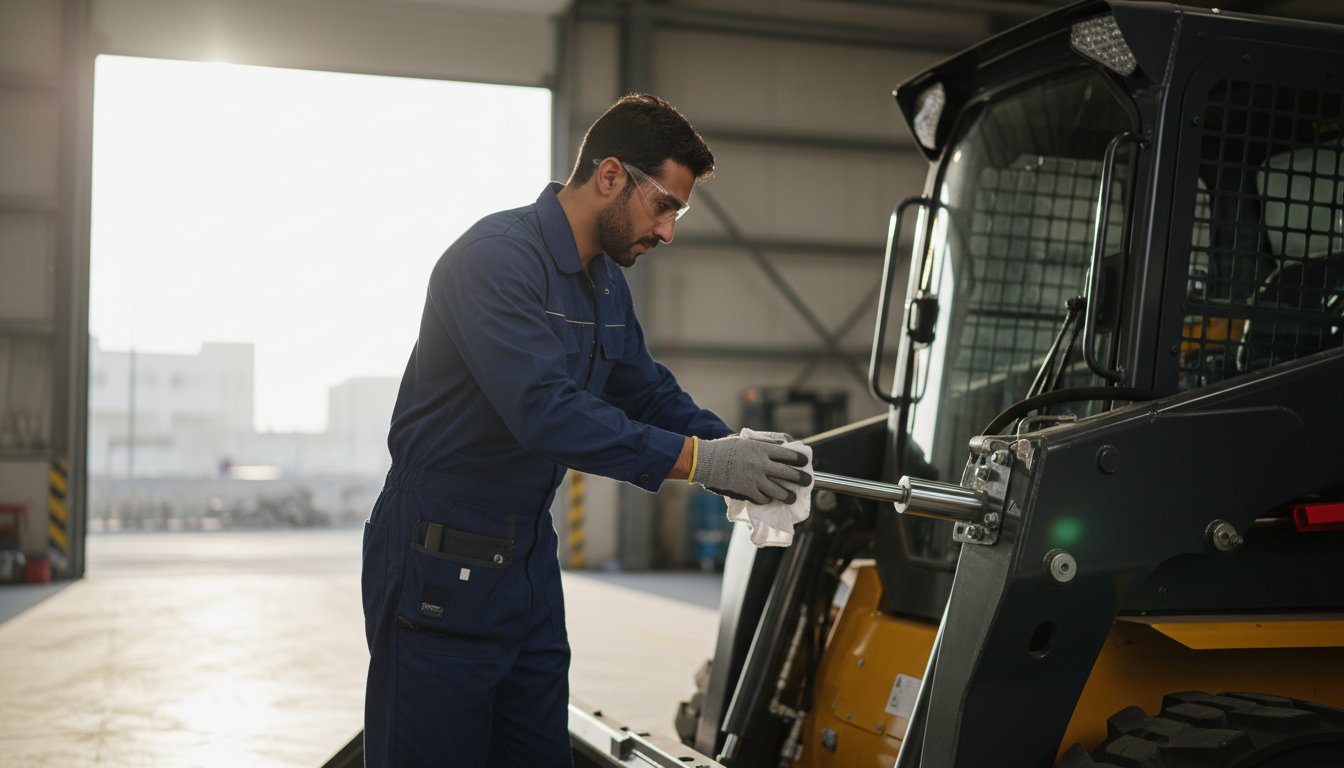
Daily skid loader hydraulic maintenance begins with a disciplined five-minute walk-around before the engine ever turns over. You must focus on high-stress points where the loader arms connect to the chassis. Look for "weeping" seals or damp spots on hoses. A damp spot today is a blown seal tomorrow, often resulting in 4,500 SAR to 6,000 SAR in lost productivity and emergency repair costs. Inspect quick-couplers for grit and debris. In the dusty environments of Riyadh or Dammam, even a small amount of silica can scar a pump's internal surfaces. This hydraulic system maintenance guide highlights how cleanliness at these connection points preserves the entire circuit's integrity. Don't ignore aeration in the sight glass. If the oil looks foamy, air is entering the system, which leads to cavitation and catastrophic pump failure.
Visual Inspection: Hoses, Fittings, and Cylinders
Check every hose for kinks or deep abrasions that expose the wire braiding. A hose that's rubbed thin against the machine frame is a high-pressure safety hazard. Ensure all fittings are tight and show no signs of movement. Vibration is responsible for nearly 42% of hydraulic fluid leaks in heavy construction equipment. You should also inspect cylinder rods for pitting or scoring. In Saudi Arabia, fine wind-blown sand acts like sandpaper on chrome plating. This abrasive action eventually destroys the rod seals and allows contaminants to enter the reservoir. If you notice any scoring, it's time to contact a technical expert to prevent further damage to your hydraulic circuit.
Fluid Level and Quality Monitoring
Checking fluid levels requires a specific configuration to be accurate. Always park the machine on level ground with the loader arms fully lowered and the bucket flat on the pavement. This position ensures the maximum amount of fluid returns to the reservoir for an honest reading. Look for "milky" oil, which signals water contamination, or dark oil with a pungent, burnt odor. Hydraulic fluid oxidation is a chemical breakdown of the oil's molecular structure caused primarily by excessive operating temperatures. When oxidation occurs, the fluid loses its lubricating properties and begins to form sludge. Monitoring these signs daily is the most effective way to perform proactive skid loader hydraulic maintenance and avoid the 15,000 SAR price tag of a total system flush and pump replacement.
The Essential Guide to Hydraulic Fluid Change and Filtration
Effective skid loader hydraulic maintenance requires more than just topping off reservoirs. It's a precise process that directly impacts your machine's uptime. Start by running the engine for 15 minutes to reach operating temperature, which ensures contaminants are suspended in the fluid rather than settled at the bottom. Once warm, park on level ground and relieve all system pressure before draining. For a standard mid-sized loader, expect to drain approximately 40 to 60 liters of fluid. Using lint-free cloths and cleaning all port areas before opening them prevents the introduction of silica dust, a common culprit for pump scoring in Saudi construction sites. For a deeper dive into system longevity, consult this skid steer hydraulic system maintenance guide to ensure your machine stays operational.
Filters are your primary defense against catastrophic failure. While oil provides lubrication, the filter captures 99% of wear-inducing particles. In the high-dust environments of Riyadh and the Eastern Province, filters often reach capacity long before the oil loses its chemical properties. Always dispose of used fluids according to Saudi Investment Recycling Company (SIRC) standards. Dumping oil in industrial zones is prohibited and carries heavy fines; instead, use authorized collection points in Modon industrial cities to ensure environmental compliance.
When to Perform a Full Hydraulic Fluid Change
Manufacturers typically recommend fluid changes every 1,000 operating hours. However, in the 45°C heat of a Saudi summer, thermal breakdown occurs faster. You should reduce this interval to 750 hours if the machine operates under heavy loads constantly. Watch for darkening fluid or a distinct burnt odor. Implementing a quarterly oil analysis program can extend component life by 30% because it identifies microscopic brass or steel shavings before a pump fails. This proactive approach is the hallmark of professional skid loader hydraulic maintenance.
Selecting High-Performance Filters and Parts
Micron ratings define your system's health. Most modern skid steers require 10-micron filtration on the return line to protect sensitive valves. Suction filters are coarser, designed to stop large debris from entering the pump, while return line filters catch wear particles from the cylinders. Don't settle for generic alternatives that may collapse under pressure. Sourcing genuine Parker or Rexroth components from ETS guarantees that your filtration meets the exact flow requirements of your hydraulic circuit. These precision parts reduce backpressure and help maintain lower operating temperatures during peak shifts.
Troubleshooting Common Skid Steer Hydraulic Issues
Sluggish hydraulic response in the lift arms often signals a clogged suction screen or a failing charge pump. If your machine's cycle times increase by 20% or more, check the fluid level and filter condition immediately. A high-pitched whining noise usually indicates aeration, while a gravel-like growling points to cavitation. These sounds are critical early warnings that help you avoid a 15,000 ﷼ pump replacement. When attachments lose power under heavy load, it's typically a sign that the relief valve is bypassing fluid too early or the pump can no longer maintain flow at high pressure.
Identifying Leaks and Pressure Drops
Effective skid loader hydraulic maintenance requires a calibrated pressure gauge to test the auxiliary circuit. If the reading falls 15% below the manufacturer’s 3,000 PSI (207 bar) specification, you likely have an internal bypass in the control valve or a worn cylinder seal. Differentiating between a hose leak and a valve block failure is vital; wetness around a fitting usually requires a simple O-ring swap, while heat localized at the valve bank suggests an internal leak. Never use your hand to find a leak. A 2,000 PSI pinhole leak can penetrate skin instantly, causing a surgical emergency. Use a piece of cardboard to safely locate the source of the spray.
Recognizing Contamination and Cavitation
Particulate contamination accounts for 75% of hydraulic component failures in Saudi construction sites. Fine desert sand acts like liquid sandpaper, scoring the precision-ground surfaces of directional control valves and causing "spool drift" where arms slowly lower on their own. Air entering the system through a loose intake fitting causes cavitation, which destroys components from the inside out. Cavitation produces a distinctive metallic rattling sound and physically erodes metal by creating microscopic implosions that pit the pump’s internal surfaces. Regular skid loader hydraulic maintenance prevents these air pockets from compromising your system's integrity.
Expert diagnostic tools and rapid repairs help you avoid extended downtime on the job site. Schedule a professional hydraulic system inspection with ETS to ensure your equipment remains reliable under the toughest conditions.
Professional Hydraulic Support: When to Call ETS Dammam
Basic skid loader hydraulic maintenance covers your daily inspections, but complex component failures demand industrial-grade intervention. When a hydraulic pump loses volumetric efficiency or a drive motor shows internal bypass, simple fluid changes won't solve the structural problem. ETS Dammam provides the technical depth needed for high-stakes repairs. Our facility in Dammam 2nd Industrial City is equipped to handle the most demanding overhauls, ensuring your equipment returns to the field with factory-level performance.
Operating in the Eastern Province means dealing with extreme ambient temperatures that often exceed 45°C. These conditions degrade hydraulic components faster than standard service intervals suggest. Partnering with a technical service provider like ETS minimizes long-term risk by identifying wear patterns before they lead to catastrophic failure. We don't just fix parts; we provide a reliability framework that protects your heavy machinery investment and ensures operational continuity.
Expert Repair for Pumps, Valves, and Cylinders
The ETS workshop features specialized turnery and precision fabrication units for custom hydraulic parts. If a cylinder barrel is scored, our honing services restore the internal surface to exact tolerances, saving you the 8,000 ﷼ to 15,000 ﷼ cost of a total replacement. Every major overhaul concludes with rigorous testing and calibration. This process is central to our commitment to "Optimizing Downtime" for KSA contractors, where every hour of lost productivity impacts the project schedule.
Sourcing Quality Hydraulic Hoses and Seals
Reliability depends on the quality of your connections. We provide custom hose assembly services at our Dammam facility, using high-pressure fittings designed for the rigors of Saudi industrial sites. Our inventory includes a massive selection of seals, chrome shafts, and honed tubes to ensure rapid turnaround times. Stop waiting weeks for international shipping. Get expert hydraulic repair services from ETS today and keep your fleet moving. We bridge the gap between routine skid loader hydraulic maintenance and professional engineering support.
Secure Your Operational Efficiency in Dammam
Consistent skid loader hydraulic maintenance is the primary factor that separates a productive shift from a 25,000 SAR emergency repair bill. By implementing a 10 point daily inspection and adhering to strict 500 hour fluid change intervals, you'll eliminate up to 80% of common hydraulic failures before they start. While daily checks are manageable for your crew, high pressure systems using Rexroth or Parker components require technical precision to maintain peak performance. Our facility in Dammam 2nd Industrial City is equipped to handle these complex demands with speed and accuracy. We offer both urgent mobile repairs and scheduled service plans to fit your project timelines. It's much more cost effective to invest in a 1,800 SAR professional service now than to face weeks of lost productivity later. Trust our engineers to provide the reliable solutions your fleet deserves. Minimize your downtime-contact ETS for professional skid loader hydraulic repairs. We're ready to help you keep your operations moving forward with expert support you can trust.
Frequently Asked Questions
How often should I change the hydraulic fluid in my skid loader?
You should change the hydraulic fluid in your skid loader every 1,000 operating hours or once a year. Following a strict skid loader hydraulic maintenance schedule prevents the buildup of contaminants that damage internal components. We've found that skipping this interval increases the risk of pump failure by 40% in harsh desert environments. Regular checks ensure your system remains pressurized and ready for high-intensity work.
What is the best type of hydraulic oil for use in Saudi Arabia?
ISO VG 68 is the most reliable hydraulic oil for the Saudi Arabian climate. Since summer temperatures in Dammam and Riyadh frequently exceed 45°C, you need a high-viscosity index oil that won't thin out under extreme heat. This choice ensures your machinery maintains the 2,500 PSI pressure required for heavy lifting without losing efficiency. It's the standard for 90% of local industrial fleets.
Why is my skid steer hydraulic pump making a loud noise?
A loud whining or banging noise usually indicates cavitation or aeration in the pump. Cavitation occurs when the pump doesn't get enough oil, often because of a blocked suction strainer or a cold start. This issue can destroy a pump in less than 50 operating hours if you don't address the air leak or restriction immediately. Noise levels above 85 decibels are a clear warning sign of internal damage.
Can I mix different brands of hydraulic fluid?
You shouldn't mix different brands of hydraulic fluid because their chemical additives might be incompatible. Even if the viscosity matches, mixing brands can lead to foaming or the formation of sludge that blocks 10-micron filters. Stick to one brand to ensure the fluid maintains its protective properties for the full 1,000-hour service life. Incompatible fluids often lead to a 15% drop in overall system efficiency.
How do I know if my hydraulic cylinder needs repair or replacement?
You'll know a hydraulic cylinder needs repair if the rod shows visible scoring or if the loader arms drift more than 5cm over 10 minutes while parked. External oil leaks at the gland seal are also a clear sign of failure. Replacing a seal kit typically costs between 400 SAR and 900 SAR, which is much cheaper than a full cylinder replacement. Don't wait for total failure to act on these signs.
What are the symptoms of a clogged hydraulic filter?
The most common symptoms of a clogged filter include sluggish hydraulic response and overheating. When a filter reaches 80% capacity, the bypass valve often opens to prevent the filter from bursting, allowing dirty oil to circulate through your valves. This contamination causes 75% of all hydraulic system failures in heavy equipment. We recommend checking the pressure gauge daily to catch these issues before they cause downtime.
Does ETS provide on-site hydraulic hose repair in Dammam?
Yes, ETS provides 24/7 on-site hydraulic hose repair services across Dammam and the Eastern Province. Our mobile workshops carry a full range of hoses and fittings to ensure we resolve your issues in under 90 minutes. We focus on minimizing your downtime so your project stays on track and avoids costly delays. Our technicians are trained to handle high-pressure systems safely and efficiently at your location.
What happens if I use the wrong viscosity hydraulic oil?
Using the wrong viscosity oil leads to accelerated wear and increased power consumption. If the oil's too thin, it won't provide a sufficient lubricant film, causing metal-on-metal contact in the pump. Conversely, oil that's too thick increases internal friction, raising operating temperatures by as much as 15°C and reducing overall fuel efficiency. This mistake can shorten the lifespan of your hydraulic components by 30% over six months.