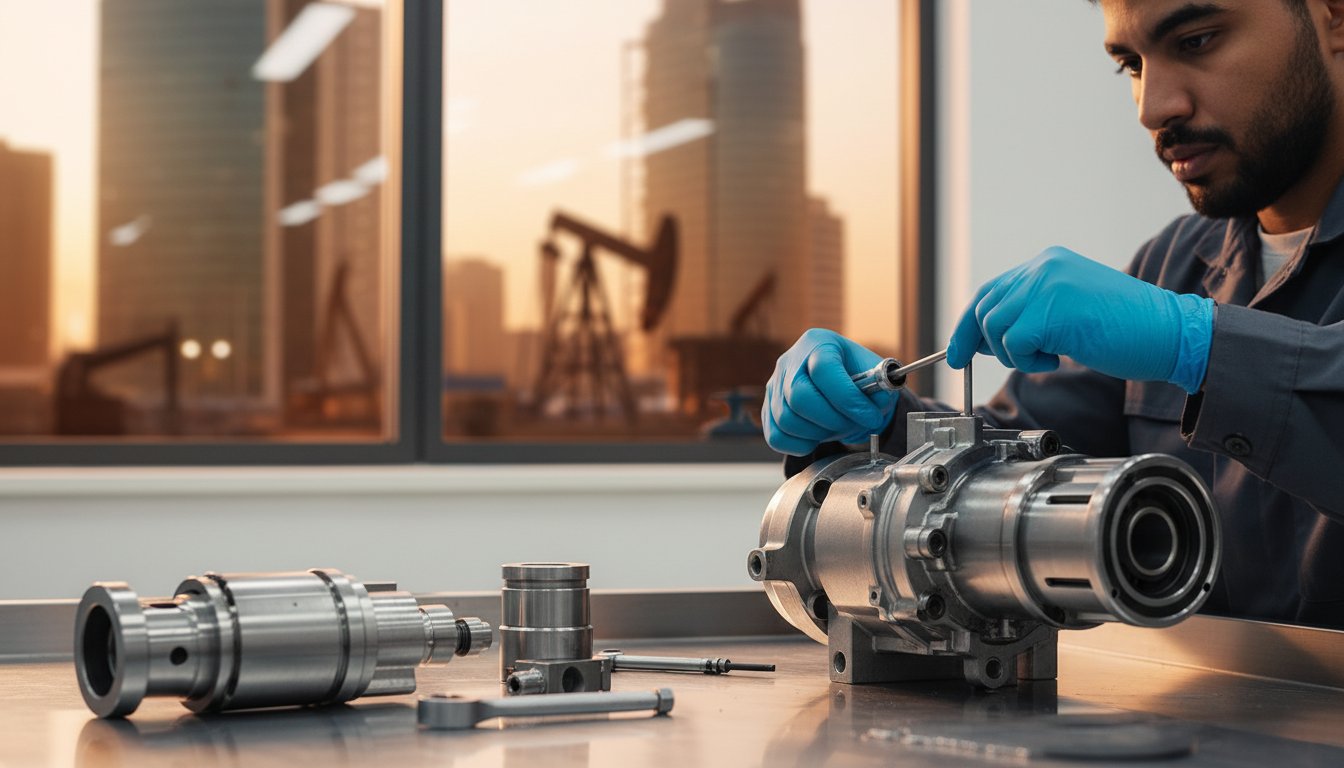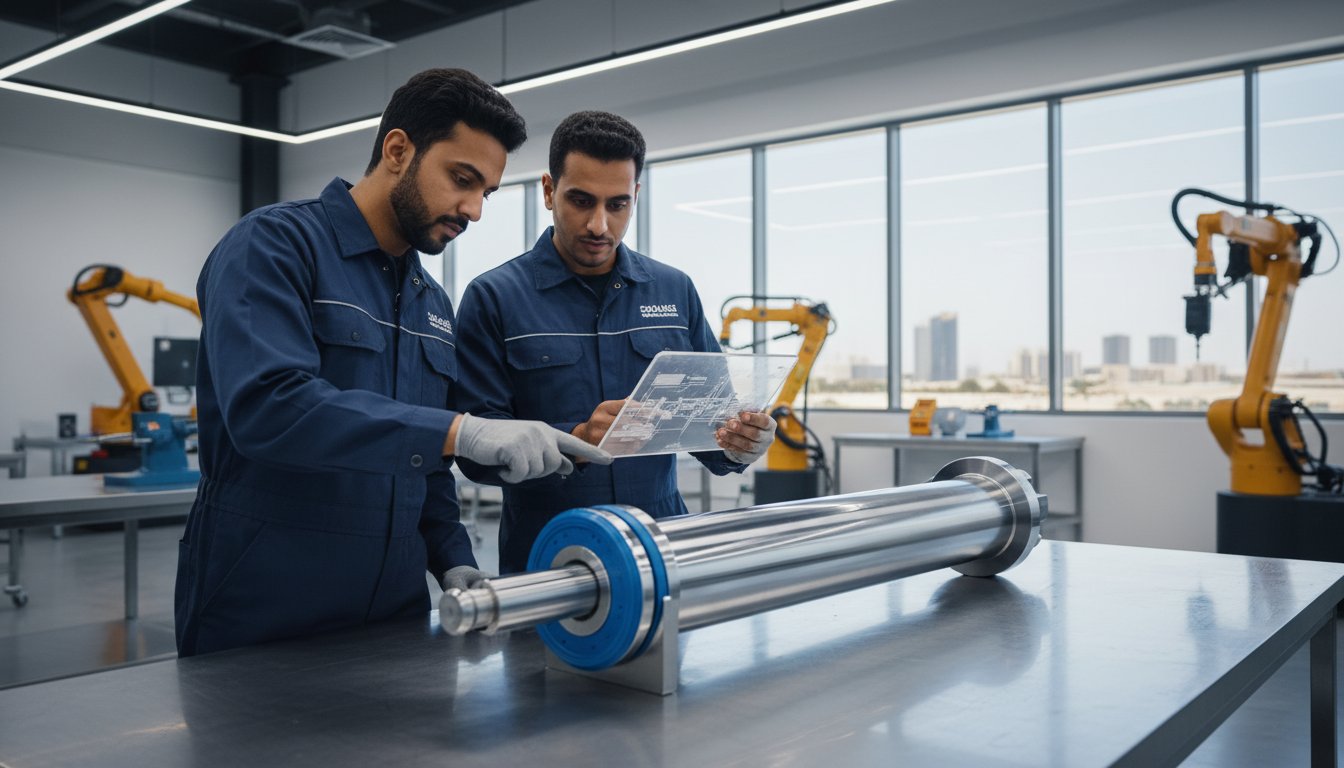
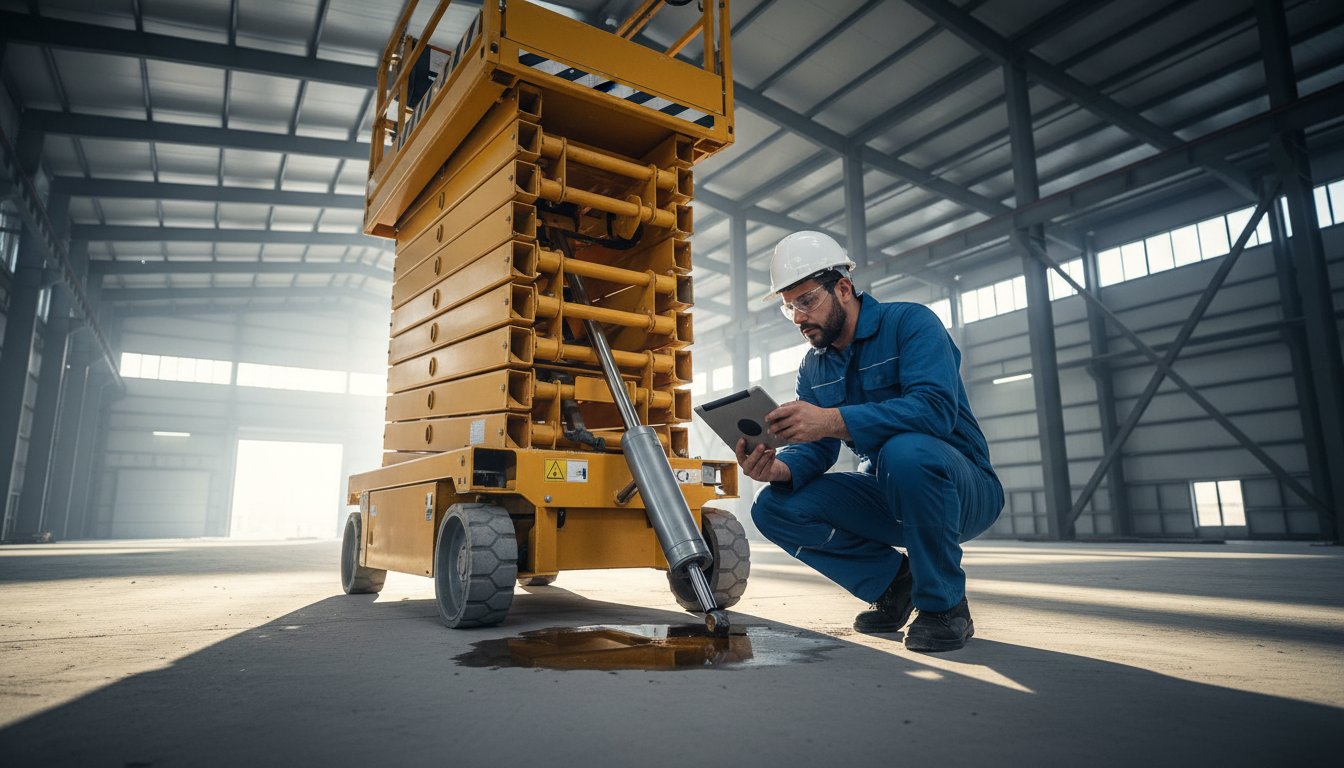
A single hydraulic seal failure can drain over 15,000 SAR from your daily operating budget before your team even takes their first break. In the high-stakes environment of Saudi construction, scissor lift hydraulic problems are more than just a mechanical nuisance. They represent a critical safety risk for operators working at heights and a primary cause of expensive project delays. You've likely experienced the uncertainty of deciding whether to patch a leaking cylinder or invest in a full component replacement while a deadline looms.
We agree that "good enough" isn't an option when your crew's safety and your company's reputation are on the line. This article promises to help you identify the root causes of hydraulic failures and implement expert strategies to minimize downtime. We'll provide a 2026 diagnostic checklist, explain when to engage a professional specialist, and share a preventative maintenance plan tailored for the kingdom's demanding industrial conditions.
Key Takeaways
- Identify early warning signs of system failure by understanding how Pascal’s Law and flow restrictions impact your equipment's lifting speed and efficiency.
- Gain expert insights into component-level wear, specifically targeting hydraulic pump failure patterns and the prevention of cylinder seal degradation.
- Learn how the extreme 45°C+ temperatures and sand ingress in Saudi Arabia accelerate scissor lift hydraulic problems through rapid oil viscosity breakdown.
- Master a professional diagnostic process to restore smooth operation, ranging from verifying fluid quality to effectively bleeding trapped air from the circuit.
- Discover how utilizing local fabrication for chrome shafts and honed tubes in Dammam can significantly minimize costly downtime and optimize your fleet's performance.
Common Symptoms of Scissor Lift Hydraulic Problems
The operational heart of any lift is its hydraulic circuit, which functions based on Pascal’s Law. This law states that pressure applied to a confined fluid is transmitted undiminished in every direction. In a typical 500 kg capacity lift, the pump generates the force necessary to extend the cylinders and raise the scissor lift mechanism. When the system is healthy, the movement is smooth and predictable. However, when scissor lift hydraulic problems arise, the symptoms are often immediate and disruptive to your workflow.
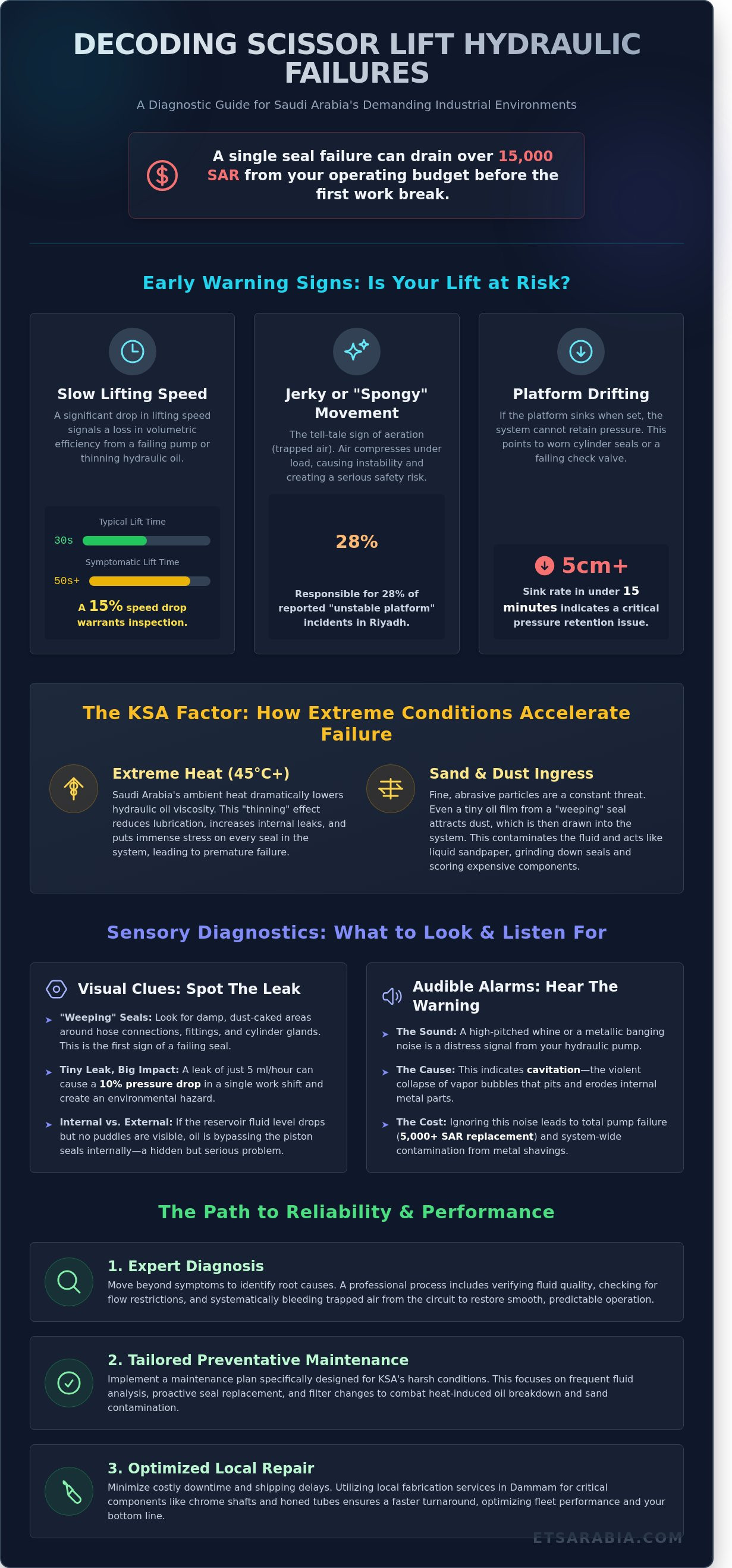
Slow lifting speeds are one of the most frequent complaints we address at ETS. If your equipment usually reaches its maximum height in 30 seconds but now takes 50 seconds, you're looking at a significant loss in efficiency. This lag is typically caused by flow restrictions or a pump that's lost its volumetric efficiency. In the high-temperature environments of Saudi Arabian industrial sites, hydraulic oil can thin out, leading to internal bypass where the fluid slips past internal components instead of doing work. A 15% drop in lifting speed is often the first warning that your pump requires a professional inspection.
Jerky or "spongy" movement creates a serious safety risk for operators. This stuttering effect is the tell-tale sign of aeration, which occurs when air bubbles become trapped in the hydraulic lines. Because air is compressible and hydraulic fluid isn't, the platform bounces as the air pockets expand and contract under load. A 2023 survey of technical faults in Riyadh's logistics sector found that air entrapment was responsible for 28% of reported "unstable platform" incidents. If your controls feel soft or the platform "jumps" during ascent, the system's integrity is compromised.
Platform drifting is another critical symptom. If you set the lift at a specific height and it sinks 5 cm or more over a 15-minute period, you have a pressure retention issue. This usually stems from a failing check valve or a worn cylinder seal. In a busy warehouse, this drift isn't just an inconvenience; it's a hazard that can lead to misaligned loading and equipment damage. Addressing scissor lift hydraulic problems early prevents these minor drifts from becoming total system collapses.
Identifying Fluid Leaks and External Contamination
Visual inspections should focus on hose connections, fittings, and cylinder glands. Look for "weeping" seals, which appear as damp, dust-caked areas around joints. In the dusty conditions of the Eastern Province, even a tiny oil film attracts contaminants that can grind down seals. A leak that loses just 5 ml of fluid per hour can lead to a significant environmental hazard and a 10% drop in system pressure within a single work shift. Distinguishing between a visible external spill and an internal bypass leak is vital. If the fluid level in the reservoir drops but no puddles are present, the oil is likely leaking internally across the piston seals.
Audible Warning Signs: What Your Pump is Telling You
Your pump provides acoustic feedback about its internal health. A high-pitched whining or a metallic banging sound usually indicates cavitation or aeration. Cavitation is the formation of vapor bubbles in hydraulic fluid due to low pressure. When these vapor bubbles move to a high-pressure area, they collapse violently, pitting the metal surfaces of the pump. This erosion can lead to a total pump failure, which might cost 5,000 SAR or more to replace, not including the cost of operational downtime. A noisy pump is a precursor to system-wide contamination as metal shavings circulate through the valves and cylinders.
Deep Dive into Component-Level Hydraulic Failures
Identifying the root cause of scissor lift hydraulic problems requires a microscopic look at the mechanical heart of the machine. Component failure rarely happens instantly; it's usually a result of gradual wear or extreme environmental stress. In the harsh operating conditions of Saudi Arabia, where ambient temperatures frequently exceed 45°C, these failures accelerate. A system that worked perfectly in December might struggle by June as heat thins the oil and stresses every internal seal.
The hydraulic pump acts as the system's heart, and its health dictates the entire machine's performance. In high-demand environments like Jeddah's industrial ports, pump efficiency can drop by 22% due to fluid aeration or internal cavitation. You'll often hear a high-pitched whining sound before a total failure occurs. This noise signals that air is entering the suction line or the pump's internal gears are grinding against the housing. Once the pump's internal tolerances exceed 0.005 inches, it can't maintain the 3,000 PSI required for heavy lifting, leading to sluggish response times.
Hydraulic hoses are equally vulnerable, especially to UV radiation and physical abrasion. In Riyadh's construction sector, external hose jackets often become brittle within 18 months of constant sun exposure. A single burst hose doesn't just stop work; it can cost between 1,500 SAR and 4,000 SAR in lost hydraulic fluid, emergency labor, and environmental remediation. Regular inspections for "weeping" at the fittings or "blistering" on the hose surface are essential to prevent these costly interruptions.
Cylinder Seal Failure and Internal Bypassing
Worn piston seals are a silent thief of productivity. When these seals degrade, fluid "leaks" past the piston internally rather than providing the force needed to lift the platform. You'll notice the platform "drifting" downward while the engine is off or the controls are neutral. Scored chrome shafts, often caused by fine sand particles common in Eastern Province job sites, act like sandpaper on new seals. To diagnose this, technicians use a "dead-head" test. By bottoming out the cylinder and monitoring the return line, they can confirm if fluid is bypassing the internal piston seal. If the cylinder is bypass-free, the drift is likely a valve issue. For a professional assessment of your lift's integrity, you can consult with our technical team to schedule a diagnostic check.
Valve Malfunctions: Holding and Counterbalance Valves
Holding valves are your primary defense against unintended platform descent. These valves lock fluid inside the cylinder to maintain a steady height. Counterbalance valves are just as critical because they regulate the flow to ensure smooth, controlled lowering even when the platform carries its maximum rated load. Following OSHA safety guidelines is vital when inspecting these parts, as a malfunctioning valve can lead to a catastrophic collapse. Solenoid-operated directional control valves often fail when microscopic debris, sometimes smaller than 10 microns, prevents the spool from seating correctly. This debris causes pressure fluctuations that make the lift feel "jerky" or unresponsive to operator commands. Keeping the hydraulic oil clean is the only way to protect these precision-machined components from premature failure.
- Pump Cavitation: Caused by clogged suction filters or low fluid levels, leading to internal pitting.
- Chrome Scoring: Physical damage to the cylinder rod that destroys seals on every stroke.
- Solenoid Burnout: Electrical failure in the valve coils, often due to voltage drops or overheating.
- Hose Abrasion: Rubbing against the scissor stack during cycles, which thins the outer carcass.
The KSA Factor: How Heat and Sand Accelerate Failure
Operating heavy machinery in Saudi Arabia presents challenges that European or North American manuals often overlook. When ambient temperatures in Riyadh or the Empty Quarter exceed 45°C, scissor lift hydraulic problems escalate from minor leaks to total system seizures. High heat causes hydraulic oil to lose its film strength. This thinning prevents the fluid from lubricating internal pump components effectively. Without that protective layer, metal-on-metal contact creates microscopic debris, leading to a 30% reduction in pump lifespan within a single summer season.
Sand is the second major threat. Fine silica particles in the Eastern Province act like liquid sandpaper inside your valves. This isn't just a maintenance headache; it's a safety crisis. For example, this OSHA report on hydraulic failure highlights how a sudden loss of pressure can lead to fatal accidents. In coastal industrial zones like Dammam and Jubail, salt-laden air accelerates the corrosion of chrome-plated piston rods and hydraulic fittings. If these fittings aren't treated with anti-corrosive coatings, they can fail in as little as 18 months.
Standard seals often fail because they aren't rated for the extreme thermal expansion seen in KSA. When temperatures fluctuate between a 15°C desert night and a 50°C afternoon, seals expand and contract rapidly. This cycle causes "compression set," where the seal loses its elasticity and begins to weep fluid. Replacing a full set of seals on a large lift can cost between 2,500 SAR and 4,000 SAR, making preventative climate-specific choices essential for your bottom line.
Managing Oil Temperature and Viscosity
Most manufacturers ship units with ISO VG 46 oil. In Saudi Arabia, this is often insufficient. Upgrading to ISO VG 68 or even VG 100 provides the necessary thickness to maintain pressure at 48°C. If your lift operates in high-cycle environments, installing an aftermarket oil cooler is a smart investment. It prevents "varnishing," a chemical breakdown where oxidized oil leaves a sticky residue on valves. Cleaning a varnished system can cost upwards of 5,500 SAR in labor and parts. We recommend monitoring oil color weekly; a shift from golden to dark brown indicates immediate oxidation.
Contamination Control in Desert Environments
Filtration is your primary defense against sand ingress. High-efficiency 10-micron filters catch particles that standard filters miss. The most overlooked entry point is the breather cap. Standard caps allow dust-heavy air into the reservoir as the cylinders retract. Replacing these with desiccant or high-efficiency breathers blocks 99% of airborne silica. We recommend a fluid sampling schedule every 250 operating hours. Analyzing these samples allows you to spot wear patterns before a catastrophic failure forces 12,000 SAR in emergency repairs. This proactive approach ensures your scissor lift hydraulic problems don't turn into permanent operational downtime.
Step-by-Step Troubleshooting and Emergency Response
Systematic diagnosis is the only way to minimize downtime when facing scissor lift hydraulic problems. You should begin by inspecting the hydraulic fluid level and its physical condition. In the high-temperature environments of Saudi Arabia, where ambient temperatures often exceed 45°C, hydraulic oil can degrade rapidly. Check the reservoir sight glass while the platform is fully lowered. If the oil appears milky, water contamination is present; if it smells burnt or looks dark, it has oxidized and lost its lubricating properties. Using a fluid that doesn't meet ISO VG 32 or 46 standards for your specific model can lead to pump cavitation and premature seal failure.
Pressure testing provides concrete data to isolate mechanical failures from hydraulic ones. Attach a 5,000 PSI (345 Bar) calibrated pressure gauge to the pump's test port. A standard 12-meter scissor lift typically operates at approximately 2,500 PSI (172 Bar). If the gauge shows the pump is reaching its rated pressure but the platform fails to rise, the problem lies downstream in the lift cylinders or the relief valves. Conversely, low pressure at the pump usually indicates a worn gear pump or an internal leak in the pump housing itself. This precise measurement prevents the common mistake of replacing expensive components based on guesswork.
Electrical signals often mimic hydraulic failures. Use a digital multimeter to verify that the solenoids are receiving the correct voltage, usually 12V or 24V DC. A voltage drop of just 10% can prevent a valve from fully opening, which restricts oil flow and causes sluggish operation. Check all ground connections for corrosion, as the humid coastal air in regions like Dammam can accelerate contact degradation. If the solenoid clicks but the valve doesn't shift, the internal spool is likely jammed by debris or a bent stem.
The Safe Way to Bleed Scissor Lift Hydraulics
Trapped air is a primary cause of jerky movement and "spongy" platform behavior. To purge the system, you must first secure the platform using the factory-installed safety maintenance prop. Never work under an unsupported lift. Fully extend the cylinders and then retract them several times through their complete range of motion. This process forces air back into the reservoir where it can escape. If the problem persists, check the suction line clamps. A loose fitting on the intake side can draw air into the system without showing an external oil leak, leading to 85% of aeration issues in mobile lifts.
When to DIY vs. When to Call a Specialist
Operators can safely handle basic maintenance like filter replacements, fluid top-offs, and tightening external hose fittings. These tasks are essential for daily reliability. However, complex repairs require professional intervention to avoid safety risks and voided warranties. Rebuilding a hydraulic pump or honing a scored cylinder requires specialized tools and a clean-room environment. In Saudi Arabia, a professional pump rebuild might cost 1,800 SAR, whereas a total system failure caused by a botched DIY repair could exceed 12,000 SAR. Avoid "part-changing" without a diagnostic report; replacing a 3,500 SAR motor when the fault was a 75 SAR relay is an expensive oversight.
Don't let equipment failure halt your project's progress. For expert diagnostics and rapid repair, contact our technical team today to restore your fleet's performance.
ETS Solutions: Professional Hydraulic Repair in Dammam
When your team encounters scissor lift hydraulic problems, every minute of inactivity translates to lost revenue. In the high-stakes industrial environments of Dammam and Jubail, a single faulty seal or a cracked honed tube can stall a project for days. Emdad Technical Services (ETS) eliminates these bottlenecks through a rapid response framework designed specifically for the KSA industrial sector. We understand that importing specialized components from Europe or North America often takes 45 days or more. That's why we've invested in local custom fabrication capabilities. We manufacture chrome shafts and honed tubes right here in Dammam, reducing your wait time from six weeks to just 48 or 72 hours.
Our facility utilizes high-grade materials that withstand the intense Saudi climate where temperatures regularly exceed 45°C. We don't just patch leaks; we re-engineer components to exceed original manufacturer specifications. By integrating 100% genuine parts from global leaders like Rexroth, Parker, and Danfoss, we ensure your machinery operates with 98% reliability. This commitment to quality is the reason 85% of our clients in the petrochemical and construction sectors choose ETS for their long-term maintenance needs. We provide the technical backbone that keeps your heavy equipment functional under the most demanding conditions.
Precision Component Repair and Fabrication
Our technical process begins with a meticulous teardown. We perform hydraulic cylinder stripping and inspection to identify microscopic wear patterns that others might miss. Every unit undergoes rigorous pressure testing up to 500 bar before it leaves our shop. Beyond simple repairs, we specialize in HPU design and manufacturing for custom lifting applications. We use 45-grade steel and apply a 25-micron hard chrome plating to ensure maximum durability. For companies facing urgent equipment failures, our Hydraulic Repair Services provide the technical expertise needed for immediate plant maintenance and restoration.
Minimizing Operational Interruptions
Location matters when your equipment fails. ETS provides dedicated on-site technical support for the Dammam 2nd Industrial City, allowing our engineers to reach your facility in record time. We've seen that 70% of hydraulic failures are entirely preventable. To address this, we offer preventative maintenance contracts that include regular fluid analysis and seal inspections. These programs are designed to catch minor issues before they turn into catastrophic scissor lift hydraulic problems. Investing 2,500 SAR in scheduled maintenance can save you over 25,000 SAR in emergency repairs and lost man-hours. Our goal is to keep your operations moving without the stress of unexpected breakdowns. We deliver the expertise, reliability, and solutions that ensure your systems are always in motion.
Maximize Your Operational Uptime Through 2026
Success on a Saudi job site depends on equipment that withstands 50°C heat and relentless desert sand. You've seen how proactive maintenance and rapid component replacement prevent a 5,000 SAR seal leak from escalating into a 75,000 SAR total system overhaul. Addressing scissor lift hydraulic problems early isn't just a safety protocol; it's a vital financial strategy to protect your project margins. Industry data indicates that 85% of hydraulic failures are preventable with the right diagnostic tools and genuine spare parts.
Emdad Technical Services (ETS) stands ready to support your fleet from our ISO-certified facility in Dammam. We're an authorized distributor for Parker and Rexroth, ensuring you receive authentic components and expert calibration that meets international engineering standards. Our strategic location allows us to provide rapid response times that keep your equipment downtime to an absolute minimum. It's time to stop worrying about technical failures and focus on your project delivery.
Get Expert Hydraulic Repair Services Now
Let's ensure your machinery remains as reliable as your reputation.
Frequently Asked Questions
Why does my scissor lift platform slowly descend (drift) when raised?
Platform drift usually stems from a leaking holding valve or internal bypass in the hydraulic cylinder. If your platform drops more than 50 millimeters in a 10 minute window, the internal seals are likely compromised. These scissor lift hydraulic problems often worsen in the Saudi heat as oil viscosity thins. ETS technicians recommend immediate inspection to prevent sudden pressure loss and ensure operator safety on the job site.
How often should I change the hydraulic fluid in my scissor lift in Saudi Arabia?
You should change the hydraulic fluid every 1,000 operating hours or once a year. In high-dust regions like Riyadh, we suggest performing a fluid analysis every 500 hours to detect particulate matter. Replacing fluid typically costs between 600 SAR and 1,200 SAR depending on reservoir size. Regular changes prevent 85% of premature pump failures and keep your equipment running efficiently during peak summer months.
Can air in the hydraulic system cause the lift to move jerkily?
Yes, trapped air is a primary cause of jerky or spongy lift movements. Air is compressible, unlike hydraulic fluid, which creates erratic pressure fluctuations during the lifting cycle. If air levels exceed 7% of the total fluid volume, you'll notice significant vibration and noise. Bleeding the system is a standard procedure that restores smooth operation and prevents cavitation damage to your expensive hydraulic pump components.
What is the most common cause of hydraulic pump failure in heavy equipment?
Fluid contamination is the leading cause of hydraulic pump failure in 75% of documented cases. Microscopic particles like sand or metal shavings act as abrasives that destroy internal tolerances within the pump. In Saudi Arabian industrial sites, silica dust is a constant threat. Maintaining a clean filtration system reduces your risk of a 4,500 SAR pump replacement and minimizes expensive operational downtime for your fleet.
Is it safe to replace a hydraulic hose while the scissor lift is extended?
It's never safe to replace any hydraulic component while the platform is extended without mechanical locks. The system is under immense pressure; removing a hose causes an instant loss of structural support. A falling 1,500 kilogram platform creates enough force to cause fatal injuries in less than a second. Always lower the lift completely or use certified maintenance stands before starting any repairs on your hydraulic lines.
How do I know if my hydraulic cylinder needs to be honed or just resealed?
You need honing if the cylinder's internal bore shows visible scoring or deep vertical scratches. If the bore is smooth but fluid leaks past the piston, a simple seal kit replacement is sufficient. Scratches exceeding 0.05 millimeters in depth will shred new seals within 48 hours of operation. Professional honing restores the surface finish to 0.4 micrometers, ensuring a tight seal and extending the component's service life.
What type of hydraulic oil is best for high-temperature environments like Dammam?
ISO VG 68 hydraulic oil is the superior choice for the extreme heat found in Dammam and the Eastern Province. This oil maintains its protective film even when outdoor temperatures hit 49°C during July and August. Using a lower viscosity oil like VG 32 in these conditions leads to 20% more internal leakage and accelerated wear. High-quality VG 68 ensures your scissor lift hydraulic problems stay at a minimum by providing stable pressure.
Can a faulty battery affect the hydraulic lifting performance of an electric scissor lift?
A faulty battery directly impacts hydraulic performance because the electric motor requires consistent voltage to drive the pump. If your 24V battery bank drops below 21V under load, the pump's flow rate can decrease by 35%. This results in sluggish lifting and increased heat generation in the motor windings. Ensuring your batteries pass a load test saves you from misdiagnosing a healthy hydraulic pump as a failing component.