In the demanding industrial landscape of Saudi Arabia, the efficiency and reliability of your pneumatic systems are paramount to success. Yet, confusing technical jargon, costly air leaks, and the constant threat of operational downtime can turn these essential assets into sources of significant concern. When every moment of productivity counts, any uncertainty about how your systems function is a liability you cannot afford.
This comprehensive guide is engineered to eliminate that uncertainty. We provide the expert knowledge needed to master your pneumatic applications, from understanding core components like valves and actuators to implementing effective maintenance routines. Our goal is to empower you with the clarity and confidence to enhance system performance, prevent costly failures, and ensure your operations achieve maximum efficiency and reliability. Let's transform your understanding and optimize your output.
What Is a Pneumatic System and How Does It Work?
At its core, a pneumatic system is a collection of interconnected components that uses compressed gas-typically filtered air-to generate force and motion. This technology, known broadly as Pneumatics, is a cornerstone of modern industrial automation across Saudi Arabia, prized for its speed, safety, and operational simplicity. The fundamental principle involves four key stages: compressing air, storing it under pressure, controlling its release, and converting its energy into useful mechanical work. This efficient process makes pneumatic systems an indispensable solution for tasks ranging from manufacturing and assembly to material handling.
The Basic Working Principle: From Compressor to Actuator
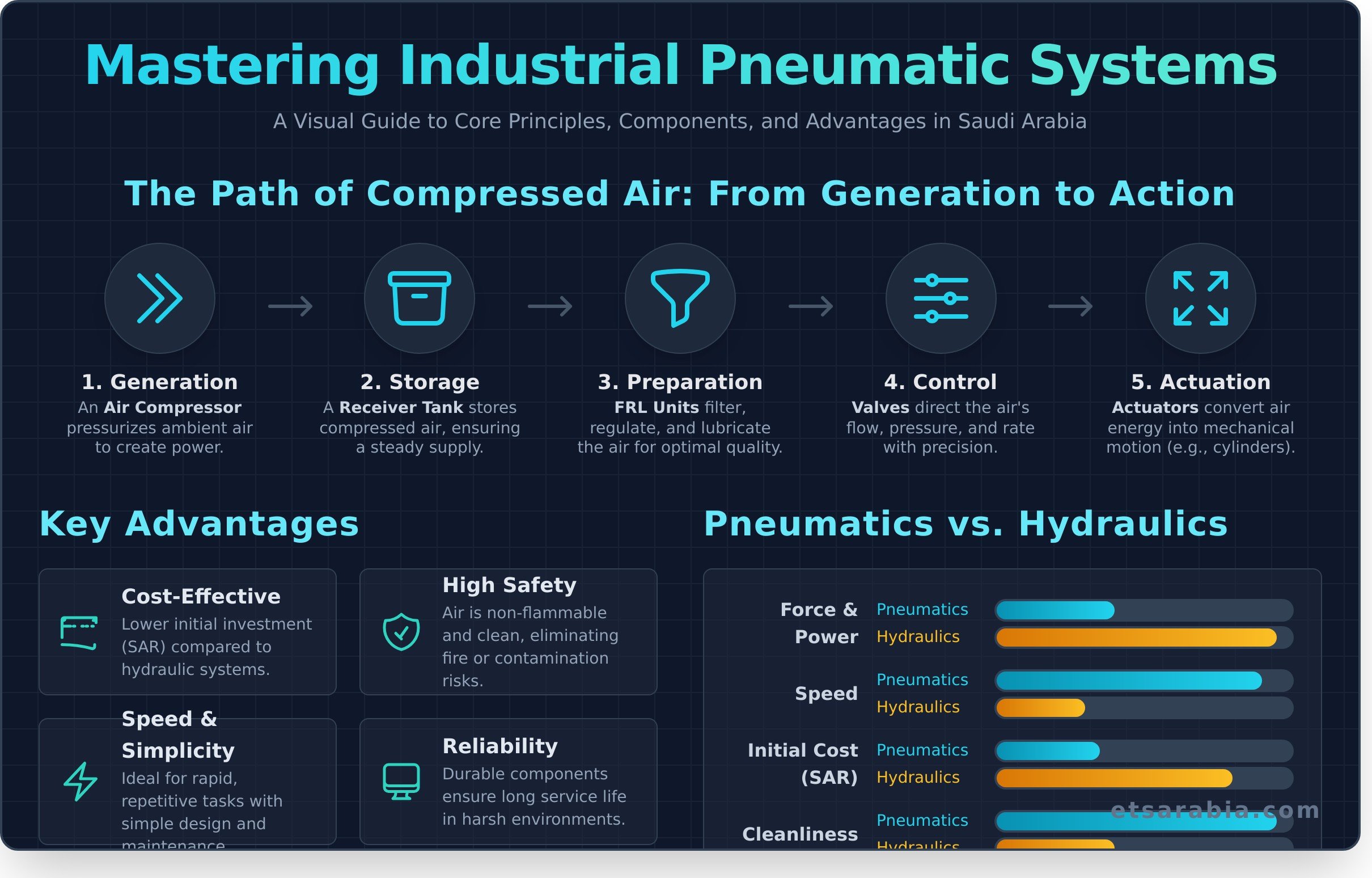
The journey of power in a pneumatic system begins at the air compressor, the heart of the operation, which draws in ambient air and pressurizes it. This compressed air is then stored in a receiver tank, ensuring a steady supply is available to meet operational demands without interruption. From the tank, sophisticated valves control the air's direction, pressure, and flow rate with high precision. Finally, this controlled air is directed to an actuator, such as a cylinder or motor, which converts the stored energy into linear or rotary motion to perform tasks like clamping, lifting, or pressing.
Key Advantages of Pneumatics in Industrial Settings
Choosing pneumatics offers distinct advantages that enhance productivity and reduce operational downtime. These benefits are critical for the demanding industrial landscape in the Kingdom.
- Cost-Effectiveness: The initial investment for pneumatic components is often lower in Saudi Riyal (SAR) compared to hydraulic counterparts, making it an economical choice for many automation projects.
- Safety: Air is non-flammable and clean. In the event of a leak, it does not contaminate the environment or create fire hazards, which is essential for industries like food processing, pharmaceuticals, and electronics.
- Simplicity & Speed: Pneumatic circuits are relatively simple to design, install, and maintain. They are exceptionally fast, making them ideal for high-speed, repetitive applications that demand rapid cycle times.
- Reliability: Built for durability, pneumatic components have a long service life and can withstand harsh industrial environments, ensuring reliable performance and maximizing uptime.
Pneumatics vs. Hydraulics: Which System Is Right for Your Application?
While both systems transmit power, their characteristics make them suitable for different applications. Hydraulics, using incompressible liquids, excel in high-force, heavy-lifting tasks. In contrast, pneumatics are the superior choice for applications requiring rapid, precise movements in cleaner operating environments. The right choice depends entirely on your specific operational requirements for force, speed, and environmental safety.
The 5 Core Components of Every Industrial Pneumatic System
To optimize the performance and reliability of any industrial pneumatic system, it is essential to understand the journey of compressed air from its generation to the point of application. Each of the five core components plays a critical, non-negotiable role. A failure or inefficiency in one stage compromises the entire system, leading to reduced productivity and costly, unplanned downtime. Investing in quality components is a direct investment in your operational continuity.
The Path of Compressed Air
Generation → Preparation → Control → Actuation
1. Air Generation & Storage: The Power Source
The journey begins with an air compressor, the heart of all pneumatic systems. The two most common industrial types are piston compressors, ideal for intermittent, high-pressure tasks, and rotary screw compressors, engineered for continuous, heavy-duty operation. This compressed air is then held in a receiver tank, which stores pressure, allows the air to cool, and reduces compressor cycling to enhance energy efficiency and equipment lifespan. Correctly sizing both the compressor and tank to match your facility's demand is the first step toward a reliable system.
2. Air Preparation: The FRL Unit
Raw compressed air is often contaminated with dirt, water, and oil. Before it can power sensitive equipment, it must be conditioned by a Filter-Regulator-Lubricator (FRL) unit. Poor air quality is a primary cause of component failure, making expert pneumatic system troubleshooting essential for facilities that neglect this stage.
- Filter: Removes harmful contaminants that can damage seals and clog components.
- Regulator: Reduces and stabilizes the air pressure to the precise level required for consistent performance.
- Lubricator: Injects a fine oil mist into the air to lubricate tools and actuators that require it, reducing friction and wear.
3. Control Valves: The Brains of the System
Control valves act as the system's nervous system, directing the flow of conditioned air to perform specific tasks with precision. They manage the start, stop, direction, and rate of airflow. The primary types include directional control valves, which dictate the path of air to extend or retract a cylinder, and flow control valves, which adjust the speed of actuators. In modern automated systems, solenoid-operated valves are standard for their fast and reliable electronic actuation.
4. Actuators: The Muscle of the System
Finally, actuators are the components that get the work done. They are the muscle of the system, converting the potential energy stored in compressed air into kinetic energy, or mechanical motion. This is where the force of the air is translated into a physical task. The two main categories are:
- Linear Actuators (Cylinders): Provide push-and-pull motion. Single-acting cylinders use air pressure for one direction and a spring to return, while double-acting cylinders use air for both extension and retraction.
- Rotary Actuators (Air Motors): Deliver rotational motion, ideal for powering tools, mixers, and other rotating equipment.
Common Industrial Applications in Saudi Arabia
In Saudi Arabia's dynamic industrial landscape, from the Eastern Province's energy hubs to the manufacturing centers in Riyadh and Jeddah, pneumatic power is a cornerstone of operational efficiency. The principles of using compressed air for mechanical motion are applied across diverse sectors, proving the versatility and reliability of this technology. At ETS, we see firsthand how expertly designed pneumatic systems are critical for enhancing productivity and minimizing costly downtime.
Manufacturing and Assembly Lines
In the Kingdom's expanding manufacturing sector, precision and speed are paramount. Pneumatic technology provides the fast, repeatable force required for modern assembly lines. Key applications include:
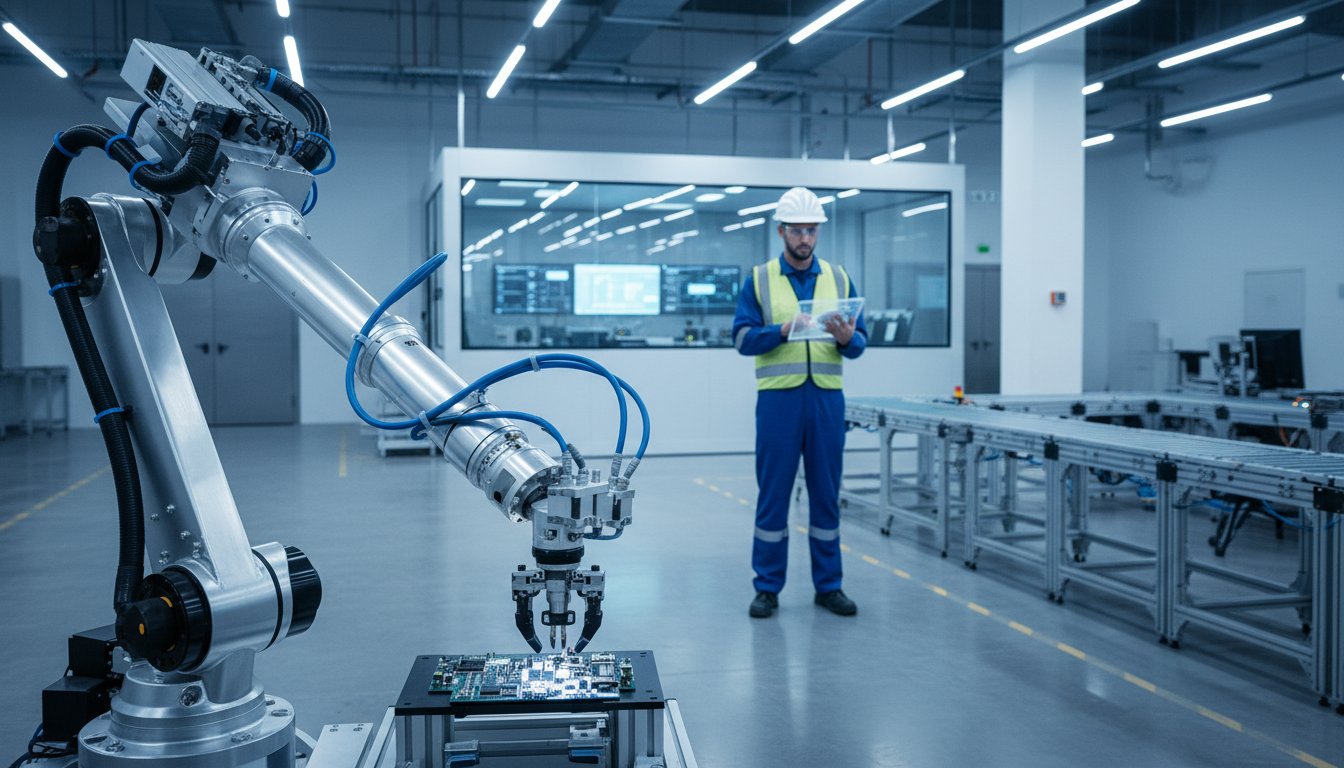
- Robotics: Powering end-of-arm tooling like grippers and clamps for rapid pick-and-place operations.
- Material Clamping: Using pneumatic cylinders to securely hold components for drilling, welding, or assembly, ensuring consistent quality.
- Pneumatic Tools: Driving high-speed drills, impact wrenches, and sanders that are lightweight, durable, and safer than electric alternatives in many environments.
Oil & Gas and Petrochemicals
Safety and reliability are non-negotiable in the oil, gas, and petrochemical industries. Because they use inert compressed air, Pneumatic systems are inherently safer in hazardous environments where flammable materials are present. Their robust nature makes them ideal for:
- Valve Actuation: Remotely and safely operating large process valves on pipelines and in refineries, a critical function for process control.
- Pneumatic Conveying: Efficiently transporting bulk materials like plastic pellets or chemical powders without contamination or risk of explosion.
- Instrumentation Air: Supplying clean, dry, and stable compressed air to power vital control systems and instrumentation throughout a plant.
Food & Beverage and Packaging
The food and beverage sector relies on pneumatic solutions for their clean, oil-free operation and precise control. In facilities across Saudi Arabia, pneumatics ensures hygienic and efficient production. Common uses are:
- Product Sorting & Diverting: Actuators quickly push products from one conveyor to another for sorting by weight, size, or quality.
- Filling and Capping: Powering machinery that accurately fills bottles and containers before securely sealing them.
- Blow Molding: Using high-pressure air to form PET bottles for water, juices, and other beverages, a process that demands reliable air delivery.
Ensuring these diverse applications run without interruption requires expert support. The team at Emdad Technical Services provides the reliable components and expert solutions needed to optimize your operations.
Essential Maintenance and Troubleshooting for Pneumatic Systems
In the demanding industrial landscape of Saudi Arabia, the reliability of your equipment is paramount. Proactive maintenance for your pneumatic systems is not merely a task-it is a core strategy to maximize operational uptime, enhance productivity, and prevent the significant costs associated with unscheduled downtime. Adopting a preventive framework over a reactive repair model ensures your operations run with consistent power and efficiency.
A Preventive Maintenance Checklist
Implementing a routine inspection schedule is the most effective way to ensure system longevity. Maintenance managers can integrate these simple, high-impact checks into their workflow:
- Daily: Drain accumulated water from all filters, drip legs, and receiver tanks to prevent moisture from entering the air lines.
- Weekly: Inspect the entire system for air leaks. A simple soap solution or an ultrasonic leak detector can quickly identify costly leaks at fittings, hoses, and seals.
- Monthly: Verify that pressure regulators are set to the correct specifications for the application. Check and refill lubricator levels where applicable.
- Annually: Schedule a comprehensive service for the air compressor, following the manufacturer’s specific guidelines to maintain its core performance.
Common Problems and Their Root Causes
Even with proper maintenance, issues can arise. Understanding the root cause is key to a fast and effective solution. Here are some common problems:
Problem: Sluggish Actuator Speed
Common Causes: Often caused by air leaks reducing available pressure, incorrect regulator settings, or flow restrictions from kinked hoses or undersized fittings.
Problem: Sudden System Pressure Drops
Common Causes: This usually indicates a major leak somewhere in the network or an air compressor that is undersized for the current operational demand.
Problem: Water in the Air Lines
Common Causes: A clear sign of a failing or overwhelmed air dryer, or filters that have not been drained properly. This moisture can cause corrosion and damage components.
When to Call for Professional Repair Services
While routine checks solve many issues, certain situations demand specialized expertise to avoid further damage and ensure long-term reliability. Consider professional support for:
- Complex valve, cylinder, or motor failures that require specialized diagnostic tools and repair techniques.
- Persistent, system-wide issues like pressure fluctuations that basic troubleshooting cannot resolve.
- A comprehensive system analysis to optimize energy efficiency and overall performance.
These challenges require expert analysis and intervention to protect your investment. For expert diagnostics and repair in Saudi Arabia, contact ETS. Our technicians ensure your systems are restored to optimal performance with speed and precision.
Partner with the Experts for Optimal Pneumatic Performance
Throughout this guide, we've explored the fundamental principles of pneumatic power, from the five core components that drive every system to their critical applications across Saudi Arabia's industrial landscape. The key to maximizing productivity and ensuring operational longevity lies in diligent maintenance and a deep understanding of troubleshooting techniques. Properly managed pneumatic systems are not just equipment; they are the reliable workhorses that power your success.
When you need to ensure your equipment performs at its peak, you need a partner you can trust. As the leading authorized supplier of premier global pneumatic brands in Saudi Arabia, Emdad Technical Services (ETS) is that partner. Our expert technical team is dedicated to minimizing your operational downtime with swift, effective solutions. Strategically located in Dammam, we provide prompt service to the industrial heartland, ensuring you have the support you need, precisely when you need it.
Need reliable pneumatic components or expert repair services? Contact ETS today. Let us provide the expertise and solutions that keep your operations moving forward, guaranteeing efficiency and reliability when it matters most.
Frequently Asked Questions About Pneumatic Systems
What is the typical operating pressure for an industrial pneumatic system?
Most industrial pneumatic systems operate at a pressure between 6 and 8 bar (approximately 90 to 120 psi). This range provides an optimal balance of force, speed, and energy efficiency for a wide variety of applications, from assembly lines to material handling. While some specialized high-pressure applications exist, operating within this standard range ensures compatibility with most components and maximizes equipment lifespan. Always consult your equipment's specifications for precise pressure requirements.
How do you find and fix an air leak in a pneumatic system?
Finding an air leak requires a systematic approach. The simplest method is applying a soapy water solution to fittings and connections; bubbling indicates a leak. For a more advanced and accurate diagnosis, an ultrasonic leak detector can pinpoint the exact source of high-frequency hissing sounds. Fixing leaks typically involves tightening loose fittings, replacing worn-out seals and O-rings, or substituting damaged hoses and tubes. Promptly addressing leaks is critical to reduce energy costs and prevent downtime.
What is the function of an FRL unit and is it always necessary?
An FRL (Filter-Regulator-Lubricator) unit is a vital component that prepares compressed air for use. The filter removes contaminants, the regulator controls the pressure to the required level, and the lubricator (if needed) adds a fine oil mist to reduce friction in moving parts. While not strictly mandatory for every single application, an FRL unit is highly recommended to protect downstream components, ensure consistent performance, and significantly extend the service life of your pneumatic equipment.
How do you calculate the force generated by a pneumatic cylinder?
The force generated by a pneumatic cylinder is calculated using a straightforward formula: Force = Pressure × Area (F = P × A). In this equation, 'Pressure' is the system's operating pressure supplied to the cylinder, and 'Area' is the effective surface area of the piston on which the pressure acts. For an extending stroke, you use the full piston area. For the retracting stroke, you must subtract the area of the piston rod from the total piston area.
Why are my pneumatic tools losing power and performance?
A loss of power in pneumatic tools is often traced back to insufficient or inconsistent air supply. Common causes include air leaks somewhere in the system, a clogged filter in the FRL unit, an incorrectly set regulator, or using hoses that are too long or have too small a diameter. Additionally, internal wear on the tool's components can reduce efficiency. A thorough inspection of the air supply from the compressor to the tool is the first step in diagnosing the problem.
Can gases other than air be used in a pneumatic system?
While compressed air is the standard, other inert gases like nitrogen can be used in specific applications, such as in environments where oxygen could pose a fire hazard or react with the product. However, it is critical to ensure that all components within the pneumatic systems-including seals, lubricants, and actuators-are compatible with the alternative gas. Using an incompatible gas can lead to material degradation, system failure, and significant safety risks. Always consult an expert before making such a change.