
On any major project site across Saudi Arabia, the sudden failure of a mobile crane can bring operations to a grinding halt. This unplanned downtime doesn't just delay timelines and inflate project costs in Saudi Riyals; it introduces critical safety risks that no operation can afford. The constant uncertainty of whether your equipment meets rigorous safety standards-and the challenge of identifying early warning signs of hydraulic failure-can be a significant burden for any project manager responsible for site safety and efficiency.
This comprehensive guide provides the definitive solution. We deliver an expert-approved, actionable checklist to help you master the essential daily, weekly, and monthly maintenance checks. By following these steps, you will enhance operational safety, confidently identify potential issues before they cause costly interruptions, and understand precisely when a problem requires professional intervention. Our goal is to ensure your equipment remains a reliable asset, keeping your projects on schedule and your worksite secure.
The Critical Role of Preventative Maintenance for Mobile Cranes
In the demanding industrial landscape of Saudi Arabia, a mobile crane is more than just equipment; it is a critical asset that dictates project timelines and operational efficiency. While many view maintenance as a routine expense, a proactive strategy is a direct investment in safety, productivity, and asset longevity. Moving beyond simple repairs, a structured preventative maintenance program is the most effective way to guarantee reliable performance, minimize costly interruptions, and protect your most valuable resources: your people and your capital. Understanding the fundamental mechanics, as detailed in Wikipedia's overview of mobile cranes, highlights the complexity of these machines and reinforces the need for expert care.
Safety: The Non-Negotiable Priority
On any job site, safety is paramount. A significant number of crane-related incidents are directly linked to mechanical failures that could have been identified and prevented with routine inspections. The operator's daily pre-operation check is the first line of defense, but it must be supported by a comprehensive maintenance schedule. A simple checklist covering hydraulic fluid levels, hose conditions, and control functions can be the difference between a productive day and a catastrophic accident.
Financial Impact of Crane Downtime
Unplanned downtime is one of the most significant hidden costs in any project. Consider the financial impact on a major construction project in Riyadh or a petrochemical facility in Jubail: a single day of a key crane being out of service can easily result in losses exceeding ﷼150,000 in project delays, idle crew wages, and rental fees for replacement equipment. This figure starkly contrasts with the manageable cost of a scheduled maintenance service, which not only prevents failure but also extends the crane's operational lifespan, maximizing your return on investment.
Regulatory Compliance and Documentation
Operating a mobile crane in Saudi Arabia requires strict adherence to national safety standards, which often align with international frameworks like OSHA. Maintaining a detailed and accurate logbook for all maintenance, inspections, and repairs is not just a best practice-it's a regulatory necessity. In the event of an incident, these meticulous records serve as crucial evidence of due diligence, protecting your company from liability and reinforcing your commitment to a safe working environment.
The Pre-Operation Daily Walk-Around Inspection: A Step-by-Step Checklist
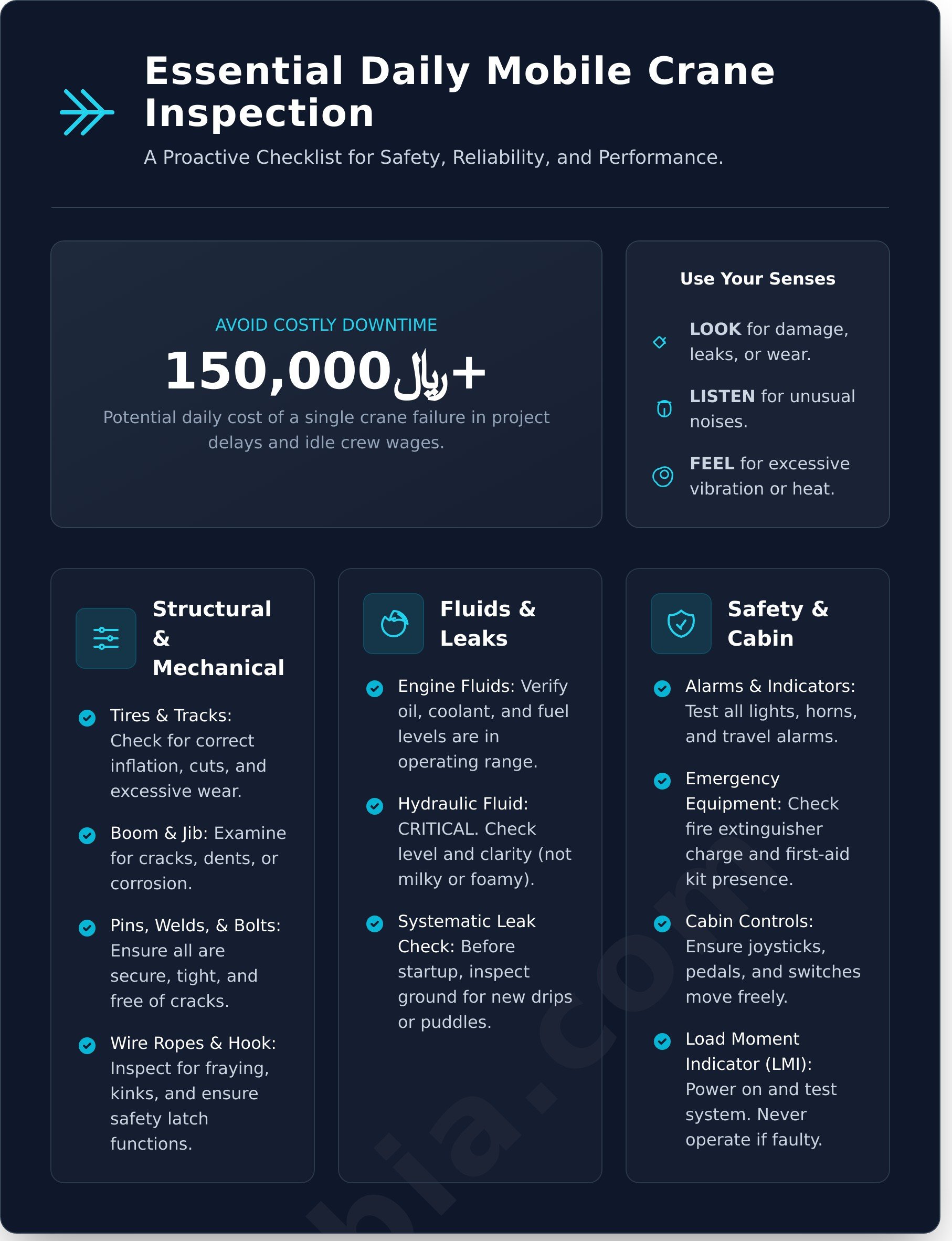
The most effective way to prevent catastrophic hydraulic failures and costly operational downtime is to identify potential issues before they escalate. A mandatory, routine daily walk-around inspection is the first line of defense. This is not a task to be rushed; it is a critical diagnostic process that ensures the safety of the operator and the reliability of the entire operation. A skilled operator uses three senses: looking for damage, listening for unusual noises, and feeling for excessive vibrations or heat.
To standardize this essential process and ensure no step is missed, we provide a comprehensive checklist for your team. Remember, no issue is too small to report and document. A minor drip today could become a major system failure tomorrow.
Download Your Free Daily Mobile Crane Inspection Checklist Here
Structural and Mechanical Checks
The structural integrity of your mobile crane is paramount for safe lifting. A thorough visual inspection of these key components is essential before every shift.
- Tires and Tracks: Check for correct inflation pressure, which is critical for stability. Inspect for any cuts, bulges, or excessive wear that could lead to a blowout under load.
- Boom and Jib: Carefully examine all sections for cracks, dents, corrosion, or other signs of metal fatigue and stress. Pay close attention to high-stress areas.
- Pins, Welds, and Bolts: Ensure all structural pins are securely in place with their keepers. Visually inspect welds for any cracks and verify that critical bolts are tight and free from damage.
- Wire Ropes and Hooks: Look for any signs of fraying, broken strands, kinks, or crushing on the wire rope. Inspect the hook for deformation and confirm the safety latch is present and functions correctly.
Fluid Level and Leak Checks
Hydraulic systems are the lifeblood of a crane. Proactive fluid management is the key to preventing most common hydraulic issues and ensuring smooth, reliable performance.
- Engine Fluids: Verify that engine oil, coolant, and fuel levels are all within the manufacturer's recommended operating range.
- Hydraulic Fluid: This is the most critical fluid check. Ensure the hydraulic oil is at the correct level in the reservoir. Note the fluid’s condition-it should be clear, not milky or foamy.
- Systematic Leak Check: Before starting the engine, carefully inspect the ground beneath the crane for any new drips or puddles of oil, coolant, or hydraulic fluid.
Safety Equipment and Cabin Functions
A safe machine is an efficient machine. Verifying all safety systems and operator controls ensures compliance with regulations in Saudi Arabia and protects your most valuable assets: your people and your equipment.
- Alarms and Indicators: Test all lights, horns, travel alarms, and dashboard indicator lights to confirm they are fully functional.
- Emergency Equipment: Check that the fire extinguisher is fully charged and easily accessible. Ensure a complete first-aid kit is present in the cabin.
- Cabin Controls: Operate all joysticks, pedals, and switches to ensure they move freely and respond as expected without sticking or delay.
- Load Moment Indicator (LMI): Power on and test the LMI system to confirm it is operational and accurately reading data. Never operate a crane with a faulty LMI.
Deep Dive: Inspecting the Mobile Crane's Hydraulic System
The hydraulic system is the powerhouse of any mobile crane, translating engine power into the immense force required for lifting and maneuvering heavy loads. It is the machine's muscle. Proactive and systematic inspection is not just best practice; it is a critical strategy to prevent catastrophic failures, ensure operator safety, and minimize costly operational downtime on job sites across Saudi Arabia. Early detection of potential issues is the key to maintaining peak performance and extending the service life of your equipment.
Key Hydraulic Components to Monitor
A thorough visual and auditory inspection can reveal the earliest signs of trouble. Focus your attention on these four critical areas:
- Pumps: Listen carefully during operation. Any unusual whining, grinding, or chattering sounds can indicate fluid contamination, aeration, or impending pump failure.
- Cylinders: Visually inspect all hydraulic cylinders. Look for fluid leaks around the rod seals and check the chrome rods for any signs of scoring, pitting, or damage that could compromise the seal.
- Hoses and Fittings: Examine all hydraulic lines for cracks, abrasions, or bulges. Pay close attention to fittings, ensuring they are secure and not "weeping" fluid, which often precedes a major leak.
- Valves and Manifolds: Check for external leaks around valve bodies and spools. Operation should be smooth and responsive; any hesitation or sticking can point to internal contamination or wear.
Telltale Signs of Hydraulic Failure
Your mobile crane will often provide clear warnings before a major failure occurs. Operators and maintenance teams should be trained to recognize these critical indicators:
- Slow or Jerky Operation: A classic symptom of reduced pressure or flow, often caused by a worn pump, internal leaks, or a clogged filter.
- Excessive Heat: High fluid temperature degrades oil and damages seals. Use an infrared thermometer to check temperatures at the reservoir; readings consistently above 82°C demand immediate investigation.
- Milky or Foamy Fluid: Hydraulic fluid that appears milky indicates water contamination, while foam suggests air is entering the system. Both severely reduce lubrication and system efficiency.
- Unusual Noises: A high-pitched whining sound often points to aeration (air in the fluid), while a low grinding noise can signal cavitation (fluid vaporizing due to low pressure), which is extremely destructive to pumps.
The Proper Way to Check Hydraulic Fluid
Always consult the manufacturer's manual for the correct procedure, as this often requires the equipment to be in a specific configuration (e.g., boom fully retracted and lowered). Check the fluid level using the sight glass or dipstick. Beyond the level, assess the fluid's condition. Healthy hydraulic oil is clear and bright. If it appears dark, cloudy, or has a burnt smell, it is a clear indicator that the fluid and filters need to be changed immediately to prevent system-wide damage.
While these routine checks are vital for day-to-day reliability, diagnosing complex or intermittent issues requires specialized equipment and expertise. For a comprehensive analysis that pinpoints the root cause of performance loss, ETS provides expert diagnostics for complex hydraulic systems.
Periodic Maintenance: Essential Weekly and Monthly Checks
While daily walk-arounds are vital, a structured periodic maintenance schedule is essential for the long-term health and operational safety of your equipment. These weekly and monthly checks are more in-depth, often requiring more time and specialized tools than daily inspections. Establishing a consistent schedule ensures these critical tasks are never overlooked, directly contributing to reduced downtime and enhanced reliability for your mobile crane.
Weekly Maintenance Tasks
A disciplined weekly routine is your first line of defense against progressive wear and tear. These tasks are designed to identify and address issues before they escalate into major hydraulic failures.
- Thorough Machine Cleaning: A clean machine is easier to inspect. Washing down the equipment reveals subtle hydraulic fluid weeps, hairline cracks in welds, or other structural defects hidden by dirt and grime.
- Complete Lubrication: Following the manufacturer's lubrication chart, grease all specified points. Proper lubrication is critical for reducing friction and preventing premature wear on pins, bushings, and bearings.
- Hydraulic Hose Inspection: Carefully examine all hydraulic hoses, paying close attention to connection points and areas where they might rub against the frame. Look for cracking, abrasion, blistering, or signs of leakage.
- Cooler and Radiator Cleaning: Check hydraulic oil coolers and radiator fins for any buildup of dust or debris. Clogged fins restrict airflow, leading to overheating, which degrades hydraulic oil and damages seals.
Monthly Maintenance Tasks
Monthly inspections involve more technical checks that assess the internal health and structural integrity of the hydraulic system, safeguarding your mobile crane against unexpected failures.
- Bolt and Fitting Torque Checks: Vibration can loosen critical fasteners over time. Check and tighten bolts and fittings on structural components, including the slew ring and counterweight, to the manufacturer's specifications.
- Hydraulic Filter Service: Inspect, clean, or replace hydraulic system filters as required. This includes the breather cap on the hydraulic tank and the main return line filter, which are crucial for preventing contamination.
- Cylinder Drift Test: Perform a drift test on the boom and outrigger cylinders. This test helps identify internal leakage past the cylinder piston seals, a condition that can compromise lifting precision and safety.
- Hydraulic Oil Analysis: Take a sample of the hydraulic oil and send it for professional analysis. This provides invaluable data on fluid condition and internal component wear, allowing you to predict and prevent failures.
The Importance of Professional Servicing
While operators can perform many of these checks, certain tasks demand the expertise of a qualified technician. Procedures like hydraulic pressure testing, accumulator servicing, and advanced diagnostics require specialized equipment to be performed safely and accurately. A professional service from a trusted partner like Emdad Technical Services ensures that no detail is overlooked. Our expert technicians can identify subtle signs of impending failure, protecting your investment and ensuring your equipment operates at peak efficiency. To guarantee reliability and minimize costly interruptions, schedule a preventative maintenance service with ETS.
When to Call the Experts: Partnering for Advanced Hydraulic Repair
While routine checks like monitoring fluid levels and replacing filters are essential in-house maintenance tasks, there is a clear line where a hydraulic issue demands specialized expertise. Attempting complex repairs on a mobile crane without the proper training, tools, and a clean environment is not just inefficient-it's extremely dangerous. An incorrect repair can lead to catastrophic system failure, costly project delays, and severe safety risks for your entire team on site.
Problems Demanding Professional Repair
Certain hydraulic failures require a level of precision and diagnostic capability that goes beyond general maintenance. For the safety and reliability of your equipment, it is crucial to contact a specialist for issues such as:
- Hydraulic Pump or Motor Failure: Accurate diagnosis, removal, and replacement of these core components require specialized knowledge to prevent immediate repeat failures.
- Cylinder Services: Complete disassembly, internal inspection, and precision resealing of hydraulic cylinders to restore performance and prevent leaks.
- Complex System Troubleshooting: Diagnosing and resolving intricate electrical faults or issues within proportional and servo control valves that manage crane functions.
- Critical Hose Replacement: Fabricating and installing long, multi-plane, or high-pressure hose assemblies that must be perfectly routed and secured.
The ETS Advantage: Diagnostics and Precision Repair
At Emdad Technical Services (ETS), our primary goal is to minimize your downtime. Our expert technicians utilize advanced diagnostic equipment to pinpoint the exact source of a hydraulic fault, eliminating guesswork and reducing repair time. We source only high-quality, OEM-spec components from world-leading brands like Parker and Rexroth, ensuring every repair enhances your system's reliability. We provide a fast, efficient, and guaranteed solution to get your mobile crane back in service and generating revenue.
Why Specialized Hydraulic Expertise Matters
The hydraulic systems in modern cranes are incredibly complex, operating under immense pressures that can exceed thousands of PSI. An improperly torqued fitting, a contaminated system, or an incorrectly crimped hose can lead to immediate, violent failure. Trusting a certified hydraulic expert ensures the repair is performed correctly the first time, adhering to strict safety and quality standards. For high-stakes hydraulic problems, partnering with a specialist like Emdad Technical Services is the most reliable path to safeguarding your assets and keeping your operations moving forward.
Ensuring Your Mobile Crane's Peak Performance and Safety
Diligent, preventative maintenance is the cornerstone of operational safety and efficiency. As this guide has outlined, consistent daily walk-arounds and in-depth periodic inspections of critical systems, especially hydraulics, are non-negotiable. Ultimately, the reliability of your mobile crane hinges on this proactive approach, safeguarding both your team and your investment against costly failures and unexpected downtime.
When routine checks uncover complex hydraulic issues, immediate expert intervention is crucial. At Emdad Technical Services, we specialize in repairing core hydraulic components, delivering fast, reliable service in Dammam and across Saudi Arabia. Our primary goal is minimizing your operational downtime and ensuring your equipment returns to service swiftly and safely.
Experiencing hydraulic issues with your crane? Contact our expert technicians for a rapid response.
By prioritizing maintenance and partnering with a trusted expert, you ensure your crane remains a powerful asset, not a potential liability. Stay safe and productive.
Frequently Asked Questions
How often should the hydraulic oil in a mobile crane be changed?
The replacement frequency depends on manufacturer guidelines-typically every 1000 operating hours-and the crane's working environment. In the demanding, dusty conditions common in Saudi Arabia, more frequent changes may be needed. We recommend regular oil analysis to accurately assess fluid condition. This proactive approach detects contamination early, allowing for condition-based maintenance that prevents costly damage and optimizes equipment uptime, ensuring your assets remain productive and reliable.
What are the most common causes of crane accidents related to maintenance?
The most severe accidents are often linked to neglected hydraulic systems. These include sudden hydraulic hose ruptures, component failures from contaminated fluid, and overlooked leaks that cause a loss of load control. These critical failures are almost always preventable with a rigorous, professional maintenance program. Proactive inspections and timely servicing are paramount to ensuring operational safety, minimizing risk, and guaranteeing the reliability of your heavy lifting equipment on site.
Is it safe to operate a mobile crane with a minor hydraulic leak?
No, it is never safe to operate any crane with a hydraulic leak, regardless of its size. A minor drip can rapidly escalate into a high-pressure spray under load, leading to a sudden loss of control, catastrophic equipment failure, and severe safety hazards for personnel. Promptly addressing any leak is critical to prevent accidents, avoid environmental contamination, and ensure your operations continue without costly interruptions. Immediate repair is the only reliable solution.
What should I look for in a qualified hydraulic repair service in Saudi Arabia?
When choosing a hydraulic repair partner in Saudi Arabia, prioritize providers with certified technicians who have proven experience with your specific crane brands. Ensure they offer rapid on-site response across the Kingdom to minimize downtime. A qualified service will use genuine OEM or high-quality equivalent parts and provide transparent diagnostics and reporting. Look for a company with a strong local reputation for quality, reliability, and delivering solutions that enhance equipment performance.
What is a crane load test and how often should it be performed?
A crane load test is a formal procedure to verify that the crane can safely lift its maximum rated load. It is a critical safety and compliance measure. In Saudi Arabia, regulations typically require a certified load test to be performed annually and after any major repair or modification to the crane's structural or hydraulic components. This ensures the machine is fit for service and complies with all local safety standards, protecting both your personnel and your investment.
Can contaminated hydraulic fluid damage my crane's components?
Absolutely. Contaminated hydraulic fluid is a leading cause of premature failure in a mobile crane. Abrasive particles like dirt and metal act like sandpaper, accelerating wear on precision components like pumps, valves, and cylinders. This leads to reduced efficiency, system overheating, and ultimately, catastrophic failure. Maintaining fluid cleanliness through proper filtration and regular changes is one of the most effective ways to ensure the longevity and reliable performance of your crane.