In Saudi Arabia's demanding industrial landscape, an unexpected power outage is more than an inconvenience-it's a direct threat to your productivity and bottom line. The silent hum of a reliable backup generator is the sound of operational continuity, but what happens when that silence is broken by a sudden failure? The resulting downtime, emergency repair costs running into thousands of Riyals, and critical production losses can be catastrophic for any operation.
This risk is one no business can afford. Proactive maintenance is not just a recommendation; it is an essential strategy to safeguard your investment and ensure your facility remains powered when it matters most. This comprehensive guide is engineered to eliminate uncertainty. We provide an expert-led maintenance checklist and practical troubleshooting tips to help you implement a preventative schedule, quickly identify common issues, and extend the operational lifespan of your equipment. Gain the expertise to ensure your generator operates flawlessly, guaranteeing reliable power and protecting your business from costly interruptions.
Understanding the Core Components of Your Industrial Generator
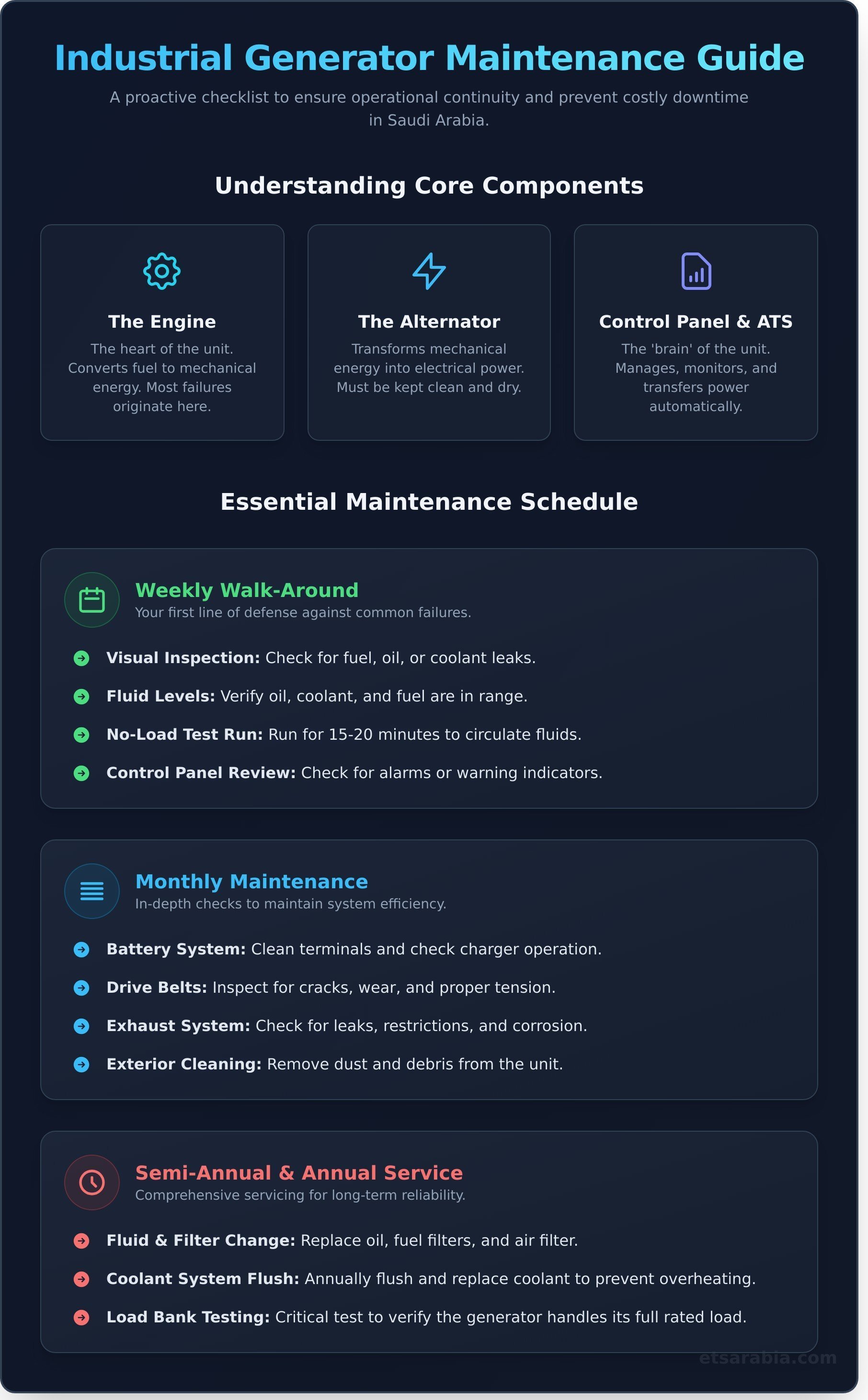
To guarantee reliable power and prevent costly operational downtime, a deep understanding of your industrial generator's core components is essential. An industrial generator should be viewed not as a single machine, but as an integrated system with three critical parts: the power source, the power converter, and the controller. In Saudi Arabia's demanding industrial sectors, the most prevalent power sources are diesel and natural gas engines. Proactive maintenance starts with recognizing that each component requires specific, expert attention to ensure the entire system performs flawlessly when you need it most.
The Engine: The Heart of the Generator
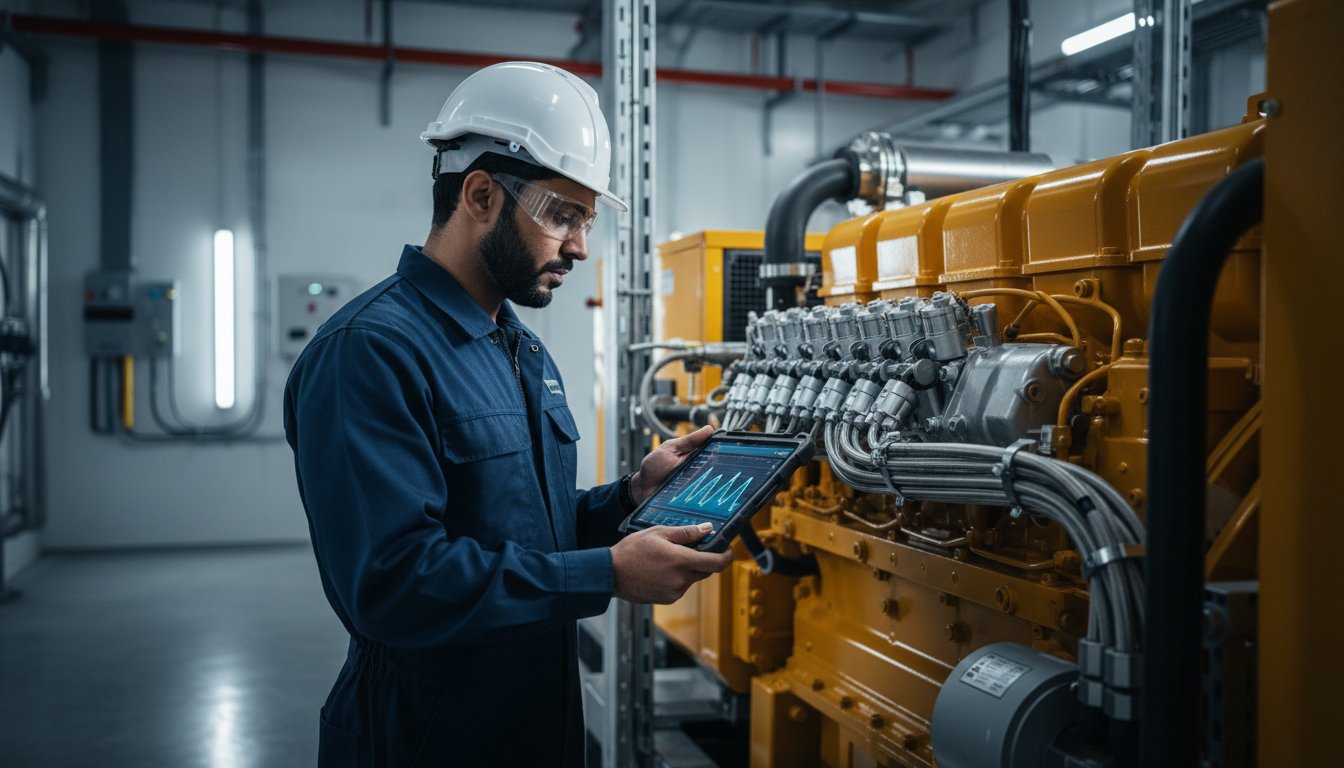
The engine is the powerhouse of the unit, responsible for converting fuel into the mechanical energy that drives the system. It is a complex machine with several vital sub-systems, including fuel delivery, cooling, lubrication, and exhaust. Because the vast majority of failures originate here, meticulous engine care is non-negotiable. A foundational knowledge of Diesel generator components reveals how interconnected these systems are, where even a small issue can lead to a complete shutdown.
The Alternator: Generating the Power
The alternator takes the mechanical energy produced by the engine and transforms it into usable electrical energy. This conversion happens through electromagnetic induction within its two primary parts: the stationary stator and the rotating rotor (or armature). The alternator's reliability hinges on a simple but critical maintenance principle: it must be kept clean and dry. Moisture, dust, and oil residue can compromise the windings and lead to premature failure, disrupting your power supply.
The Control Panel and Automatic Transfer Switch (ATS)
The control panel serves as the 'brain' of the unit, providing an interface to manage and monitor every operational parameter, from voltage and frequency to engine temperature. Working in tandem with it is the Automatic Transfer Switch (ATS). This device's role is critical: it detects a utility power failure and automatically transfers the electrical load to the generator, ensuring a seamless transition. Regular testing of these control systems is imperative to guarantee they will perform reliably during an actual power outage.
The Essential Generator Maintenance Checklist: From Daily to Annually
In industrial operations, the cost of unexpected downtime far exceeds the investment in preventative maintenance. A sudden generator failure can halt production, costing thousands of Riyals per hour and disrupting critical processes. This actionable checklist provides a structured framework to ensure your power systems remain reliable. We strongly advise keeping a detailed maintenance log to track all services and adapting this schedule based on your specific operational demands and harsh environmental conditions, such as the high dust levels common in Saudi Arabia.
Weekly Walk-Around Inspections
This quick but critical routine is your first line of defense against common failures. It allows your team to identify and address minor issues before they escalate into costly problems that cause significant downtime.
- Visual Inspection: Carefully check the unit and surrounding area for any fuel, oil, or coolant leaks.
- Fluid Level Checks: Verify engine oil, coolant, and fuel levels are within the recommended range and top up as needed.
- No-Load Test Run: Start the generator and run it for 15-20 minutes without a load to circulate fluids and ensure it starts reliably.
- Control Panel Review: Scan the control panel for any active alarms or warning indicators.
Monthly Maintenance Tasks
A more in-depth monthly check ensures that key components are functioning correctly and are not showing signs of premature wear. This proactive step helps maintain the efficiency of your power solution.
- Battery System: Confirm the battery charger is operating correctly. Check and clean terminals, and verify electrolyte levels in non-sealed batteries.
- Drive Belts: Inspect all belts for signs of cracking, fraying, or excessive wear. Check for proper tension to prevent slippage.
- Exhaust System: Examine the entire exhaust line, from the engine to the discharge point, for leaks, restrictions, or corrosion.
- Exterior Cleaning: Wipe down the generator set to remove dust and debris, which can impede cooling and hide potential issues.
Semi-Annual and Annual Servicing
These comprehensive services are essential for long-term reliability and performance. They involve replacing key consumables and conducting advanced diagnostics to guarantee your equipment operates at peak efficiency.
- Fluid and Filter Change: Replace the engine oil, oil filter, fuel filters, and air filter to ensure clean operation and prevent engine damage.
- Coolant System Flush: Annually flush the cooling system and replace the engine coolant to prevent corrosion and overheating.
- Load Bank Testing: This critical test verifies that the generator can handle its full rated load under real-world conditions, confirming its readiness for an emergency. Proper testing is a cornerstone of Generator Performance Optimization and ensures you have the power you need, when you need it most.
Overwhelmed by the complexity of annual servicing? Ensure it’s done right by certified experts. Schedule professional servicing with ETS. Our technicians provide reliable solutions to minimize your operational downtime.
Troubleshooting Common Industrial Generator Problems
Unplanned downtime is a critical threat to productivity and profitability. When your industrial power systems face an issue, a fast and effective response is essential. This guide serves as your first line of defense, outlining preliminary diagnostic checks you can perform safely before calling for professional service. Addressing these common problems promptly can often resolve the issue, minimizing costly interruptions and getting your operations back online.
Problem: Generator Fails to Start
A non-starting generator is one of the most frequent issues. Before assuming a major failure, perform these simple but critical checks. These steps often uncover a simple oversight that can be corrected immediately, restoring your power without the need for a service call.
- Fuel System: Verify the fuel tank has an adequate level. Inspect for clogged fuel filters or a blocked fuel line, which can starve the engine.
- Battery and Connections: Check the battery terminals for any signs of corrosion and ensure all connections are tight and secure. A weak or poorly connected battery is a primary cause of starting failure.
- Control Panel Settings: Ensure the main control switch is in the 'Auto' or 'Run' position. A generator set to 'Off' or 'Stop' will not engage.
- Safety Switches: Confirm that the emergency stop button has not been activated. If it is engaged, reset it according to the manufacturer's instructions.
Problem: Unstable Voltage or Frequency
Fluctuations in power output can damage sensitive equipment and disrupt operations. If your generator is producing unstable voltage or frequency, the cause may be related to load, fuel, or regulatory components. These checks can help you diagnose the root of the problem.
- Electrical Load: Assess the connected load. A sudden, significant change in power demand can cause temporary instability. Ensure the load is balanced and within the generator's capacity.
- Governor and AVR: Visually inspect the engine governor and the Automatic Voltage Regulator (AVR). Look for loose connections or signs of malfunction, but avoid making adjustments unless you are a qualified technician.
- Air and Fuel Supply: A clogged air filter or an inconsistent fuel supply can cause the engine to run erratically, affecting output. Check these systems for blockages.
Problem: Overheating and Shutdowns
An overheating generator will trigger a protective shutdown to prevent catastrophic engine damage. This is often caused by issues within the cooling system or by excessive operational demands, especially in the demanding climate of Saudi Arabia.
- Cooling System: Check the coolant level and top up if it is low. Inspect the radiator for any obstructions like dust, debris, or dirt that could restrict airflow and reduce cooling efficiency.
- Fan and Belts: Ensure the radiator fan is operating correctly and that the fan belts are tight and in good condition. A loose or broken belt will compromise the entire cooling system.
- Operational Load: Verify the generator is not consistently running beyond its rated capacity. An overloaded unit will generate excess heat, leading to shutdowns.
If these troubleshooting steps do not resolve the issue, it indicates a more complex problem that requires expert diagnosis. Contact a certified technician to ensure a safe and reliable repair.
Optimizing Generator Performance in Saudi Arabia's Climate
Operating an industrial generator in Saudi Arabia presents unique environmental challenges that can severely impact performance and reliability. The combination of extreme ambient heat and pervasive dust requires a specialized maintenance strategy. As a Dammam-based leader in technical solutions, Emdad Technical Services (ETS) has the localized expertise to protect your assets and ensure uninterrupted power, effectively minimizing operational downtime.
Implementing a climate-specific maintenance plan is not just about preventing failures; it's about optimizing efficiency and extending the lifespan of your critical power equipment.
Combating High Ambient Temperatures
Extreme heat is the primary adversary of any engine. When power equipment operates in high temperatures, its cooling system works overtime, increasing the risk of overheating and component failure. To mitigate this, we recommend:
- Ensuring Adequate Ventilation: Guarantee sufficient airflow around the unit to help dissipate heat effectively. Avoid placing the unit in enclosed spaces without proper ventilation systems.
- Using Correct Engine Oil: Utilize high-grade engine oil specifically formulated for high-temperature operation to maintain lubrication and prevent thermal breakdown.
- Considering Cooling Upgrades: For mission-critical applications, retrofitting a larger radiator or an enhanced cooling system can provide a crucial performance margin.
It's also vital to understand engine de-rating. Manufacturers specify a reduction in power output at higher temperatures to prevent damage. Factoring this into your power planning is essential for reliable operation.
Managing Dust and Sand Ingress
Fine sand and dust can be catastrophic for internal components. These abrasive particles can clog filters, contaminate fluids, and cause premature wear. Key preventative measures include:
- Frequent Air Filter Inspection: Air filters are the first line of defense. They must be inspected and replaced far more frequently than in temperate climates.
- Properly Sealed Enclosures: A high-quality, well-sealed generator enclosure is critical to prevent dust from reaching sensitive parts like the alternator and control panel.
- Keeping the Alternator Clean: Ensure the alternator windings are kept free of dust buildup, which can trap heat and lead to electrical failure.
Fuel Quality and Storage
High temperatures can accelerate diesel fuel degradation, leading to the formation of sludge, water condensation, and microbial growth in the tank. To ensure your fuel remains stable and clean:
- Implement Regular Tank Cleaning: Periodically drain and clean fuel tanks to remove water and sediment.
- Use Fuel Additives: Employ fuel stabilizers and biocides to prevent contamination and maintain fuel integrity during storage.
Proactive, climate-aware maintenance is the key to dependable power in Saudi Arabia. Need an on-site assessment to ensure your equipment is prepared? Contact our Dammam-based experts.
Why Partner with a Professional for Generator Maintenance
While routine in-house checks are a crucial first step, the complex electrical and mechanical systems of an industrial generator demand specialized expertise. Attempting advanced maintenance with untrained staff not only risks ineffective repairs but can also create severe safety hazards, lead to costly secondary damage, and potentially void your equipment warranty. Engaging a professional service provider is a strategic decision to protect your investment and ensure operational continuity.
Expertise, Safety, and Compliance
Certified technicians possess advanced diagnostic tools that can identify underlying issues invisible to the naked eye, from subtle voltage fluctuations to early signs of mechanical wear. This expert approach ensures all service work complies with stringent Saudi Arabian safety standards and local regulations, including Civil Defense requirements. By entrusting your equipment to professionals, you mitigate the risk of electrical accidents, fires, or further damage, safeguarding both your personnel and your facility.
Minimizing Downtime and Total Cost of Ownership
The true cost of a power system is measured over its entire lifecycle, where unplanned downtime is the most significant expense. A proactive, professional maintenance strategy is proven to lower the total cost of ownership by preventing catastrophic failures that can halt production for hours or days, costing your business significant revenue in lost output-potentially hundreds of thousands of Riyals.
- Proactive Servicing: A scheduled service plan identifies and resolves minor issues, like a worn belt or a clogged filter, before they can trigger a complete system shutdown. This is far more cost-effective than an emergency repair.
- Enhanced Asset Value: Comprehensive service records from a reputable provider demonstrate meticulous care, which enhances the equipment’s operational lifespan and preserves its resale value.
- Guaranteed Reliability: Professional maintenance provides the ultimate assurance that your backup power will activate flawlessly during a utility outage, protecting your critical processes and data.
In Saudi Arabia's demanding industrial landscape, reliable power is non-negotiable. Emdad Technical Services (ETS) acts as your dedicated technical partner, delivering expert solutions to keep your operations moving forward. We provide comprehensive maintenance programs designed to optimize performance and guarantee reliability when you need it most. Discover how ETS can safeguard your power systems by visiting us at etsarabia.com.
Your Partner for Guaranteed Power Reliability in Saudi Arabia
Ultimately, the reliability of your industrial operations hinges on the performance of your power systems. This guide has highlighted that proactive maintenance, from daily checks to annual overhauls, is non-negotiable for preventing costly failures. Understanding how to troubleshoot common issues and account for Saudi Arabia's demanding climate are critical steps, but the most robust solution is partnering with a dedicated expert. A well-maintained industrial generator is not an expense; it is your primary defense against operational downtime.
At Emdad Technical Services (ETS), our Dammam-based expert technicians are committed to ensuring your power is always on. We leverage deep experience with the region's harsh environmental conditions to create maintenance plans focused on one primary goal: minimizing your downtime and maximizing productivity. Trust the local experts who understand the stakes and deliver solutions you can depend on.
Ensure your power is always on. Contact ETS for a generator maintenance plan. Take the first step towards securing your operational future today.
Frequently Asked Questions
How often should an industrial generator be serviced in a hot climate like Saudi Arabia?
In the demanding climate of Saudi Arabia, standard service intervals are often insufficient. We recommend a more rigorous maintenance schedule, with inspections at least quarterly or every 200-250 running hours. The extreme heat and airborne dust place additional stress on cooling systems, air filters, and engine components. A proactive approach is critical to prevent overheating and ensure your generator provides reliable power when you need it most, minimizing the risk of costly operational downtime.
What is generator load bank testing and why is it essential?
Load bank testing is a diagnostic process that simulates a full, real-world electrical load on your generator. It is essential for verifying that the unit can perform at its full rated capacity. This test helps prevent "wet stacking"-a condition in diesel engines where unburnt fuel and carbon build up due to prolonged operation under light loads. Regular load bank testing ensures your equipment is reliable, identifies potential failures before an actual outage, and guarantees peak performance under emergency conditions.
Can I use a standard car battery in my industrial generator?
No, you should never use a standard car battery in an industrial generator. Industrial-grade batteries are specifically designed for the high cranking power and deep-cycle capabilities required to start large engines. They are also built to withstand the constant vibration and charging cycles of a generator set. Using an undersized car battery will lead to premature failure, unreliable starting, and could leave your facility without power during a critical outage. Always use the manufacturer-specified battery for guaranteed reliability.
What are the main differences between a standby and a prime power generator?
The primary difference lies in their intended application and operational capacity. A standby generator is designed for emergency use, providing backup power only when the main utility grid fails. It has a limited number of approved annual running hours. In contrast, a prime power generator is engineered to be the primary source of electricity, capable of running continuously for extended periods. Prime units are built with more robust components to handle the demands of constant, heavy-duty operation.
How long can an industrial diesel generator run continuously?
An industrial diesel generator's continuous runtime is primarily limited by its fuel supply and maintenance requirements. A prime-rated generator, connected to a large external fuel tank, can run indefinitely, stopping only for scheduled maintenance like oil and filter changes (typically every 500 hours). Standby units are usually limited by their smaller, built-in fuel tanks, which may provide power for 24 to 72 hours before refueling is necessary. Proper maintenance is key to achieving maximum runtime.
What are the key signs that my generator needs an immediate professional inspection?
You should schedule an immediate professional inspection for your generator if you notice any clear warning signs. These include unusual engine noises like knocking or grinding, visible fluid leaks (oil, coolant, or fuel), excessive or discolored exhaust smoke, and difficulty starting or frequent shutdowns. Fluctuations in voltage or frequency during operation are also critical indicators. Addressing these issues promptly is essential to prevent catastrophic failure, ensure safety, and avoid expensive, unplanned downtime.