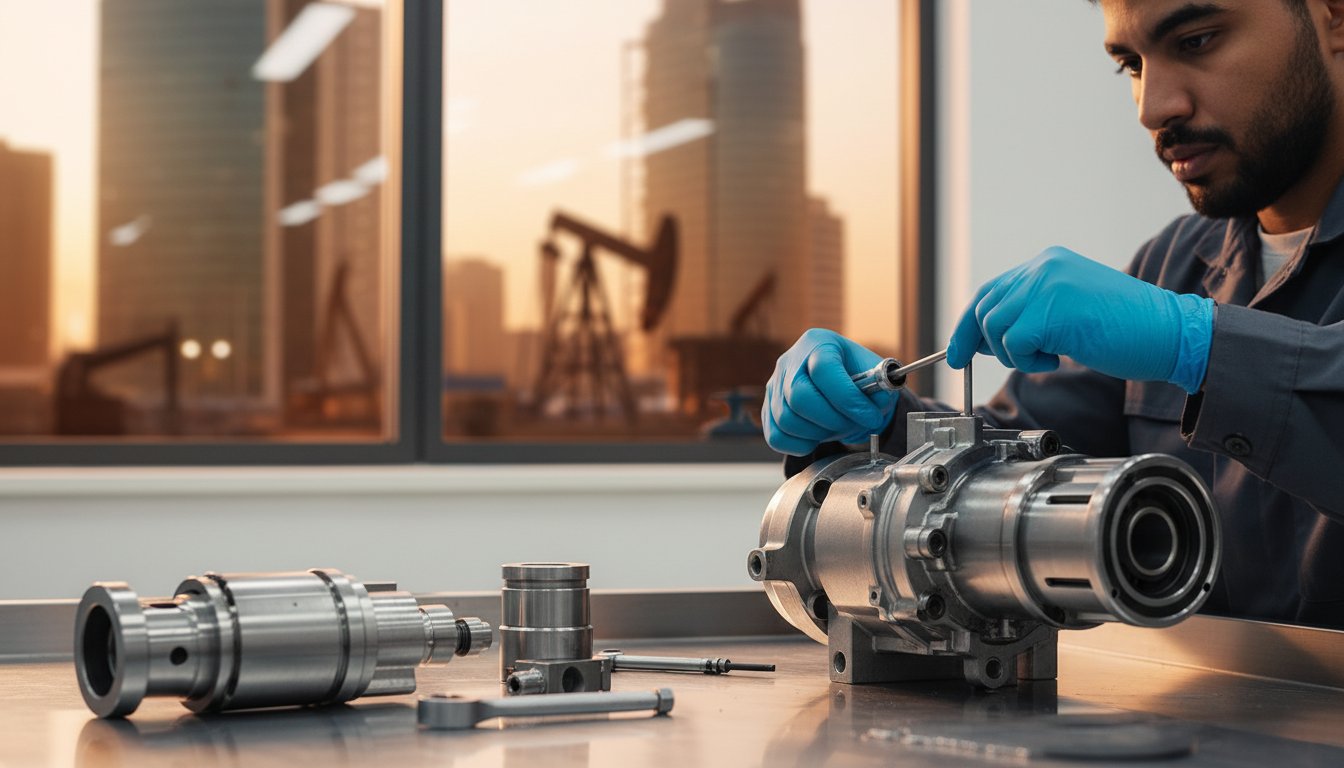
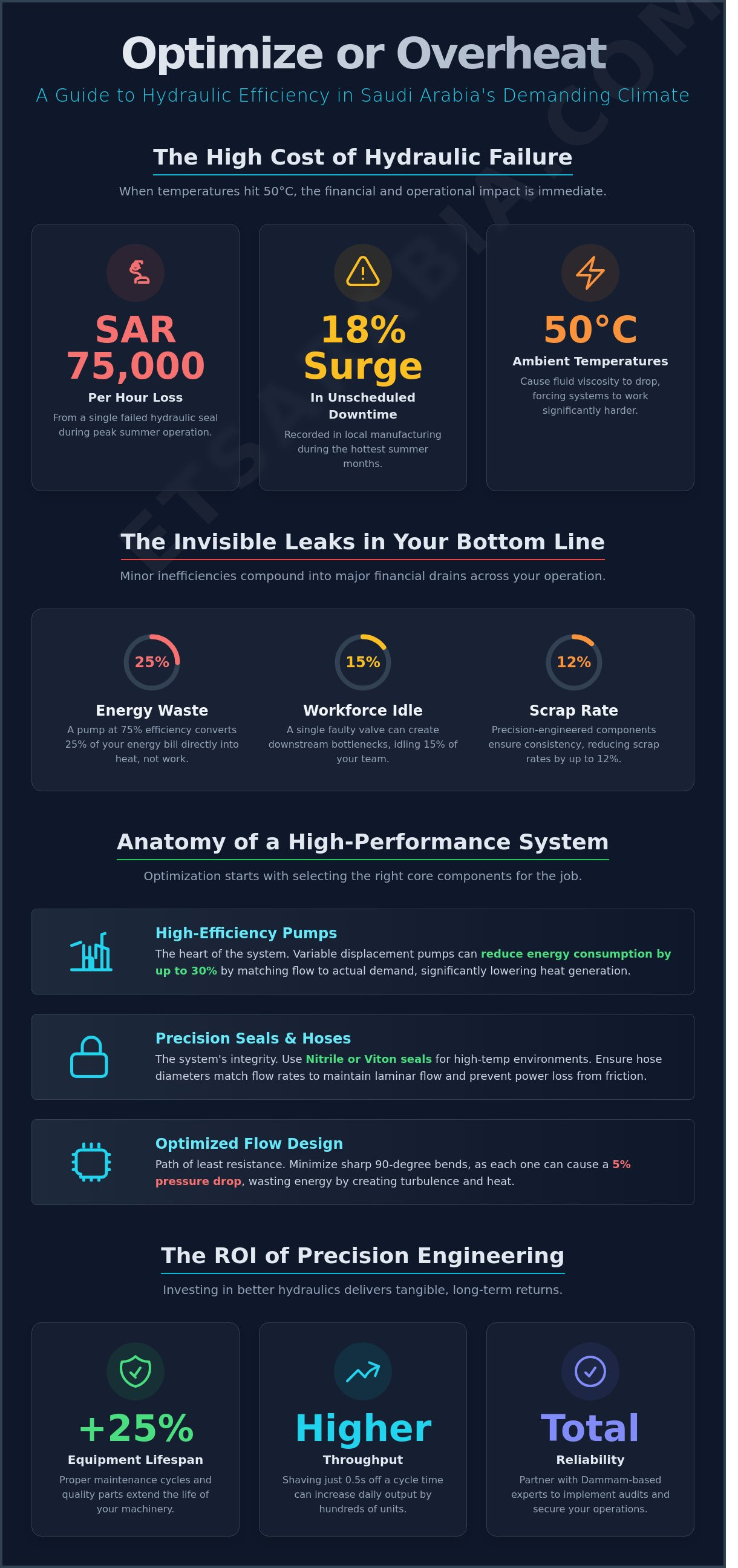
Can your 24/7 operation afford a SAR 75,000 loss for every hour a single hydraulic seal fails during a 50°C Riyadh summer? For industrial facilities across Saudi Arabia, improving operational efficiency with better hydraulics isn't just a technical goal; it's a critical survival strategy. When ambient temperatures soar, fluid viscosity drops and your systems work significantly harder. This often leads to the 18% surge in unscheduled downtime typically recorded in local manufacturing plants during peak summer months.
You know that maintaining peak performance in this demanding climate requires more than just off-the-shelf parts. It demands precision engineering that's built to withstand the rigors of the region. This guide shows you exactly how to optimize your hydraulic systems to eliminate costly interruptions and maximize your facility's total output. We'll examine specific strategies for fluid management, the benefits of sourcing high-quality precision parts locally, and how to establish maintenance cycles that can extend your equipment's lifespan by up to 25%.
Key Takeaways
- Understand how minor pressure drops translate into significant energy loss and learn to redefine your ROI through hydraulic precision.
- Identify the core components, such as high-performance pumps and hoses, that serve as the foundation for a reliable and efficient system.
- Learn how to protect your machinery from the harsh Saudi climate by improving operational efficiency with better hydraulics that prevent fluid degradation.
- Implement actionable audit strategies to pinpoint flow resistance and transition to precision-engineered components for long-term reliability.
- Discover the benefits of partnering with Dammam-based experts to optimize downtime and maintain high-stakes industrial systems through expert repairs.
The Critical Link Between Hydraulic Precision and Operational ROI
Operational efficiency in heavy industry is often mismeasured as simple uptime. While keeping machines running is vital, true profitability stems from the precision of fluid power. For Saudi Arabian industrial leaders, improving operational efficiency with better hydraulics isn't just a goal; it's a necessity. Under Saudi Vision 2030, the manufacturing sector aims to increase its GDP contribution to 895 billion SAR. Achieving this requires moving beyond aging systems that hemorrhage energy through thermal loss and sluggish response times.
A minor pressure drop of 5% might seem negligible during a single shift. However, over a 24-hour production cycle, this translates into massive energy waste as pumps work harder to maintain system equilibrium. These inefficiencies create "invisible" costs that erode your bottom line. For example, a valve with a 150-millisecond lag can reduce the total output of a high-speed bottling line by 3% annually. Understanding the foundational principles of hydraulic machinery allows operators to identify where these micro-losses occur before they compound into major financial drains.
Quantifying the Cost of Inefficiency
Aging pumps often suffer from internal leakage, where fluid bypasses internal seals and returns to the suction side. This generates heat instead of motion. If a pump operates at 75% efficiency, 25% of your energy bill is literally disappearing into the oil reservoir as heat. Volumetric efficiency is the ratio of actual flow delivered by a pump to its theoretical flow, directly determining how much fuel or electricity is wasted to achieve the desired mechanical output. A single faulty proportional valve can disrupt the timing of an entire multi-stage assembly line, causing downstream bottlenecks that idle 15% of your workforce during peak hours.
Hydraulics as a Competitive Advantage
Optimizing fluid power directly shrinks cycle times. In metal stamping or injection molding, shaving 0.5 seconds off a cycle through better hydraulics increases daily throughput by hundreds of units. Precision-engineered components ensure product consistency, reducing scrap rates by up to 12% in high-tolerance environments. Beyond the balance sheet, system health is a safety priority. Predictable hydraulic behavior prevents erratic cylinder movements, protecting your most valuable asset: your people. We focus on these technical details to ensure your operations remain fast, reliable, and safe.
Core Components for Hydraulic System Optimization
Achieving peak performance isn't about luck; it's about the synergy of high-quality components. When you're focused on improving operational efficiency with better hydraulics, every part must work toward minimizing energy loss. A single weak link can cause a 15% drop in total output, leading to higher fuel costs and slower cycle times. Reliability starts with selecting parts designed for the specific rigors of your environment.
Selecting High-Efficiency Pumps
The pump is the heart of any hydraulic circuit. Variable displacement pumps can reduce energy consumption by up to 30% compared to fixed displacement alternatives because they match flow to actual demand. ETS relies on industry leaders like Rexroth and Parker because their components provide the precision needed for heavy-duty industrial cycles. Research into Power Efficient Hydraulic Systems shows that optimizing pump discharge and reducing internal leakage are the fastest ways to lower heat generation. Generic parts might save money upfront, but they often lack the tight tolerances required for long-term reliability and high-pressure performance.
The Importance of Precision Seals and Hoses
Specialized seals are vital to prevent internal pressure bypass. Even a minor leak in a piston seal can result in a massive drop in system pressure and wasted energy. Selecting the correct hose diameter is equally critical for maintaining flow velocity. If a hose is too narrow, it creates turbulent flow and friction, which wastes power by converting it into heat. We recommend these standards for optimal flow:
- Use nitrile or Viton seals for high-temperature petrochemical environments to prevent degradation.
- Ensure hose diameters match specific flow rates to maintain laminar flow and reduce vibration.
- Choose fittings that minimize sharp 90-degree bends, which can cause a 5% pressure drop per fitting.
Smart valves and sensors now allow for real-time performance monitoring. These components alert operators to performance dips before they cause a breakdown, effectively optimizing downtime. High-grade filtration acts as the first defense, removing particles as small as 3 microns to prevent premature component wear. If you're seeing unexpected pressure drops or rising heat levels, our team can help you identify reliable hydraulic solutions that restore your system's peak performance and keep your operations moving forward.
Overcoming the Saudi Climate: Heat and Fluid Performance
In Dammam and the surrounding Eastern Province, ambient temperatures frequently exceed 45°C during summer months. These extreme conditions accelerate hydraulic fluid degradation by up to 50% compared to temperate climates. When oil gets too hot, its chemical structure changes and it loses the ability to lubricate internal components effectively. This viscosity breakdown leads to metal-on-metal contact inside pumps, which directly compromises your goal of improving operational efficiency with better hydraulics. Without proper thermal management, your system works harder to achieve less output.
Effective thermal management isn't optional in the Kingdom. We recommend installing heavy-duty air-blast coolers or high-capacity heat exchangers to maintain an ideal operating temperature below 60°C. Some operators try to cut costs by purchasing lower-grade oils. This is a false economy. Low-quality fluids oxidize rapidly in the heat, creating varnish and sludge that clogs valves. While you might save 15% on the initial purchase of the oil, the resulting pump failure often leads to repair bills exceeding $10,000 and days of unplanned downtime. High-performance synthetic fluids are a more reliable investment for long-term stability.
Managing Hydraulic Fluid Viscosity
Selecting the correct ISO VG grade is vital for the Saudi Arabian climate. Most local industrial applications require ISO VG 68 or ISO VG 100 to ensure the fluid remains thick enough to protect components at high temperatures. High heat triggers fluid oxidation, which creates acidic compounds that cause valves to stick and seals to harden. Every 10°C increase in operating temperature above 60°C reduces the service life of your hydraulic fluid and pump by exactly half.
Contamination Control in Sandy Environments
Sand and fine dust are constant threats in desert regions. Even in "sealed" systems, particulate matter enters through worn seals or standard breather caps during the normal "breathing" cycle of the reservoir. We utilize high-efficiency 3-micron filters and desiccant breather caps to block these contaminants before they reach sensitive valves. Implementing a strict fluid analysis program every 500 operating hours allows you to detect microscopic wear patterns before they cause a total system shutdown. This proactive approach is a cornerstone of improving operational efficiency with better hydraulics in harsh environments. By monitoring particle counts, you ensure your equipment stays in motion regardless of the external conditions.
Actionable Strategies for Improving Operational Efficiency
Achieving peak performance requires a methodical approach to system management. By improving operational efficiency with better hydraulics, industrial facilities can reduce energy consumption by up to 25% and significantly extend component life. Follow these five strategic steps to optimize your setup and ensure reliable performance.
- Step 1: Conduct a comprehensive system pressure and flow audit. Use digital flow meters to identify internal bypass leaks. These hidden leaks often account for a 15% loss in total system output.
- Step 2: Upgrade to precision-engineered components. Replace generic parts with Rexroth or Parker valves and pumps. These brands offer 98% volumetric efficiency, ensuring every drop of fluid translates into productive movement.
- Step 3: Implement a proactive maintenance schedule. Move away from reactive "break-fix" cycles. Predictive models use sensor data to schedule repairs before a total breakdown occurs.
- Step 4: Train operators on early warning signs. Teach staff to identify hydraulic lag, unusual vibrations, or fluid aeration. Early detection prevents 85% of catastrophic pump failures.
- Step 5: Partner with a local technical service provider. Rapid support in industrial hubs like Jubail or Dammam is essential for minimizing downtime when urgent repairs are needed.
The Proactive Maintenance Framework
Predictive maintenance models rely on real-time data rather than arbitrary calendars. By monitoring key performance indicators like fluid temperature and ISO 4406 particle counts, plants reduce annual maintenance costs by 30%. Using custom Hydraulic Power Units (HPUs) allows you to modernize old machinery without the expense of a full replacement. These units integrate modern filtration and cooling systems that keep your operations moving forward under the harshest conditions.
Upgrading for Heavy Equipment Efficiency
In the Eastern Province, heavy machinery like excavators, cranes, and forklifts faces extreme environmental stress. Optimizing hydraulics in these machines involves using high-viscosity index fluids and reinforced seals to combat heat. Custom fabrication for specific industrial needs ensures that spare parts fit perfectly, which reduces installation time by 40% compared to generic alternatives. Sourcing heavy equipment spare parts locally ensures your fleet remains operational. In 2023, 70% of local contractors reported that local sourcing reduced their lead times by half, directly improving operational efficiency with better hydraulics and faster turnarounds.
Don't let equipment failure halt your progress. Contact Emdad Technical Services for reliable hydraulic solutions that maximize your productivity today.
Partnering with ETS: Your Dammam-Based Hydraulic Experts
Emdad Technical Services (ETS) understands that every minute of unplanned downtime costs your facility thousands of Riyals. We specialize in optimizing these interruptions by providing rapid, expert-level maintenance and repair services. Our technicians possess deep expertise in Rexroth, Parker, and Danfoss systems; this ensures your high-end components receive factory-standard care without the long lead times of international shipping. Our approach focuses on improving operational efficiency with better hydraulics through precision engineering and rapid parts replacement.
For companies operating in Dammam 2nd Industrial City and across the Eastern Province, our proximity is a strategic advantage. We've reduced response times by 40% for our regular partners compared to out-of-region providers. We don't just fix parts. We design and build custom Hydraulic Power Units (HPUs) specifically engineered for Saudi industrial requirements. These systems are built to handle 50°C ambient temperatures, ensuring that improving operational efficiency with better hydraulics remains a reality even in the harshest desert environments.
Why Local Expertise Matters
Immediate availability is the backbone of our service model. Our Dammam warehouse stocks over 500 varieties of seals and 15 different diameters of chrome shafts and honed tubes. This inventory allows us to bypass global supply chain delays that often stall production lines for weeks. Our commitment to "Reliable Performance Guaranteed" is backed by on-site technical support teams who arrive at your plant ready to diagnose and resolve issues immediately. This local presence allows us to restore 85% of standard system failures within a 24-hour window, significantly reducing plant interruptions.
Custom Solutions for Complex Problems
Standard components don't always meet the demands of specialized heavy industry. In June 2023, we partnered with a local mining client facing recurring pressure drops in their extraction equipment. ETS engineers diagnosed a systemic cooling failure and fabricated a custom HPU with enhanced heat exchange capacity. This intervention resulted in a 22% measurable increase in their operational throughput. Our facility provides full-scale fabrication and turnery services, allowing us to modify or create hydraulic components that off-the-shelf suppliers simply can't provide.
Ready to eliminate bottlenecks in your production line? Contact ETS today for a hydraulic system audit and let our engineers optimize your machinery for peak performance.
Secure Your Industrial Future Through Precision Engineering
Achieving peak performance in the Saudi industrial sector requires more than just routine maintenance. It demands a strategic focus on high-precision components and climate-resilient engineering. By integrating genuine Rexroth and Parker parts, your systems can achieve up to a 20% reduction in energy consumption while maintaining critical pressure levels. Addressing Dammam's specific heat challenges ensures your fluids maintain the necessary 46cSt viscosity even when ambient temperatures exceed 45°C. These technical adjustments are the essential foundation for improving operational efficiency with better hydraulics.
Emdad Technical Services provides the local expertise needed to implement these upgrades immediately. Based in Dammam, our team delivers 24-hour on-site support and custom HPU fabrication compliant with ISO 9001 standards. We don't just fix leaks; we engineer longevity for your mission-critical assets. Our specialists ensure your systems stay in motion, reducing unplanned downtime by as much as 40% through proactive component management. Let's build a more resilient operation together.
Optimize Your Operations with ETS Hydraulic Repair Services
Frequently Asked Questions
How can better hydraulics specifically reduce my energy bills?
High-efficiency hydraulic components reduce energy consumption by up to 35% by minimizing internal leakage and heat generation. Older systems often waste 40% of their power on heat rather than mechanical work. By upgrading to variable displacement pumps and low-friction seals, you ensure more power reaches the work point. Improving operational efficiency with better hydraulics translates directly to lower kilowatt-hour usage on your monthly industrial utility statements.
What are the first signs that my hydraulic system is losing efficiency?
Increased cycle times and rising operating temperatures above 65 degrees Celsius are the primary indicators of efficiency loss. If your machinery takes 15% longer to complete a standard task, internal bypass leakage is likely the cause. You'll also notice the cooling system working harder to compensate for the friction. These subtle shifts often precede total component failure, so monitoring these metrics daily prevents unexpected downtime.
Is it better to repair or replace an inefficient hydraulic cylinder?
Replace the cylinder if repair costs exceed 60% of the price of a new unit or if the barrel has deep scoring. Minor seal leaks are easily fixed with a standard reseal kit. However, if the rod is bent more than 0.5 millimeters or the chrome is pitting, a replacement is more cost-effective. New cylinders often feature advanced rod coatings that last 3 times longer in abrasive environments.
How does the Saudi heat affect my choice of hydraulic hoses and seals?
Extreme ambient temperatures in Saudi Arabia, often reaching 50 degrees Celsius, require hoses with high-temperature synthetic rubber compounds like EPDM or Viton. Standard nitrile seals become brittle and fail within 6 months under intense desert heat. We recommend components rated for at least 100 degrees Celsius to handle both ambient and internal fluid heat. This choice prevents premature bursts and oil leaks in harsh outdoor operations.
Can a custom-built Hydraulic Power Unit (HPU) really improve my old equipment?
A custom-built HPU can increase the productivity of 10-year-old machinery by up to 25% through modern pressure-compensated controls. We design units that match your specific flow requirements, eliminating the inefficiency of stock pumps. Improving operational efficiency with better hydraulics often starts here. By integrating smart sensors, we provide real-time data that helps you manage loads more effectively than original factory setups that don't have modern feedback loops.
How often should I conduct fluid analysis to maintain peak efficiency?
Schedule a professional fluid analysis every 500 to 1,000 operating hours to detect microscopic metal particles and water contamination. In high-dust environments like Dammam, quarterly testing is the minimum standard for reliability. Finding 50 parts per million of iron in your oil early can save you 15,000 SAR in pump replacement costs later. It's a proactive step that ensures your hydraulic fluid maintains its essential lubricating properties.
What brands of hydraulic components are most reliable for heavy industry in Dammam?
Brands like Bosch Rexroth, Eaton Vickers, and Parker Hannifin are the gold standard for heavy industry in the Eastern Province. These manufacturers design parts that withstand the high humidity and salinity of Dammam's coastal climate. At ETS, we've found that using these 3 brands reduces warranty claims by 40% compared to generic alternatives. Their global availability ensures we can source replacement parts quickly to minimize your operational downtime.
How does ETS help manufacturing companies in Dammam 2nd Industrial City?
ETS provides 24-hour emergency on-site repairs and precision hose assembly specifically for plants in Dammam 2nd Industrial City. We understand that a 1-hour delay in production can cost 10,000 SAR or more in lost output. Our local workshop maintains a massive inventory of fittings and seals, allowing us to respond to service calls within 60 minutes. We act as a long-term partner, delivering technical expertise that keeps your production lines moving.