In high-stakes industrial operations, unplanned downtime is the most significant threat to productivity and profitability. A single, catastrophic failure can often be traced back to the smallest of components. When a system grinds to a halt, the culprit is frequently a misunderstood or incorrectly specified part: the hydraulic seal. The frustration of sourcing the right replacement quickly, only to have it fail again, points to a deeper issue that costs your operation valuable time and money in Saudi Riyals.
This ultimate guide is engineered to eliminate that uncertainty. Here, you will gain the expert knowledge to confidently identify different seal types, understand critical material properties, and select the precise solution for any application. We will empower you to move beyond simple replacement and diagnose the root cause of failures, enhancing the overall reliability and lifespan of your equipment. For our partners across Saudi Arabia, this is your first step toward preventing costly interruptions and ensuring your systems are always in motion.
The Critical Role of Hydraulic Seals in System Performance
In any high-performance hydraulic system, the components that enable motion and power are often seen as the most critical. However, the integrity of the entire system relies on a component frequently underestimated: the hydraulic seal. Far more than a simple gasket designed to stop leaks, a Hydraulic seal is a precision-engineered device responsible for containing immense pressure, enabling the conversion of fluid power into linear motion. Its performance directly dictates the efficiency, reliability, and safety of your equipment. A single, correctly specified seal ensures optimal force transmission, while a failing one can bring an entire production line to a halt, costing thousands of Riyals in lost productivity.
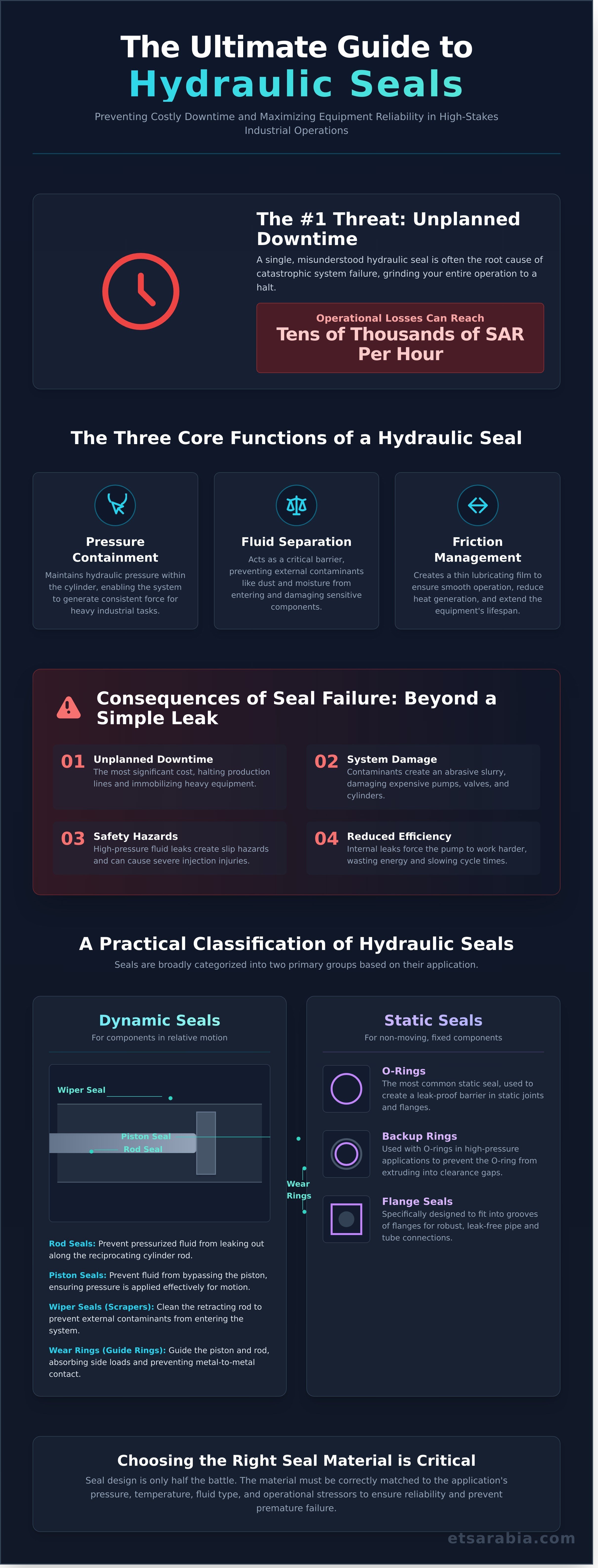
The Three Core Functions of a Hydraulic Seal
To appreciate their importance, it's essential to understand the three primary roles that high-quality hydraulic seals perform within a system:
- Pressure Containment: The seal's fundamental job is to maintain hydraulic pressure within the cylinder. This containment is what allows the system to generate the consistent force required for heavy lifting, pressing, and other industrial tasks.
- Fluid Separation: A robust seal acts as a critical barrier, keeping hydraulic fluid inside the system while preventing external contaminants like dust, moisture, and debris from entering. This function is vital for protecting sensitive components like pumps and valves from premature wear.
- Friction Management: By creating a thin lubricating film, the seal allows moving parts, such as a piston rod, to operate smoothly with minimal friction. This reduces heat generation, minimizes energy loss, and extends the operational life of the equipment.
Consequences of Seal Failure: Beyond a Simple Leak
The true cost of a failed seal extends far beyond the price of a replacement part. The operational and financial impact can be severe, leading to cascading problems that affect your entire operation:
- Unplanned Downtime: This is the most significant cost. In Saudi Arabia's fast-paced industrial sector, a halted production line or immobilized heavy equipment can result in losses amounting to tens of thousands of SAR per hour.
- System Damage: When a seal fails, contaminants can enter the hydraulic fluid, creating an abrasive slurry that damages pumps, valves, and cylinders. This leads to expensive component replacements and extensive repair work.
- Safety Hazards: High-pressure fluid leaks create dangerous slip hazards and can cause severe injection injuries if they come into contact with skin, posing a significant risk to personnel.
- Reduced Efficiency: Even minor internal leaks past a worn seal cause a drop in system pressure. The pump must work harder to compensate, leading to wasted energy, increased fuel consumption, and slower cycle times.
A Practical Classification of Hydraulic Seal Types
To select the correct component, it is essential to understand that hydraulic seals are broadly categorized into two primary groups: dynamic and static. The distinction is straightforward yet critical: dynamic seals are used between parts that are in relative motion, while static seals are applied between components that are fixed in place. Choosing the wrong type can lead to premature failure, fluid leakage, and costly operational downtime. The selection process must go beyond simple dimensions; it requires a detailed analysis of the seal's specific function within the hydraulic system.
Dynamic Seals: For Components in Motion
Dynamic seals are engineered to perform under the demanding conditions of movement, pressure, and friction. They are vital for maintaining system pressure and preventing fluid from escaping while components are in operation. According to resources from industry bodies like the Fluid Sealing Association, proper selection is paramount for system longevity. The most common types found in a hydraulic cylinder include:
- Rod Seals: These are among the most critical seals in any hydraulic system. Their primary function is to seal the reciprocating motion of the cylinder rod, preventing pressurized hydraulic fluid from leaking out of the cylinder.
- Piston Seals: Located on the piston head, these seals prevent fluid from bypassing the piston as it moves along the cylinder bore. This ensures hydraulic pressure is applied effectively to move the piston, directly impacting system force and speed.
- Wiper Seals (Scrapers): Positioned at the external end of the cylinder head, wipers serve a protective role. They clean the retracting cylinder rod, scraping off dirt, moisture, and other external contaminants that could damage internal components.
- Wear Rings (Guide Rings): These components absorb transverse forces, guiding the piston and rod to prevent metal-to-metal contact. This guidance is crucial for extending the service life of the entire sealing system.
Static Seals: For Non-Moving Parts
Static seals are used in applications where there is no relative motion between sealing surfaces. Their role is to create a reliable, leak-proof barrier between stationary components, often under high pressure. Their simplicity and effectiveness make them indispensable in hydraulic equipment.
- O-Rings: As the most common type of static seal, O-rings are used in a vast range of applications. They reliably seal static joints, flanges, and connections, providing an effective barrier against leakage.
- Backup Rings: Often used with O-rings in high-pressure scenarios. A backup ring is a rigid, extrusion-resistant component that prevents the O-ring from being forced into the clearance gap under load.
- Flange Seals: Specifically designed to fit into the grooves of flanges, these seals ensure a robust, leak-free connection in pipe and tube systems common in industrial setups across Saudi Arabia.
Choosing the Right Seal Material for Your Application
While the design of a seal is crucial, selecting the correct material is equally vital for ensuring reliable performance and preventing premature failure. The wrong material can degrade quickly when exposed to operational stressors, leading to leaks, system contamination, and costly operational downtime. A material’s properties must be precisely matched to the system’s demands to guarantee the integrity and longevity of your hydraulic seals.
Key Factors in Material Selection
To optimize performance, you must evaluate the specific conditions the seal will face. Four critical factors guide the material selection process:
- Operating Temperature: Consider the full range, from low-temperature startups to peak operational heat. Materials have distinct upper and lower limits beyond which they lose elasticity or degrade.
- System Pressure: The material must withstand the maximum operating pressure, including any potential spikes or rapid cycles, to prevent extrusion or permanent deformation.
- Hydraulic Fluid Type: Chemical compatibility is non-negotiable. The seal material must resist swelling, shrinking, or breaking down when in contact with mineral oils, synthetic fluids, water-based fluids, or other media.
- Application Environment: External factors such as exposure to chemicals, UV radiation from the sun in Saudi Arabia, or abrasive particles like dust and sand can significantly impact a seal's service life.
Common Seal Materials and Their Properties
Understanding the fundamental strengths of common polymers is the first step toward making an informed choice for your hydraulic equipment.
- Nitrile (NBR): A versatile and cost-effective choice for standard applications. It offers excellent resistance to petroleum-based oils and hydraulic fluids and is suitable for a temperature range of -35°C to 120°C. However, it has poor resistance to ozone and UV light.
- Viton® (FKM): Known for its exceptional performance in harsh conditions. FKM provides superior resistance to high temperatures (up to 200°C), chemicals, and a broad range of fluids, making it ideal for the petrochemical and heavy industrial sectors.
- Polyurethane (PU): Delivers outstanding abrasion, tear, and extrusion resistance. Its toughness makes it the preferred material for high-pressure, dynamic applications like hydraulic cylinders and rod seals where durability is paramount.
- PTFE (Teflon®): Characterized by its extremely low friction, wide temperature range (-200°C to 260°C), and near-universal chemical compatibility. It is often used in applications requiring smooth, low-friction movement.
Specialty Materials for Harsh Environments
Standard materials may not suffice for applications involving extreme heat, aggressive chemicals, or specific industry requirements like food-grade compliance. In these demanding scenarios, specialized elastomers and plastics are engineered to provide reliable sealing. Consulting an expert is the most effective way to identify the optimal material and avoid system failure.
If you are facing a unique sealing challenge, our team has the expertise to specify the right solution. Need a seal for a tough application? Our experts can help.
Common Causes of Hydraulic Seal Failure and How to Prevent Them
Identifying a failed hydraulic seal is only the first step. True operational efficiency comes from understanding the root cause to prevent future occurrences. A leaking or damaged seal is often a symptom of a larger systemic issue, such as excessive pressure, contamination, or improper installation. By diagnosing the failure mode correctly, you can implement targeted solutions that enhance reliability and minimize costly downtime in your Saudi Arabian operations.
Diagnosing Common Failure Modes
Visually inspecting a failed seal provides critical clues to the underlying problem. Here are the most common failure modes and their indicators:
- Extrusion: The seal appears nibbled, chipped, or has scalloped edges. This occurs when high pressure forces the seal material into the clearance gap between metal components. Prevention: Ensure system pressure does not exceed the seal's rating and verify that hardware clearances meet design specifications.
- Abrasion: The seal surface looks dull, worn, or polished, often with fine scratches. This is caused by rough hardware surfaces or abrasive particles circulating in the hydraulic fluid. Prevention: Use high-quality fluid filtration and ensure all metal surfaces, like cylinder rods, are smooth and free of defects.
- Contamination: Characterized by distinct nicks, cuts, or embedded particles on the seal surface. Metal shavings, dirt, or other foreign debris are the direct cause. Prevention: Meticulously clean all components before assembly and maintain a stringent fluid filtration schedule.
- Chemical Degradation: The seal may appear swollen, soft, cracked, or discolored. This results from incompatibility between the seal material and the hydraulic fluid or external chemicals. Prevention: Always use hydraulic fluids recommended by the OEM and confirm the seal material is compatible with your system's operating environment.
Preventive Maintenance and Proper Installation
A proactive strategy is your best defence against premature seal failure. This includes maintaining exceptionally clean hydraulic fluid through proper filtration, regularly monitoring system temperature and pressure to stay within operational limits, and inspecting cylinder rods for damage that could tear seals upon actuation.
Even the highest quality hydraulic seals will fail if installed incorrectly. Always use the correct, non-metallic installation tools to avoid nicks and cuts. Ensure both the seal and the housing are meticulously clean and free of burrs or sharp edges. Proper lubrication is critical to prevent damage during assembly. For expert guidance and access to reliable components that ensure long-term performance, contact the specialists at ETS.
Secure Your System's Performance with a Reliable Sealing Partner
As this guide has shown, the performance and longevity of your equipment depend directly on making informed sealing decisions. Choosing the correct seal type and material is not just a detail-it's a critical strategy for preventing leaks and costly system failure. By understanding the root causes of degradation, you can significantly reduce operational downtime and enhance productivity.
For businesses in Saudi Arabia, securing the right components promptly is essential. Emdad Technical Services (ETS) is your trusted partner for high-performance sealing solutions. We combine an extensive in-stock inventory of hydraulic seals in Dammam with partnerships with leading global manufacturers. This ensures you receive premium-quality parts without delay. Our expert technical support team is always ready to help you select the precise component to optimize your application's performance.
Find the right hydraulic seals in Saudi Arabia. Contact ETS for expert sourcing. Choose a partner dedicated to keeping your operations moving forward with confidence and reliability.
Frequently Asked Questions About Hydraulic Seals
What is the difference between a hydraulic seal and a gasket?
While both prevent leaks, their application differs significantly. A hydraulic seal is engineered for dynamic applications where there is relative motion between parts, such as a piston moving within a cylinder. Conversely, a gasket is used in static applications to create a seal between two stationary surfaces, like mating flanges. Choosing the correct component is critical for system integrity and preventing costly fluid loss and contamination in your machinery, ensuring reliable performance.
How long do hydraulic seals typically last?
The operational lifespan of a hydraulic seal is not fixed; it is influenced by multiple factors including system pressure, operating temperature, fluid compatibility, and hardware surface finish. In ideal conditions within Saudi Arabia's demanding industrial environments, a quality seal can last for thousands of hours. However, exposure to contaminants or improper installation can significantly reduce its service life. Regular inspections are key to preemptive maintenance and avoiding unexpected operational downtime.
Can you reuse a hydraulic seal after it has been removed?
We strongly advise against reusing any hydraulic seal. Once a seal has been installed and compressed, it conforms to the specific dimensions of its housing. Removing it often causes microscopic damage or stretching that compromises its sealing ability. Re-installation will almost certainly lead to premature failure, system leaks, and potentially catastrophic equipment damage. For guaranteed reliability, always use a new, high-quality seal for every installation to minimize operational risk.
What are the first signs that a hydraulic seal is beginning to fail?
The most obvious sign of a failing seal is an external fluid leak around a cylinder rod or piston. However, early indicators can be more subtle, such as a gradual decrease in system performance, slower cylinder actuation, or a loss of holding power. You might also notice increased operating temperatures or unusual noises from the hydraulic system. Addressing these early warning signs promptly is essential to prevent extensive damage and costly, unplanned operational downtime.
How do I measure a hydraulic seal to find a replacement?
To ensure an exact match for a replacement, precise measurement is crucial. For most hydraulic seals, you will need three key dimensions: the Inside Diameter (ID), the Outside Diameter (OD), and the Cross-Section (CS) or height. Use a calibrated digital caliper for the most accurate results. Measure the seal in several places to account for any wear. Providing these precise measurements to your supplier guarantees you receive the correct component, ensuring a perfect fit and optimal performance.
Why is it important to use a backup ring with an O-ring?
In high-pressure hydraulic applications, an O-ring alone can be forced into the clearance gap between mating components, a failure known as extrusion. A backup ring, made from a harder, more wear-resistant material, is installed alongside the O-ring to provide a solid barrier, physically blocking the extrusion path. This allows the O-ring to maintain its seal under significantly higher pressures, enhancing system reliability and extending the service life of the entire seal assembly.