On October 14, a maintenance supervisor at a major petrochemical facility in Jubail watched as a 120,000 SAR per hour production line went dark due to a sudden, unexplained loss of system pressure. You’ve likely felt that same frustration when a critical unit fails and the pressure to restore performance falls squarely on your shoulders. Effective hydraulic power pack troubleshooting is the only way to move from frantic guesswork to precision repair while protecting your valuable machinery from further damage.
We recognize that your priority is minimizing operational interruptions while avoiding the risk of making a technical failure worse through an incorrect fix. This guide provides the systematic approach you need to master. You'll learn how to diagnose HPU failures accurately, restore your industrial operations quickly, and gain the confidence to make the right call every time. We're providing a clear framework to help you decide between an immediate internal repair or calling a specialist. By following these professional diagnostic steps, you can reduce fault recurrence by 40% and ensure your systems stay in motion.
Key Takeaways
- Adopt a systematic diagnostic framework focused on the three pillars of HPU health to identify the root cause of any operational failure.
- Master professional hydraulic power pack troubleshooting techniques, including the "Look, Listen, Feel" method, to detect and resolve common issues like fluid aeration.
- Understand how to mitigate the "Thermal Runaway" effect caused by harsh climates to protect your hydraulic fluid's viscosity and extend component life.
- Establish proactive maintenance routines using high-quality parts to minimize unexpected downtime and ensure your industrial systems remain in motion.
- Learn when to transition from DIY fixes to professional HPU repair services to avoid risking total system failure and ensure precision performance.
Understanding Hydraulic Power Pack Failure Modes
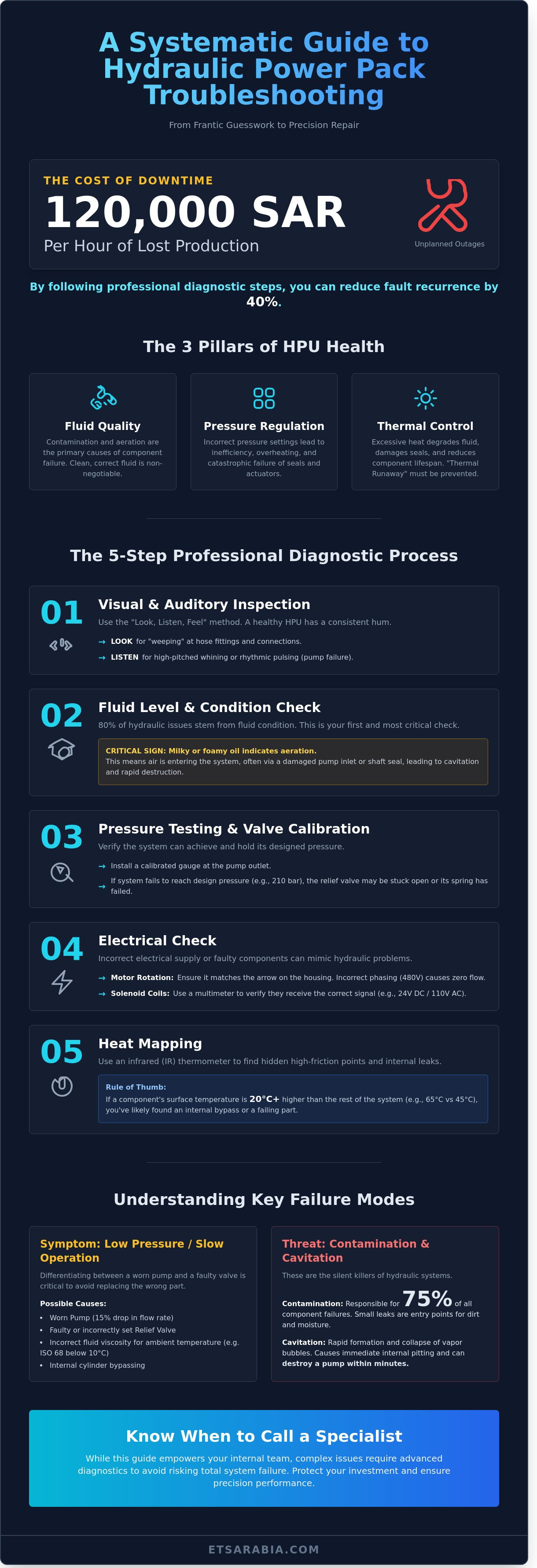
Effective hydraulic power pack troubleshooting isn't about guesswork; it's a rigorous, systematic process of elimination designed to restore system integrity. At Emdad Technical Services (ETS), we view HPU health through three critical pillars: fluid quality, pressure regulation, and thermal control. When one pillar weakens, the entire system risks collapse. Professionals use the Symptom-Cause-Correction framework to identify issues before they escalate. This methodical approach ensures that a minor vibration doesn't transform into a total motor burnout. Ignoring a 10% increase in operating noise often leads to catastrophic failure within 48 hours of heavy operation.
Common HPU Components and Their Roles
Reliable performance depends on components functioning within their designed parameters. The reservoir is more than a storage tank; it acts as a vital heat exchanger and de-aerator, allowing air to escape and heat to dissipate. Positive displacement pumps are the heart of the system, where a 15% drop in flow rate typically indicates internal gear or piston wear. Relief valves serve as the critical safety gate for pressure management. If these valves stick, the resulting pressure spikes can rupture seals and damage downstream actuators instantly.
The Cost of Delayed Troubleshooting
In Saudi Arabia's high-stakes oil and gas sectors, unplanned downtime is an expensive liability. Industry data suggests that a single hour of lost production in the Eastern Province can cost operators upwards of $20,000 in lost revenue. Small leaks are never just leaks; they are entry points for hydraulic contamination, which accounts for 75% of all component failures. Rapid hydraulic power pack troubleshooting prevents these minor issues from compounding. Cavitation is the rapid formation and collapse of vapor bubbles within the hydraulic fluid, which causes immediate internal pitting and destroys pump life within minutes of onset. Our expert teams focus on these early warning signs to ensure your operations remain in motion without costly interruptions.
Step-by-Step Diagnostic Guide for Common HPU Problems
Effective hydraulic power pack troubleshooting requires a systematic approach to identify root causes before they lead to catastrophic component failure. Statistics from industrial maintenance logs suggest that 80% of hydraulic system issues stem from fluid condition or improper pressure settings. Following a logical sequence prevents unnecessary parts replacement and reduces mean time to repair.
- Step 1: Visual and Auditory Inspection: Walk around the unit while it's under load. Look for "weeping" at hose fittings and listen for high-pitched whining. A healthy HPU should maintain a consistent hum; rhythmic pulsing usually indicates a pump piston failure or a faulty vane.
- Step 2: Checking Fluid Levels and Aeration: Check the reservoir sight glass first. If the oil looks milky or foamy, air is entering the system. This often happens at the pump inlet or through a damaged shaft seal.
- Step 3: Pressure Testing and Relief Valve Calibration: Install a calibrated pressure gauge at the pump outlet. If the system fails to reach its 210 bar design pressure, the relief valve might be stuck open or its spring may have lost tension.
- Step 4: Electrical Check: Verify the motor rotation matches the arrow on the housing. Incorrect phasing during a recent 480V installation can cause the pump to run backward, providing no flow. Check solenoid coils with a multimeter to ensure they're receiving the required 24V DC or 110V AC signal.
- Step 5: Heat Mapping: Use an infrared (IR) thermometer to scan valves and cylinders. If a component's surface temperature exceeds 65°C while the rest of the system is at 45°C, you've found an internal bypass or high-friction point.
Addressing Low Pressure and Slow Operation
Differentiating between a worn pump and a faulty relief valve is critical. If the system reaches pressure slowly, check the oil viscosity. Using an ISO 68 oil when the ambient temperature is below 10°C will cause sluggish response times. To check for internal cylinder bypassing without disassembly, extend the rod fully and hold the control valve open. If the return line gets hot to the touch within 60 seconds, fluid is leaking past the piston seals. For precision system audits, Emdad Technical Services provides advanced diagnostic tools to pinpoint these hidden inefficiencies.
Identifying Excessive Noise and Vibration
Distinguishing between cavitation and aeration is the first step in noise reduction. Cavitation sounds like marbles rattling inside the pump and is usually caused by a clogged 100-mesh suction strainer. Aeration produces a sharper, banging sound. Check the suction line integrity; even a pinhole leak above the oil level can pull in enough air to cause massive vibration. Ensure the motor-to-pump coupling is aligned within 0.05mm to prevent mechanical resonance that can shatter pump bearings within 500 operating hours.
Troubleshooting for Harsh Climates: Heat and Contamination
In the Eastern Province of Saudi Arabia, ambient temperatures frequently exceed 50°C during summer months. These extreme conditions make hydraulic power pack troubleshooting a specialized task that requires more than just basic mechanical knowledge. When your HPU operates in these environments, you'll likely face the "Thermal Runaway" effect. This occurs when high ambient heat prevents the system from shedding internal heat generated by pressure drops. As the oil temperature climbs past 65°C, fluid viscosity drops below safe operating limits. This leads to a 300% increase in component wear and causes internal seals to harden and fail prematurely.
Sand and dust ingress represent the second major threat in regions like Dammam and Jubail. Microscopic silica particles, often smaller than 5 microns, bypass standard filters and act as an abrasive paste within your valves. To maintain reliable performance, you must adjust your maintenance schedules. While manufacturers might suggest 2,000-hour service intervals, local conditions often require reducing these to 750 or 1,000 hours to prevent catastrophic failure.
Managing Hydraulic Overheating
Heat is the primary cause of 80% of hydraulic component failures in the Gulf. To keep your systems running, establish a weekly schedule to pressure-wash heat exchanger fins. Dust buildup can reduce cooling efficiency by 40% in just a few days. We recommend setting your thermostat triggers for high-temperature alarms at 60°C and forced shutdowns at 70°C. If your system consistently runs hot, your reservoir might be undersized. A professional HPU should have a reservoir capacity at least three times the pump's flow rate per minute to allow for natural heat dissipation. If you're operating at a 1:1 ratio, it's time to upgrade to an active air-oil or water-glycol cooling system.
Contamination Control in Sandy Environments
Preventing contamination is far more cost-effective than repairing a scored cylinder. Most particulate matter enters the system through the air breather. Standard filler caps aren't enough; you need high-efficiency, 3-micron absolute-rated desiccant breathers to block fine sand and moisture. Avoid the common mistake of "topping up" oil from open drums. Statistics show that 70% of system contamination is introduced during fluid replenishment. Always use a portable filtration cart when adding oil to ensure the fluid meets ISO 4406 cleanliness standards. Implement a monthly oil analysis program to track microscopic wear metals. This data lets you catch a failing pump weeks before it causes a total system shutdown, effectively optimizing downtime and protecting your investment.
Preventive Maintenance: Stopping Problems Before They Start
Effective hydraulic power pack troubleshooting starts long before a system failure occurs. Reliability depends on consistent monitoring and a proactive approach to wear. Industrial operators should follow a strict daily checklist focusing on fluid levels and visual leak detection. Weekly inspections must include checking filter indicators and verifying system pressure against established baselines. A standard industrial HPU typically maintains an operating temperature between 45°C and 55°C. If temperatures exceed 65°C, it's a clear sign of internal efficiency loss or cooling failure.
Using premium components from brands like Rexroth, Parker, or Danfoss reduces the frequency of emergency repairs. Data shows that off-brand components often fail 40% faster under high-pressure conditions compared to these industry leaders. Beyond hardware, staff training is vital. Operators must be able to identify fluid foaming immediately. This usually signals air entering the system through a loose suction line. Addressing this within the first 15 minutes prevents catastrophic pump cavitation and expensive downtime.
Filtration and Fluid Management
Change pressure and return-line filters when indicators reach the 75% bypass threshold or every 2,000 operating hours. For high-duty cycle units, kidney-loop filtration systems are vital because they continuously polish the oil, often extending component life by 300%. In regions like Saudi Arabia where ambient heat is extreme, selecting an ISO VG 68 oil provides better viscosity than the standard VG 46. This ensures the pump remains lubricated even when external temperatures exceed 40°C.
Component Longevity Strategies
Inspect hoses for "weeping" at the crimp points during every shift change. Statistics show 90% of hose failures occur near the fittings due to constant vibration and pressure spikes. If you keep spare pumps in storage, rotate the shafts manually every 90 days to prevent seals from drying out. High-quality hydraulic seals and fittings are the primary defense against internal pressure loss and external fluid leaks. Implementing these small steps ensures your hydraulic power pack troubleshooting sessions remain rare and manageable.
Minimize your operational risks with our professional maintenance solutions. Contact ETS today for expert HPU support.
Professional HPU Repair: When to Call the Experts at ETS
While basic hydraulic power pack troubleshooting helps identify minor leaks or clogged filters, there's a clear point of no return where internal component damage becomes a high-risk factor. If your system experiences a persistent 15% drop in operating pressure or fluid temperatures consistently exceeding 82°C, continuing DIY repairs often leads to catastrophic failure. At this stage, professional intervention prevents a 5,000 SAR pump replacement from turning into a 50,000 SAR system overhaul.
ETS technicians utilize advanced diagnostic tools like digital flow meters and high-frequency pressure transducers. These instruments detect internal bypass and cavitation that manual gauges simply miss. For aging systems, we provide custom HPU fabrication as a modern solution. This replaces 20-year-old units with energy-efficient designs that can reduce your facility's power consumption by up to 25% while improving cycle times.
ETS Hydraulic Repair Services
Our facility provides comprehensive overhauls for pumps, cylinders, and directional control valves. Every repaired component undergoes rigorous validation on our specialized hydraulic test bench to ensure it meets original manufacturer specifications. In a 2023 project for a manufacturing plant in Dammam, ETS identified a recurring valve synchronization issue that had caused three separate shutdowns. By recalibrating the system on our test bench, we achieved a 42% reduction in annual downtime for that specific production line.
Secure Your Operations with a Technical Partner
Relying on reactive maintenance is a gamble that costs Saudi industrial leaders millions in lost productivity each year. ETS offers structured maintenance contracts for mission-critical HPUs, providing scheduled inspections and priority response across the Eastern Province. As a local supplier with access to global brands like Bosch Rexroth and Parker, we maintain a localized inventory of critical spare parts. This strategy eliminates the 4-week lead times typically associated with international shipping.
Our team understands that every minute of a stopped line impacts your bottom line. We deliver expertise you can trust to keep your systems in motion. Don't let a minor technical glitch paralyze your facility. Contact ETS for urgent hydraulic troubleshooting and repair services to restore your system's peak performance immediately.
Secure Your Systems with Proactive Hydraulic Care
Effective hydraulic power pack troubleshooting requires a systematic approach to identifying fluid contamination and heat-related wear. Implementing a 500-hour preventive maintenance schedule significantly reduces the risk of sudden system failure. When internal leaks or pump cavitation occur, prompt diagnostics are essential to protect your industrial assets. ETS operates an ISO 9001:2015 certified repair facility to ensure every component meets rigorous global standards. We provide 24/7 emergency support across Dammam to resolve critical issues within hours, effectively optimizing downtime for your facility. As an authorized distributor for leading global hydraulic brands, we provide genuine parts that can extend equipment life by up to 40% compared to generic alternatives.
Our team is ready to restore your system's peak performance immediately. Reliability isn't just a goal; it's a guarantee we deliver through technical precision. Request Expert Hydraulic Troubleshooting & Repair from ETS to secure your operations today. Your productivity is our priority; we're here to ensure your machinery never stops.
Frequently Asked Questions
Why is my hydraulic power pack making a high-pitched whining sound?
A high-pitched whining sound usually indicates pump cavitation or aeration within the system. Cavitation occurs when the fluid doesn't fill the pump's internal volume completely, often caused by a suction strainer that is 90% clogged or a restricted inlet line. This condition can destroy a precision pump in under 24 hours. You must check the fluid level and inspect all intake filters to ensure 100% flow to prevent permanent metal-to-metal damage.
How often should I change the hydraulic fluid in a power pack?
You should change hydraulic fluid every 2,000 to 4,000 operating hours or at least once every 12 months to maintain system integrity. In high-dust environments like Dammam, 75% of hydraulic failures stem directly from fluid contamination. Regular oil analysis every 500 hours helps identify when additives have depleted or when particulate counts exceed ISO 4406 cleanliness standards. This proactive maintenance ensures your power pack maintains 100% operating efficiency.
What are the first steps to take when a hydraulic system loses all pressure?
Check the reservoir fluid level and the pump drive coupling immediately to identify the source of the pressure loss. If the fluid level is below the 20% mark, the pump will suck air and fail to prime. Next, verify that the relief valve isn't stuck in the open position due to debris. Effective hydraulic power pack troubleshooting begins with these basic visual inspections before moving to complex gauge testing or expensive component teardowns.
Can high ambient temperatures in Saudi Arabia cause HPU failure?
Yes, ambient temperatures exceeding 45 degrees Celsius in Saudi Arabia frequently cause hydraulic fluid to thin out, which leads to internal leakage and overheating. When oil temperature rises above 60 degrees Celsius, seal life decreases by 50% for every 10 degree increase in heat. We recommend installing an oversized heat exchanger or an air-blast cooler to maintain an ideal operating range of 40 to 55 degrees Celsius for maximum component longevity.
What is the difference between cavitation and aeration in a hydraulic pump?
Cavitation is the formation and collapse of vapor bubbles due to low pressure at the pump inlet, while aeration is the presence of outside air in the fluid. Cavitation sounds like marbles rattling in the pump and usually results from a restricted suction line. Aeration creates a softer whining noise and causes spongy cylinder movement. Both conditions lead to rapid component wear and must be resolved immediately to optimize downtime and protect your investment.
When should I consider replacing my HPU instead of repairing it?
You should replace your HPU when repair costs exceed 65% of the price of a new unit or if the system is more than 15 years old. Frequent breakdowns that cause more than 4 hours of weekly downtime suggest that internal components have reached their fatigue limit. Upgrading to a modern unit often provides a 20% increase in energy efficiency through improved pump technology and better thermal management systems that keep your operations moving forward.
Does Emdad Technical Services provide on-site hydraulic troubleshooting in Dammam?
ETS provides 24/7 on-site hydraulic power pack troubleshooting and repair services across Dammam and the Eastern Province. Our mobile service teams arrive with calibrated testing equipment to diagnose faults within 60 minutes of arrival on your site. We focus on rapid response to ensure your operations remain in motion, offering a 100% reliability guarantee on all field repairs and component replacements. Our expertise ensures your systems return to peak performance quickly.
What are the common causes of a hydraulic motor not turning?
A hydraulic motor fails to turn primarily due to a broken drive shaft, excessive internal leakage, or a seized rotating group. If the motor receives 100% of the required flow but doesn't rotate, the internal mechanical tolerances have likely failed. You should check the case drain flow; if it exceeds 10% of the total pump output, the motor is worn out. It requires an immediate professional overhaul to restore the torque necessary for your industrial applications.