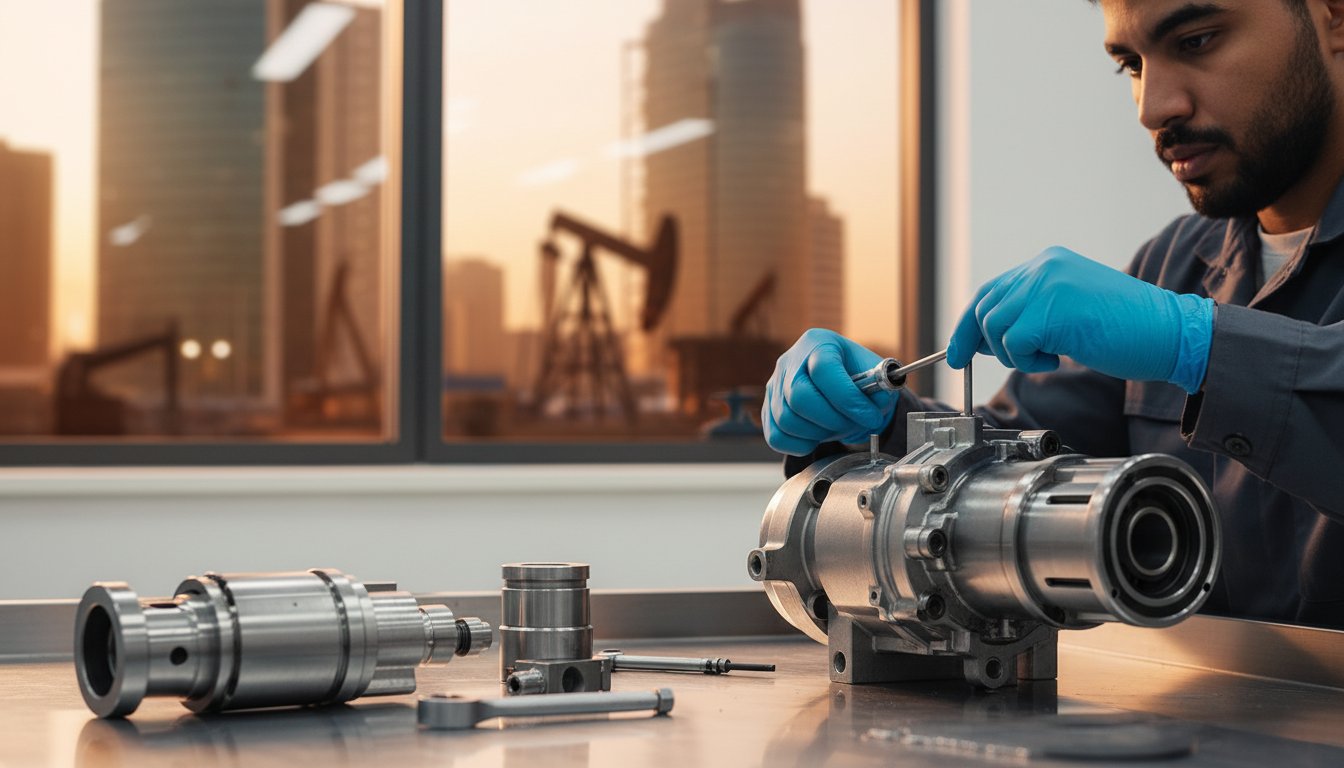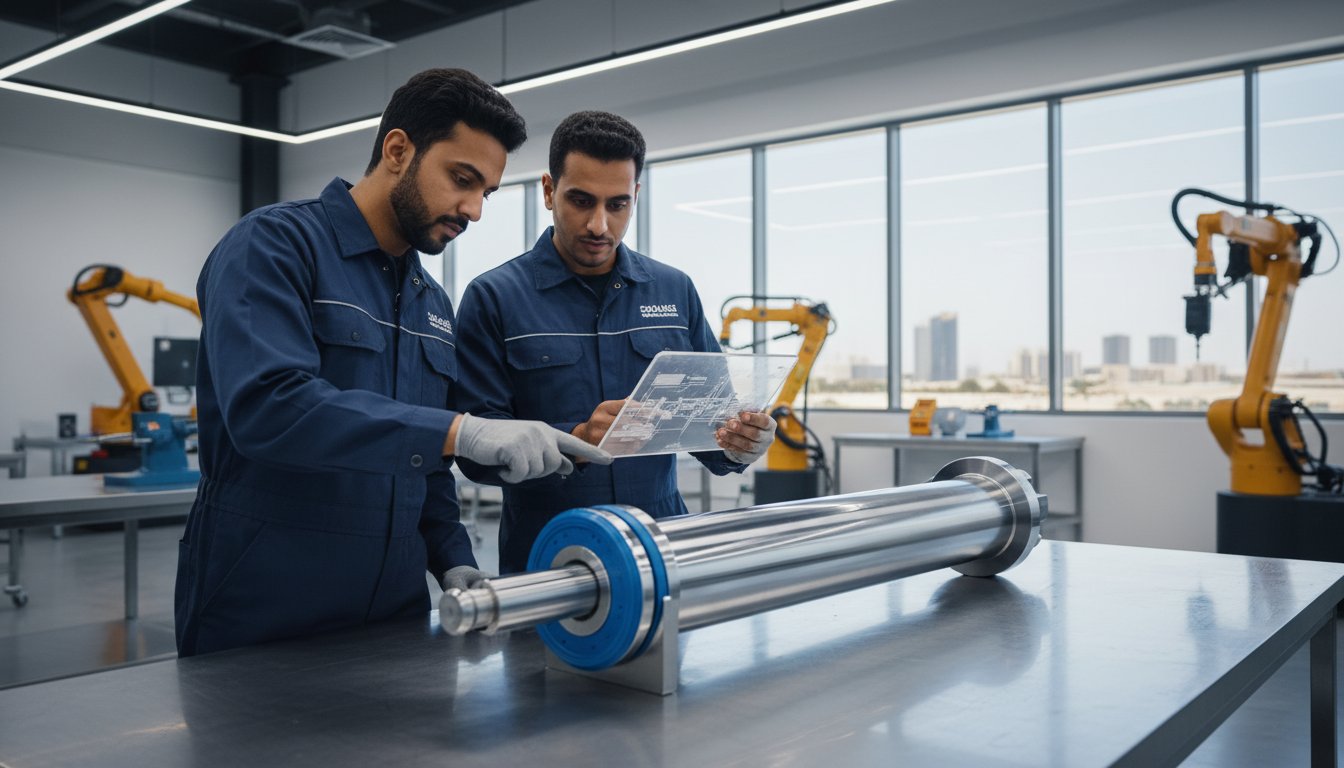

In the demanding industrial landscape of Saudi Arabia, unplanned equipment downtime is a direct threat to your bottom line, with every idle moment costing significant Saudi Riyals. When a hydraulic accumulator fails, it can trigger a cascade of costly operational delays. The critical questions arise immediately: Is this a simple pre-charge issue or a sign of major failure? Is my team equipped to handle this safely and correctly? An incorrect diagnosis or procedure doesn't just waste time; it poses a serious safety risk and can lead to even more expensive damage.
This comprehensive 2026 guide is engineered to eliminate that uncertainty. We provide the expert, reliable procedures for hydraulic accumulator charging and repair that your technicians need. By mastering the steps within, you will gain the confidence to accurately diagnose faults, safely execute charging protocols, and make cost-effective decisions between repair and replacement. Our goal is to empower you to minimize downtime, ensure system integrity, and keep your critical operations moving forward with guaranteed performance.
Key Takeaways
- Understand the core functions of a hydraulic accumulator to accurately diagnose system-wide performance issues and prevent unnecessary downtime.
- Follow a step-by-step safety protocol for nitrogen pre-charging to protect personnel and high-value industrial equipment from critical hazards.
- Learn to identify the early warning signs of internal bladder or seal failure, the most common and costly accumulator malfunction.
- Master the essential procedures for hydraulic accumulator charging and repair to determine when a component replacement is a more cost-effective solution than a full unit replacement.
The Critical Role of Hydraulic Accumulators in Industrial Systems
In the demanding industrial landscape of Saudi Arabia, from petrochemical plants to heavy manufacturing, hydraulic systems are the lifeblood of operations. At the heart of these systems is the hydraulic accumulator, a critical pressure vessel designed to store and discharge energy. It functions much like a rechargeable battery, using a compressed gas (typically nitrogen) to store hydraulic fluid under pressure and release it on demand. This simple yet powerful mechanism is essential for optimizing system performance and efficiency. For a comprehensive technical breakdown, see this Hydraulic Accumulator Overview.
A properly functioning accumulator performs several vital roles that protect your equipment and enhance productivity:
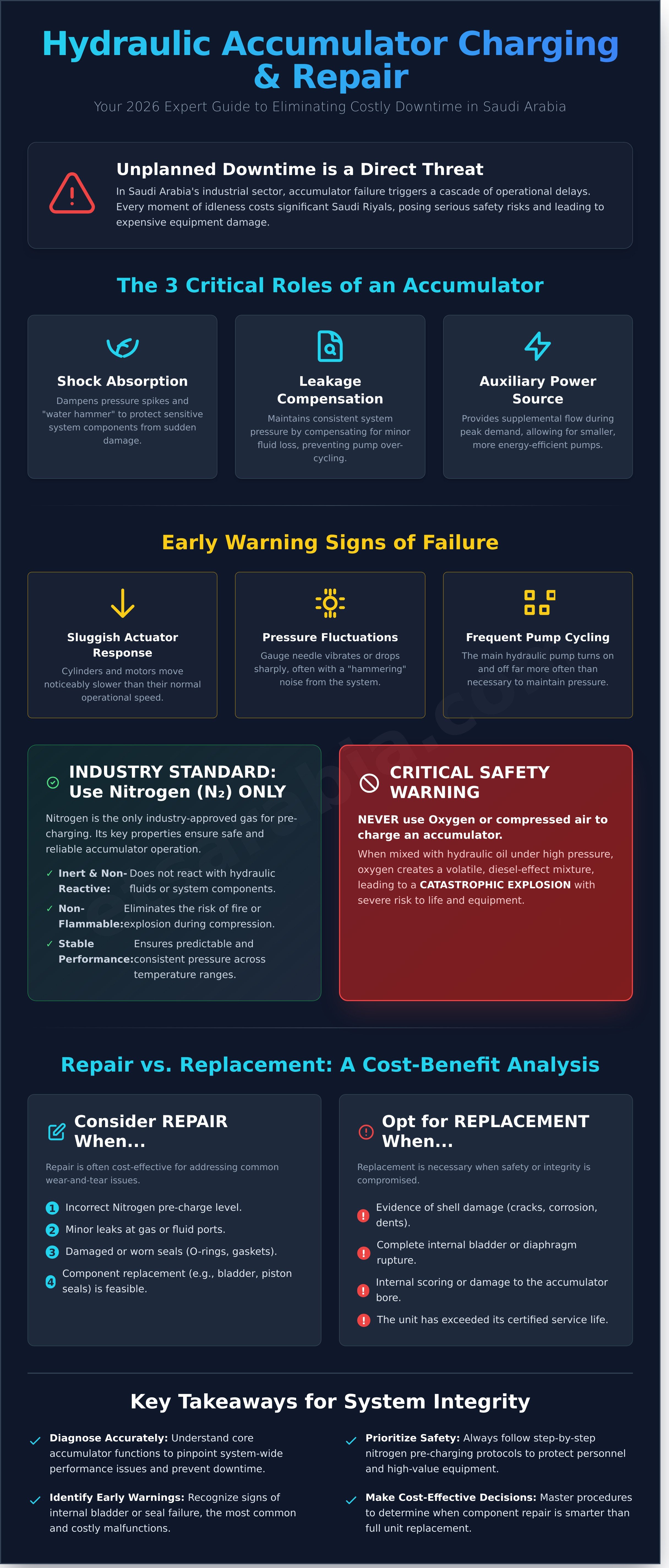
- Shock Absorption: It dampens pressure spikes and hydraulic shock (water hammer) caused by sudden valve closures or pump startups, protecting sensitive components from damage.
- Leakage Compensation: In closed-loop systems, it compensates for minor fluid loss, maintaining consistent pressure and preventing pump cycling.
- Auxiliary Power Source: The accumulator provides supplemental fluid flow during peak demand cycles, allowing for the use of smaller, more efficient pumps and reducing energy consumption.
Ignoring accumulator health can lead to severe consequences, including sudden pressure drops, violent system shock, and catastrophic failure of pumps, seals, and hoses. Proactive maintenance and expert hydraulic accumulator charging and repair are not just best practices-they are essential strategies to prevent costly, unscheduled downtime.
While all serve the same core purpose, accumulators are primarily available in three designs, each suited for specific applications:
- Bladder Accumulators: The most common type, ideal for high-frequency shock absorption and general energy storage.
- Piston Accumulators: Used for high-pressure systems and large fluid volumes, offering high durability.
- Diaphragm Accumulators: Compact and cost-effective, best for low-flow applications and leakage compensation.
Signs Your Accumulator Needs Charging or Service
Recognizing the early warning signs of accumulator failure is key to preventing system-wide damage. If you observe any of the following symptoms, it is time for an immediate inspection:
- Sluggish Actuator Response: Cylinders and motors move slower than usual, indicating insufficient pressure support.
- Visible Pressure Fluctuations: The system pressure gauge needle vibrates or drops significantly during operation, often accompanied by a "hammering" noise.
- Frequent Pump Cycling: The hydraulic pump turns on and off more often than necessary to maintain system pressure.
Why Nitrogen is the Standard for Pre-Charging
The choice of gas for pre-charging an accumulator is a critical safety and performance decision. Dry, inert Nitrogen (N2) is the universal industry standard because its properties ensure stable and reliable operation. It is non-flammable and does not react with hydraulic fluids or system components, preventing corrosion and degradation.
CRITICAL SAFETY WARNING: Never use Oxygen or compressed air to charge a hydraulic accumulator. When mixed with hydraulic oil under high pressure, Oxygen can create a volatile, explosive mixture, leading to a catastrophic failure with severe risk to personnel and equipment.
"Nitrogen is the only industry-approved gas for pre-charging because its inert properties guarantee stable, predictable performance without the catastrophic risk of explosion."
Step-by-Step Guide to Safely Charging a Hydraulic Accumulator
SAFETY WARNING: HIGH-PRESSURE HAZARD
Hydraulic accumulators store energy under extreme pressure. Incorrect handling, charging, or repair can lead to a violent, explosive failure, causing severe injury or death. These procedures must only be performed by trained, qualified technicians. NEVER use oxygen or compressed air to charge an accumulator.
A systematic approach is critical for ensuring both safety and optimal performance. Successful hydraulic accumulator charging and repair relies on using the correct equipment and following a precise, methodical process. Before you begin, gather the necessary tools:
- A complete charging and gauging kit specifically designed for nitrogen service.
- A certified, high-pressure nitrogen bottle equipped with a regulator.
- A calibrated torque wrench for gas valve fittings.
- Mandatory safety glasses and any other site-required Personal Protective Equipment (PPE).
Step 1: Isolate the Accumulator and Release All Hydraulic Pressure
Before servicing the gas side, you must completely depressurize the hydraulic side. Isolate the accumulator from the main hydraulic circuit using shut-off valves. Safely bleed all stored hydraulic fluid pressure from the accumulator line. Verify that the system's pressure gauge reads zero before proceeding. This is the most critical safety step.
Step 2: Attach the Charging and Gauging Assembly Correctly
Remove the protective cap from the accumulator's gas valve. Securely attach the charging and gauging assembly to the valve. Ensure all connections are tight to prevent leaks, but do not over-torque. The assembly should now connect the accumulator, the nitrogen bottle, and the pressure gauge.
Step 3: Slowly Introduce Nitrogen Gas to the Specified Pre-charge Pressure
With the bleed valve on the charging assembly closed, slowly open the valve on the nitrogen bottle. Watch the pressure gauge closely and allow the nitrogen to enter the accumulator gradually. Charging too quickly can cause a temperature increase (adiabatic effect), leading to an inaccurate pressure reading once the gas cools. Stop once the target pre-charge pressure is reached.
Pre-Charge Pressure: Getting it Right
Setting the correct nitrogen pre-charge is vital for system efficiency. A general rule is to pre-charge to approximately 80% of the minimum system working pressure. However, this is only a guideline. Always consult the equipment manufacturer's service manual for the exact pre-charge specification. Incorrect pressure compromises performance: too low results in a sluggish response, while too high reduces the accumulator's effective fluid volume and its ability to absorb shocks.
Essential Safety Protocols During Charging
Safety is the paramount concern in all hydraulic accumulator charging and repair procedures. Always wear appropriate PPE, including safety glasses or a face shield. Double-check that the hydraulic system pressure is at zero before you begin charging. Never stand directly in front of the accumulator's hydraulic or gas ports during the process. Adherence to established protocols, such as the guidelines found within OSHA Safety Standards, is not optional-it is essential for preventing accidents and ensuring reliable operation.
Diagnosing Common Accumulator Failures
A successful hydraulic accumulator charging and repair strategy is built on accurate diagnostics. If an accumulator repeatedly fails to hold its pre-charge, simply recharging it is not a solution-it's a symptom of a deeper problem. Identifying the root cause is essential to prevent system damage, ensure operational safety, and minimize costly downtime. The most common point of failure is internal, where the gas and hydraulic fluid are separated.
Bladder Failure: Symptoms and Confirmation
In bladder-type accumulators, the most frequent issue is a compromised or ruptured bladder. This failure allows the nitrogen pre-charge to mix directly with the hydraulic fluid, leading to poor system performance. Key indicators include:
- Rapid Loss of Pre-charge: The accumulator loses pressure shortly after being charged, as the gas escapes into the hydraulic system.
- Foamy or Milky Fluid: Aerated hydraulic fluid, which appears milky or foamy, returning to the reservoir is a clear sign of gas contamination.
- Diagnostic Tests: A simple "tap test" on the shell can reveal a failure; a solid, dull thud suggests it's full of oil, while a hollow ring indicates the gas pre-charge is intact. For more precise, non-invasive analysis, thermal imaging can detect the temperature difference caused by escaping gas.
Piston and Diaphragm Accumulator Failures
While less common than bladder issues, piston and diaphragm accumulators have unique failure modes. A worn or damaged piston seal allows hydraulic fluid to bypass the piston, mixing with the nitrogen pre-charge. This results in the same performance degradation as a bladder failure. Diaphragm ruptures are often more sudden and catastrophic. Furthermore, all accumulator types are susceptible to shell integrity issues like stress fractures or severe corrosion, which are critical safety hazards and almost always mandate a complete unit replacement, not repair.
When to Call for Professional Diagnostics
Attempting to diagnose complex internal failures without the proper equipment is inefficient and dangerous. Always adhere to established Hydraulic System Safety Guidelines, including complete system depressurization, before any inspection. You should seek expert assistance if you repeatedly lose pre-charge or if you suspect internal damage but lack the tools for a safe teardown and inspection. A simple recharge will not fix the underlying fault. For a definitive analysis that saves time and prevents further damage, ETS provides expert diagnostics to pinpoint the root cause fast.
Repair vs. Replacement: A Cost-Benefit Analysis
Making the correct decision between repairing or replacing a faulty hydraulic accumulator is critical for ensuring operational safety, managing budgets, and minimizing downtime. For engineers in Saudi Arabia's demanding industrial environments, this choice requires a framework that moves beyond the initial price tag to assess total cost of ownership and risk. When faced with a malfunctioning unit, a sound financial and safety analysis is paramount.
The decision-making process can be simplified by evaluating key factors. A straightforward bladder or seal failure in a modern, undamaged accumulator shell often makes a strong case for repair. However, if there are any signs of shell damage, corrosion, or if the unit uses obsolete parts, replacement becomes the only safe and reliable option. Our expertise in hydraulic accumulator charging and repair is built on helping clients make this critical choice with confidence.
Cost Analysis: Parts and Labor
While a new bladder kit may cost ﷼1,500 SAR, a complete new accumulator of a common size might cost ﷼4,500 SAR. On the surface, repair seems more economical. However, you must factor in the specialized labor hours, which can add ﷼1,000-﷼2,000 SAR, and the need for proper disassembly tools and nitrogen charging equipment. For many standard accumulators, the total cost of a professional repair quickly approaches that of a new unit, making replacement a more time-efficient and often more cost-effective solution.
Safety and Certification Considerations
An accumulator is a high-pressure vessel, and safety cannot be compromised. A repaired accumulator must be properly tested and certified for service according to stringent industry standards. Using a poorly repaired pressure vessel introduces significant liability and a severe risk to personnel and equipment. In contrast, a new unit arrives with a full manufacturer's warranty and the necessary certifications, guaranteeing its integrity and compliance from day one. This assurance is essential for maintaining a safe and regulation-compliant facility.
Ultimately, the most significant factor is often the cost of downtime. A complex repair can sideline critical machinery for a full day or more. Swapping in a new, pre-charged accumulator can often be completed in a fraction of the time. In a fast-paced industrial operation, the production value lost during an extended shutdown can far exceed the entire cost of a new component. Prioritizing operational continuity is key.
To make the optimal decision, consider these points:
- Repair is viable when: The accumulator shell is in excellent condition, the failure is limited to a standard internal component like a bladder, and OEM parts are readily available.
- Replacement is necessary when: There is any physical damage, pitting, or corrosion on the shell; the model is obsolete; or the cost of downtime makes a fast replacement more profitable.
For an expert evaluation of your system's needs and to explore a full range of solutions, contact the specialists at Emdad Technical Services. We provide reliable solutions that keep your operations moving forward.
Expert Accumulator Services in Saudi Arabia by ETS
When your critical hydraulic systems require attention, you need a partner with proven expertise and a commitment to operational excellence. Emdad Technical Services (ETS) is the leading provider of expert hydraulic accumulator charging and repair services across Saudi Arabia. With extensive experience supporting the demanding oil & gas, manufacturing, and marine industries, we understand the high stakes involved. We deliver reliable solutions that ensure safety, compliance, and peak performance, safeguarding your most valuable assets.
Our state-of-the-art service center in Dammam is fully equipped to handle complex repairs and testing, while our commitment to using only genuine parts and adhering to the strictest international safety standards guarantees quality you can trust.
Our Accumulator Charging & Repair Process
We follow a transparent and efficient process designed to provide clarity and deliver results quickly. Our methodical approach ensures every accumulator is serviced to OEM specifications for guaranteed reliability.
- Step 1: Comprehensive Diagnostics: Our service begins with a thorough inspection, either on-site at your facility or at our Dammam workshop. We use advanced diagnostic tools to accurately assess the accumulator's condition, including pre-charge pressure, bladder or diaphragm integrity, and shell condition.
- Step 2: Clear Recommendations & Quote: Based on our findings, we provide a detailed report with a clear recommendation for repair or replacement. You will receive a firm, transparent quote with no hidden costs, allowing you to make an informed decision for your operations and budget.
- Step 3: Professional Execution: Once approved, our certified technicians carry out the necessary work using specialized tools and equipment. Whether it's nitrogen pre-charging, bladder replacement, or a complete overhaul, we execute the job with precision and efficiency.
Minimizing Your Downtime is Our Priority
We know that every minute of downtime impacts your productivity and profitability. Our entire service is structured to restore your operations as quickly and safely as possible. We stock a comprehensive inventory of common accumulator types, bladders, seals, and repair kits at our Dammam facility, enabling a fast turnaround on most repairs and replacements.
For urgent needs, our rapid-response field service team is equipped to perform on-site accumulator charging, testing, and replacement throughout the Kingdom. Choose ETS for a partner dedicated to keeping your systems in motion. For immediate support with your hydraulic accumulator charging and repair needs, contact our expert team today.
Your Expert Partner in Hydraulic Accumulator Charging and Repair
Maintaining the integrity of your hydraulic accumulators is not just about performance-it is a critical component of operational safety and efficiency. As this guide has detailed, adhering to precise charging procedures and correctly diagnosing failures are paramount. Making a strategic decision between repair and replacement, tailored to Saudi Arabia's industrial demands, can prevent significant downtime and costly interruptions, safeguarding your valuable machinery.
When your systems require specialized attention, trust the experts. Emdad Technical Services (ETS) is your dedicated partner for professional hydraulic accumulator charging and repair. Our specialized technicians, operating from our state-of-the-art Dammam workshop, are committed to minimizing your operational downtime with fast, reliable solutions. Don't let a faulty accumulator compromise your productivity. Ensure your equipment operates at peak performance and safety.
Contact ETS for expert hydraulic accumulator charging and repair services.
Frequently Asked Questions About Hydraulic Accumulator Charging & Repair
What gas is used to charge a hydraulic accumulator?
Dry, inert nitrogen is the industry standard and the only gas recommended for charging hydraulic accumulators. Its inert properties prevent chemical reactions with hydraulic fluid and internal components. Crucially, it is non-flammable. Never use oxygen or compressed air, as they can cause a dangerous, explosive reaction when mixed with hydraulic oil under pressure, leading to catastrophic equipment failure and severe safety hazards for personnel and machinery.
How often should you check the pre-charge on a hydraulic accumulator?
For optimal system performance and safety, we recommend checking the pre-charge pressure at least annually. However, for critical systems operating under high-cycle or extreme temperature conditions common in Saudi Arabia, a quarterly or semi-annual check is advisable. Regular verification ensures the accumulator functions correctly, prevents system damage, and helps avoid unexpected downtime, which can cost your operation thousands of SAR per hour in lost productivity.
What happens if a hydraulic accumulator fails?
An accumulator failure can have severe consequences for your hydraulic system. Symptoms include a loss of stored pressure, leading to slower cycle times and reduced equipment efficiency. It can also cause hydraulic shock or "water hammer," which creates damaging pressure spikes that can harm pumps, valves, and hoses. In the worst-case scenario, a catastrophic shell or bladder failure can halt operations entirely, resulting in costly emergency repairs and significant production losses.
Can you repair a ruptured accumulator bladder?
No, a ruptured or torn accumulator bladder cannot be repaired. Any attempt to patch or seal a damaged bladder is unsafe and will inevitably fail under pressure. The only correct and safe solution is to replace the entire bladder assembly with a new one that meets the manufacturer's specifications. This replacement is a standard part of professional hydraulic accumulator charging and repair services and is essential for restoring the unit's integrity and reliable performance.
What is the function of a charging and gauging kit?
A charging and gauging kit is an essential tool for maintaining hydraulic accumulators. Its primary function is to safely and accurately measure the nitrogen pre-charge pressure within the accumulator. The kit allows a technician to release pressure if it's too high or, more commonly, to connect a nitrogen bottle to recharge the accumulator to the precise pressure required by the system's design. Proper use of this kit is fundamental for performance tuning and preventative maintenance.
Is it safe to transport a charged hydraulic accumulator?
Transporting a charged hydraulic accumulator is considered the shipment of a pressurized vessel and is subject to strict safety regulations in Saudi Arabia, often governed by bodies like SASO. While possible with certified carriers, the safest practice is to release the nitrogen pre-charge before transportation and recharge it upon installation. This minimizes risks during transit. Always consult with your logistics provider and a technical expert to ensure full compliance and safety.
How do you test if an accumulator is working properly?
The most reliable method is to check the nitrogen pre-charge pressure using a proper charging and gauging kit when the hydraulic system is shut down and pressure is released. A significant drop from the specified pre-charge indicates a leak or bladder failure. You can also observe system performance; sluggish operation or pressure fluctuations are clear signs of a problem. If you suspect an issue, it is critical to seek expert diagnostic and repair services to prevent further damage.