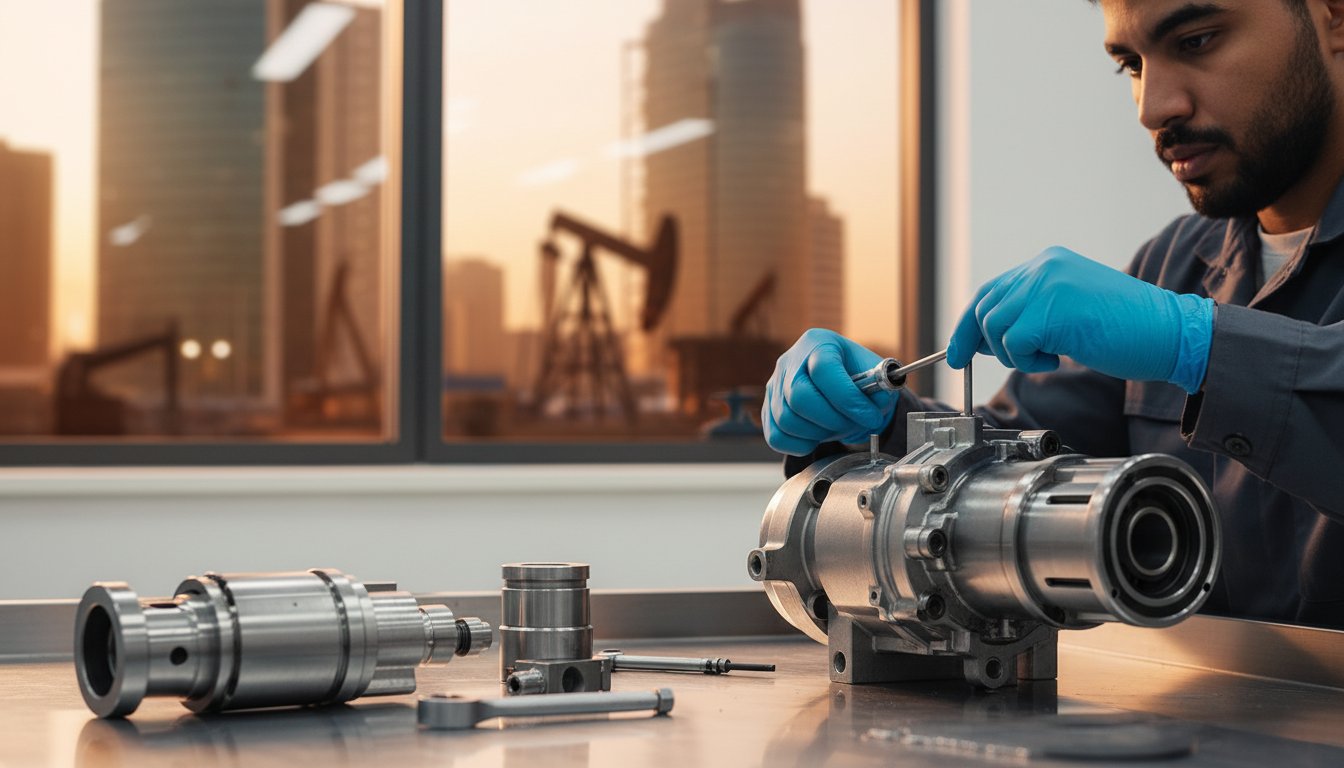
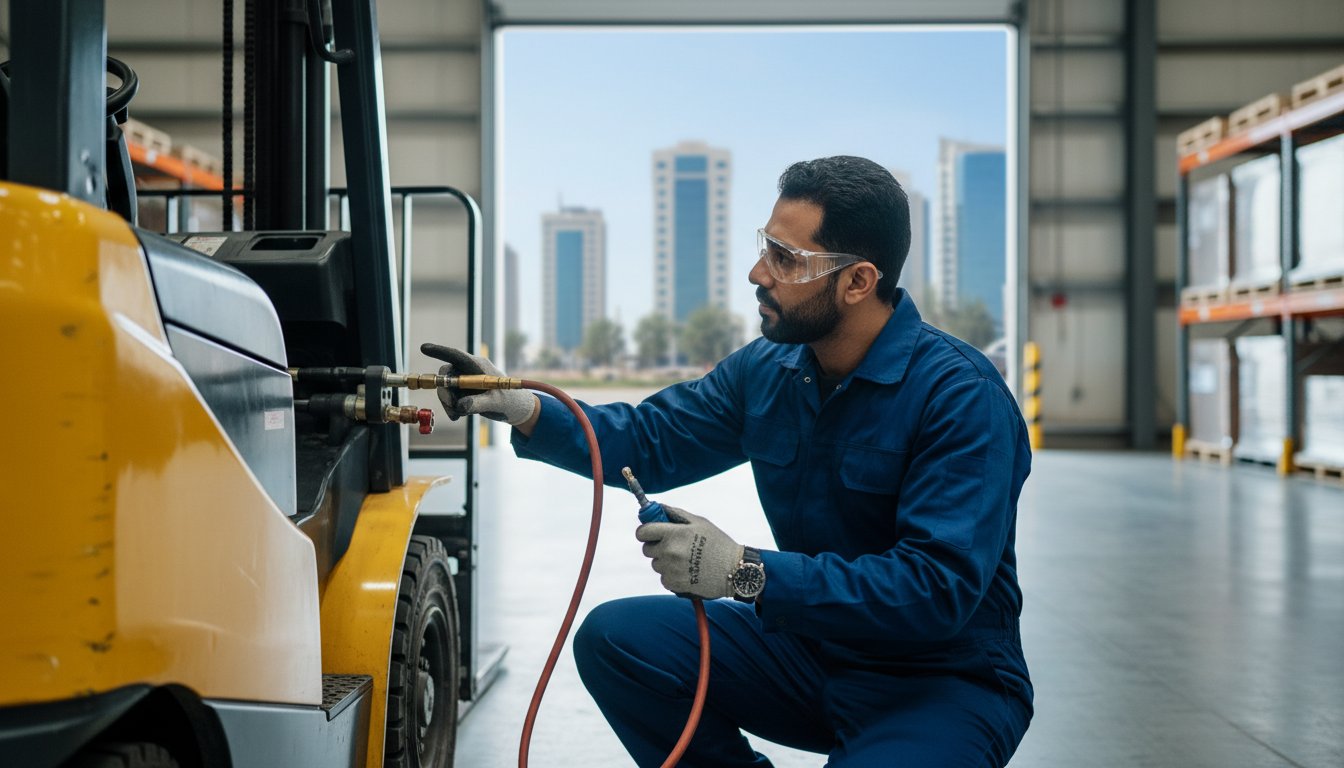
A silent forklift represents a critical failure in your supply chain, where every hour of downtime translates into lost productivity and rising costs in Saudi Riyals. When faced with a hydraulic leak, a loss of lifting power, or a complete system shutdown, the immediate challenges are clear: ensuring operator safety, diagnosing the problem accurately, and executing a fast, effective forklift hydraulic system repair. The uncertainty between a minor fix and a major overhaul can halt your entire operation, making access to reliable expertise absolutely essential.
This comprehensive guide is your solution. We provide the expert insights needed to confidently troubleshoot common hydraulic issues, understand the professional repair process from start to finish, and implement preventative measures. Our goal is to empower you to minimize costly interruptions, ensure your equipment is repaired to the highest safety standards, and get your operations back to full capacity without delay. Learn how to turn a critical breakdown into a manageable, resolved issue.
Key Takeaways
- Learn to identify early warning signs of hydraulic failure, from slow lifting to unusual noises, to prevent catastrophic and costly breakdowns.
- Understanding core components is crucial for a faster, more accurate forklift hydraulic system repair, ensuring you can communicate issues effectively to technicians.
- Discover how a proactive maintenance plan can save your business thousands of Saudi Riyals by avoiding the high costs of emergency operational downtime.
- Identify the key criteria for selecting a reliable repair partner in Saudi Arabia, ensuring prompt service and expert solutions that maximize your fleet's productivity.
Anatomy of a Forklift Hydraulic System: The Core Components
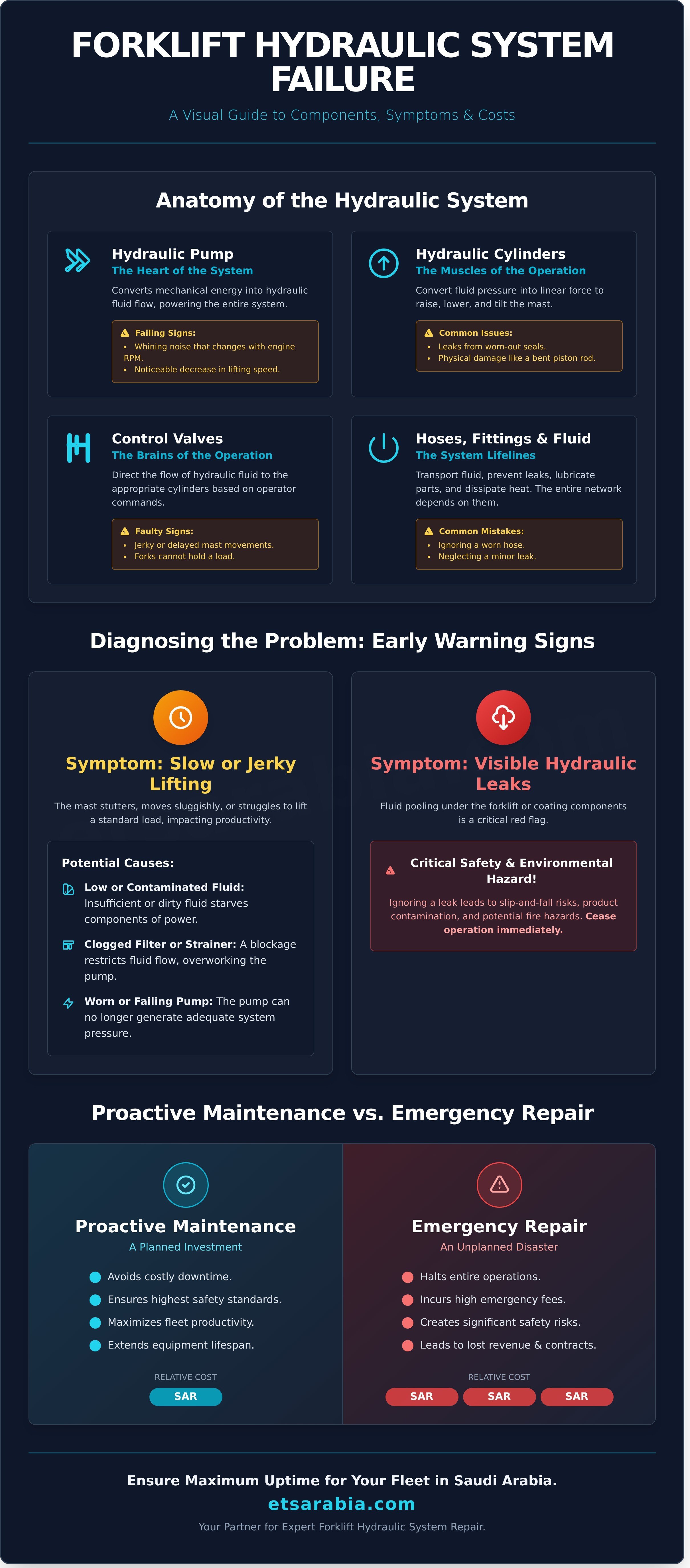
Think of the hydraulic system as the powerful circulatory system of your forklift. It is the core muscle that enables all heavy lifting, tilting, and steering functions. This robust network uses pressurized fluid to convert a small amount of force into the immense power needed to move multi-ton loads with precision. Understanding the basic Anatomy of a Forklift and its hydraulics is the first step in diagnosing issues. When this system fails, your equipment loses its primary capabilities, leading to costly operational downtime and the need for professional forklift hydraulic system repair.
The Hydraulic Pump: The Heart of the System
The hydraulic pump is the heart of the operation, responsible for converting mechanical energy from the forklift's engine into hydraulic fluid flow. Most forklifts operating in demanding industrial environments in Saudi Arabia rely on durable gear pumps for their efficiency and reliability. A failing pump often gives clear warning signs, such as a distinct whining noise that changes with engine RPM or a noticeable decrease in lifting speed and power.
Hydraulic Cylinders: Providing the Lift
Hydraulic cylinders are the actuators that perform the heavy work. They expertly convert the system's fluid pressure into the linear force required to raise, lower, and tilt the mast. Each cylinder assembly consists of a piston, a rod, and critical seals that contain the high-pressure fluid. The most common issues are leaks caused by worn-out seals or physical damage like a bent piston rod, which compromises both safety and performance.
Control Valves: The Brain of the Operation
If the pump is the heart, the control valve assembly is the brain. This intricate component directs the flow of hydraulic fluid to the appropriate cylinders based on the operator's commands. When an operator moves a lever, it shifts a corresponding spool inside the valve, opening a path for the fluid to travel. Symptoms of a faulty valve include jerky or delayed mast movements, an inability for the forks to hold a load, or a complete failure of a specific hydraulic function.
Hoses, Fittings, and Fluid: The System's Lifelines
The hoses, fittings, and fluid are the essential lifelines that connect every component. High-pressure hoses transport the fluid, while secure fittings and seals prevent leaks that can drain the system of its power. The hydraulic fluid itself is a critical element; it not only transfers power but also lubricates moving parts and helps dissipate heat. Ignoring a worn hose or a minor leak is a frequent mistake that can escalate into a major failure, requiring an emergency forklift hydraulic system repair to prevent further damage.
Diagnosing the Problem: Common Symptoms of Hydraulic Failure
A forklift's hydraulic system is its muscle. When it falters, your entire operation is at risk of costly downtime. Recognizing the early warning signs is critical to preventing catastrophic failure. If your operators report any of the following symptoms, cease operation of the equipment immediately and consult with a professional. Many of these issues can be identified early during routine preventative maintenance checks, but once a symptom appears, prompt action is required. This guide will help you diagnose the potential source of the problem.
Symptom: Slow or Jerky Lifting/Lowering
One of the most common indicators of a hydraulic issue is a noticeable loss of performance. If the mast stutters, moves sluggishly, or struggles to lift a standard load, it signals a problem with hydraulic pressure or flow. This degradation in efficiency directly impacts productivity and can be a precursor to a complete system failure. Potential causes range from simple to complex:
- Low or Contaminated Fluid: The simplest issue to check. Fluid is the lifeblood of the system; insufficient or dirty fluid starves components.
- Clogged Filter or Strainer: A blockage restricts fluid flow, forcing the pump to work harder for less output.
- Worn or Failing Hydraulic Pump: The heart of the system. If the pump can no longer generate adequate pressure, performance will suffer dramatically.
Symptom: Visible Hydraulic Fluid Leaks
Any sign of fluid pooling under the forklift or coating its components is a clear red flag requiring expert forklift hydraulic system repair. Systematically check around cylinders, hoses, and fittings. Ignoring a leak is not an option; it presents significant safety and environmental hazards in any facility, including slip-and-fall risks for personnel, potential product contamination, and fire hazards. Common culprits are worn-out seals, cracked hoses, or loose fittings.
Symptom: Whining or Grinding Noises
Unusual noises from the hydraulic system are an urgent warning. A high-pitched whining often indicates pump cavitation-a destructive process where air enters the system, damaging internal components. A louder grinding noise can signal advanced pump failure or significant contamination from metal particles. If these sounds are heard, shut down the forklift immediately to prevent irreversible damage and ensure operator safety.
Symptom: Mast Drifts Down or Fails to Hold Load
This is a critical safety failure that requires immediate attention. If an operator raises a load and the mast slowly drifts downward on its own, the system cannot hold pressure. This creates an extremely dangerous situation where a load could fall unexpectedly, endangering staff and destroying inventory. The cause is typically an internal leak in the lift cylinders or a faulty control valve. This issue renders the forklift unsafe for any operation until it is professionally repaired.
The Professional Repair Process: What to Expect from an Expert Technician
When your forklift's hydraulics fail, you need more than a temporary fix; you need a lasting solution that prevents recurring issues and minimizes costly downtime. A "quick fix" might get your machine moving for a day, but it often ignores the underlying problem, leading to more significant failures later. At ETS, our approach to forklift hydraulic system repair is methodical and transparent, designed to restore your equipment to peak performance and reliability.
Our process demystifies the repair journey, ensuring you understand every step we take to guarantee the long-term health of your machinery. This systematic approach is the core of our value promise: expert service that optimizes your operational uptime.
Step 1: Comprehensive Diagnostics and Safety Inspection
An expert technician never just treats the symptom. Our process begins with a thorough diagnostic inspection to identify the root cause of the failure. Using advanced tools like pressure gauges and flow meters, we accurately measure system performance against manufacturer specifications. This is complemented by a complete safety check of all hydraulic hoses, fittings, and controls to identify any potential hazards or points of wear before they become critical problems.
Step 2: Component Repair vs. Replacement
Based on our findings, we provide clear, cost-effective recommendations. In many cases, components can be expertly repaired, saving you significant costs compared to a full replacement.
- Cylinder Repair: Honing cylinder tubes to remove scoring and replacing high-grade seals can restore a cylinder to as-new condition.
- Pump & Valve Rebuilds: We assess the internal wear on pumps and valves to determine if a professional rebuild is a viable, reliable alternative to a costly replacement.
To ensure longevity and performance, we exclusively use high-quality OEM or equivalent parts for every repair, guaranteeing compatibility and durability.
Step 3: System Flushing and Fluid Replacement
After a component failure, microscopic metal particles and other contaminants can circulate throughout the hydraulic system, posing a severe risk to new or repaired parts. That is why a complete system flush is a non-negotiable step in our professional forklift hydraulic system repair process. We remove all contaminated fluid, replace essential filters and strainers, and refill the system with the precise type and grade of hydraulic fluid recommended for your equipment.
Step 4: Final Testing and Calibration
Our work is not complete until we have verified the repair under real-world conditions. The system is carefully re-pressurized while we meticulously check for any leaks. We then conduct rigorous load testing to ensure the forklift can safely and efficiently handle its rated capacity. Finally, we calibrate critical components like pressure relief valves to the correct settings, protecting the entire system from future over-pressurization events.
This meticulous, four-step process ensures your equipment is returned to service not just working, but working safely and efficiently. Need a professional diagnosis? Contact our Dammam experts.
Preventative Maintenance vs. Emergency Repair: A Cost-Benefit Analysis
In the demanding industrial landscape of Saudi Arabia, viewing forklift maintenance as a mere operational cost is a critical mistake. A proactive maintenance strategy is an investment in reliability and productivity, safeguarding your operations against the significant financial and reputational damage caused by unexpected equipment failure. The choice is not between spending money and saving it; it is between a controlled, predictable investment and an unpredictable, costly crisis.
The True Cost of Downtime
The invoice for an emergency forklift hydraulic system repair is only the tip of the iceberg. A single non-operational forklift in a busy Riyadh distribution center or a Dammam port facility can cost your business upwards of 4,000 SAR per day in lost productivity, idle labor costs, and missed delivery deadlines. Ignoring a small hydraulic leak today can lead to a catastrophic pump or cylinder failure tomorrow, causing cascading damage that multiplies repair costs and extends downtime from hours to days. This disruption directly impacts your ability to meet client commitments, risking long-term reputational harm.
Key Elements of a Hydraulic Maintenance Schedule
A structured maintenance plan is the most effective defense against unplanned downtime. It ensures your equipment remains in optimal condition and identifies potential issues before they escalate. A comprehensive schedule includes:
- Daily Operator Checks: Quick visual inspections for leaks, damaged hoses, and low fluid levels before each shift.
- Regular Service Intervals: Professional hydraulic fluid and filter changes, typically every 1,000 to 2,000 operating hours, to prevent contamination and wear.
- Annual Professional Inspection: A thorough system analysis, including pressure testing and component evaluation by certified technicians, to guarantee performance and safety compliance.
How a Service Partner Optimizes Uptime
Engaging a dedicated service partner like ETS transforms your maintenance approach from reactive to predictive. We develop tailored maintenance plans based on your fleet’s specific usage patterns and operational environment, ensuring maximum efficiency. Our experts perform proactive parts replacement and diagnostics, addressing wear and tear before it results in failure. This partnership provides more than just a forklift hydraulic system repair service; it offers peace of mind, expert advice, and priority support that keeps your operations moving forward. Learn more about our proactive maintenance programs at etsarabia.com.
Why Choose ETS for Forklift Hydraulic Repair in Saudi Arabia
When your forklift's hydraulic system fails, every minute of downtime directly impacts your productivity and profitability. In Saudi Arabia's demanding industrial landscape, you need more than a quick fix; you need a reliable partner who can deliver a fast, effective, and lasting solution. Emdad Technical Services (ETS) is that partner, providing specialized expertise to get your operations back in motion without delay.
Our commitment is built on three pillars of service that directly address the critical needs of your business: speed, expertise, and quality.
Rapid Response and On-Site Service
Our strategic location in Dammam gives us a critical advantage, enabling our teams to reach your site across the Eastern Province and beyond with unparalleled speed. Our service vehicles are fully equipped mobile workshops, allowing our technicians to perform most diagnostics and repairs on your premises. Our primary objective is to minimize your costly interruptions and restore your equipment's functionality as swiftly as possible.
Unmatched Technical Expertise
With decades of hands-on experience, our certified technicians possess the deep knowledge required for complex industrial hydraulics. We specialize in all major forklift brands, and our rigorous diagnostic process ensures we identify the root cause correctly the first time. This commitment to precision in forklift hydraulic system repair saves you valuable time and avoids the expense of repeat service calls, delivering a dependable solution you can trust.
Access to High-Quality Spare Parts
A superior repair depends on superior components. ETS maintains strong partnerships with world-leading hydraulic brands like Parker and Rexroth, giving us direct access to OEM-quality parts. Our extensive local inventory includes:
- High-pressure hydraulic hoses and fittings
- Durable seals and O-ring kits
- Hydraulic pumps, motors, and cylinders
- Control valves and solenoids
This ensures every repair is completed promptly with components built to last, guaranteeing reliable performance and protecting your investment.
Don't let hydraulic issues compromise your workflow. Choose ETS for a partner who delivers expertise, reliability, and solutions that keep your operations moving forward. Ready to restore your forklift's performance? Contact ETS today for an expert consultation on your forklift hydraulic system repair needs.
Ensure Operational Continuity with Expert Hydraulic Repair
A forklift's hydraulic system is the core of its power, and understanding its complexities is crucial for maintaining productivity. As we've explored, recognizing the early signs of failure and prioritizing preventative maintenance over costly emergency fixes can save your operation significant time and thousands in Saudi Riyal. Ultimately, a swift and professional forklift hydraulic system repair is not just a fix-it's a critical investment in your operational efficiency and safety.
Don't let hydraulic issues disrupt your workflow. Emdad Technical Services (ETS) is your dedicated partner in Saudi Arabia, committed to maximizing your uptime. With expert on-site service in Dammam and across the Kingdom, and access to genuine parts from leading brands, we deliver solutions that last. Minimize Downtime. Schedule Your Expert Forklift Hydraulic Repair with ETS.
Keep your operations moving forward with confidence and reliability.
Frequently Asked Questions About Forklift Hydraulics
How much does a typical forklift hydraulic system repair cost?
The cost for a forklift hydraulic system repair in Saudi Arabia can vary significantly. Minor repairs, such as replacing a leaking hose or fitting, may cost between ﷼500 and ﷼1,500. More complex issues, like rebuilding a hydraulic pump or replacing a lift cylinder, can range from ﷼3,000 to over ﷼10,000, depending on the forklift model and the extent of the damage. For an accurate quote, a thorough diagnostic inspection by our expert technicians is required.
Is it safe to continue using a forklift with a small hydraulic leak?
No, it is never safe. Even a small leak indicates a system fault that can escalate without warning, potentially leading to a sudden loss of lifting or steering control and creating a serious safety hazard. Continuing operation also risks severe damage to other hydraulic components and environmental contamination. We strongly advise ceasing use immediately and scheduling a prompt repair to prevent catastrophic failure, ensure operator safety, and minimize costly operational downtime.
How often should I change the hydraulic fluid in my forklift?
As a best practice, we recommend changing the hydraulic fluid and filters every 2,000 operating hours or at least once annually, whichever comes first. However, you should always consult your forklift manufacturer’s specific service manual for their precise guidelines. Regular fluid changes are critical for removing contaminants, preventing premature wear on components like pumps and valves, and ensuring the reliable performance and longevity of your hydraulic system.
Can the wrong hydraulic fluid damage my forklift's system?
Yes, absolutely. Using an incorrect type of hydraulic fluid can cause severe and costly damage. The wrong fluid viscosity can lead to system overheating and inadequate lubrication, causing premature pump and component failure. It can also degrade seals and hoses, leading to leaks and pressure loss. To guarantee optimal performance and protect your investment, it is essential to use only the fluid grade and type specified by the original equipment manufacturer (OEM).
What is the most common part to fail in a forklift hydraulic system?
The most frequent points of failure in any forklift hydraulic system are the hoses and seals. Due to constant flexing, high pressure, and exposure to the operating environment, hydraulic hoses can crack, abrade, or burst over time. Similarly, seals within cylinders and valves degrade and wear, leading to internal or external leaks. While major components like pumps and motors are robust, their failure is often a secondary result of fluid contamination or hose/seal issues.
Do you offer repair services for other heavy equipment besides forklifts?
Yes, Emdad Technical Services provides expert hydraulic and pneumatic repair for a wide range of heavy equipment. Our expertise extends beyond forklifts to include mobile cranes, wheel loaders, excavators, boom lifts, and other industrial machinery. Our certified technicians are equipped to diagnose and deliver reliable solutions for diverse systems, ensuring we can meet all your heavy equipment maintenance needs and keep your entire fleet operating at peak efficiency.