
A sudden hydraulic failure brings your most critical operations to a standstill. Your most reliable forklift is out of commission, your production schedule is disrupted, and an unexpected repair bill-potentially costing thousands of Saudi Riyals-is on its way. This scenario is more than an inconvenience; it's a direct threat to your operational efficiency and profitability, causing delays that ripple through your entire supply chain. Such failures not only impact your bottom line but also pose significant safety risks to your team.
This comprehensive guide is engineered to provide a reliable solution. We will deliver a clear, actionable framework of essential daily, weekly, and monthly hydraulic system checks designed to prevent costly interruptions before they occur. By mastering these expert maintenance routines, you will enhance operator safety, significantly reduce the risk of emergency repairs, and extend the life of your equipment. It is time to take control of your fleet's performance and ensure your systems are always in motion.
Understanding the Core: Key Components of a Forklift Hydraulic System
The hydraulic system is the powerhouse of your forklift, providing the immense force required for lifting, tilting, and positioning heavy loads. To effectively troubleshoot issues and minimize operational downtime, a foundational understanding of its core components is essential. Think of it as the machine's circulatory system: the pump is the heart, the fluid is the blood, and the hoses are the veins, all working in unison to deliver power precisely where it's needed.
A failure in any single component can compromise the entire system's performance, leading to reduced efficiency and potential safety hazards. Recognizing the function of each part is the first step toward prompt diagnosis and reliable repair.
The Hydraulic Pump: The Heart of the System
The hydraulic pump is the starting point for all lifting operations. Its primary function is to convert the forklift engine's mechanical power into hydraulic energy by pushing fluid into the system under pressure. Most models utilize robust gear pumps for their reliability and efficiency. Key indicators of a failing pump include a distinct whining noise that changes with engine RPM or a noticeable loss of lifting power, signaling that immediate inspection is required to prevent further damage.
Lift and Tilt Cylinders: The Muscle
Cylinders are the components that perform the actual work. They expertly convert the hydraulic pressure generated by the pump into powerful linear motion-the force that lifts the mast and tilts the forks. Comprised of a barrel, piston, and rod, the design and function of these parts are central to all modern forklift hydraulic systems. The integrity of the cylinder seals is paramount; worn or damaged seals are a primary cause of fluid leaks and a gradual loss of pressure, which directly impacts lifting capacity.
Control Valves: The Brain
The control valve assembly acts as the system's brain, directing the flow of high-pressure hydraulic fluid to the appropriate cylinders. When an operator moves a control lever, they are physically manipulating a spool within the valve block, opening and closing pathways to channel the fluid. A common issue is a sticking or worn spool, which can cause delayed, jerky, or completely unresponsive lift and tilt functions, severely hindering operator control and productivity.
Hoses, Fittings, and Fluid: The Lifelines
The hydraulic fluid, hoses, and fittings are the lifelines that connect every component. The fluid is more than a lubricant; it is the medium that transfers energy throughout the system. Hoses and fittings are engineered to withstand extreme pressures but are susceptible to abrasion, aging, and damage. A pinhole leak in a high-pressure hose is extremely dangerous and can cause serious injury, making regular visual inspections a critical part of any maintenance routine.
The Essential Daily Pre-Operation Hydraulic Inspection Checklist
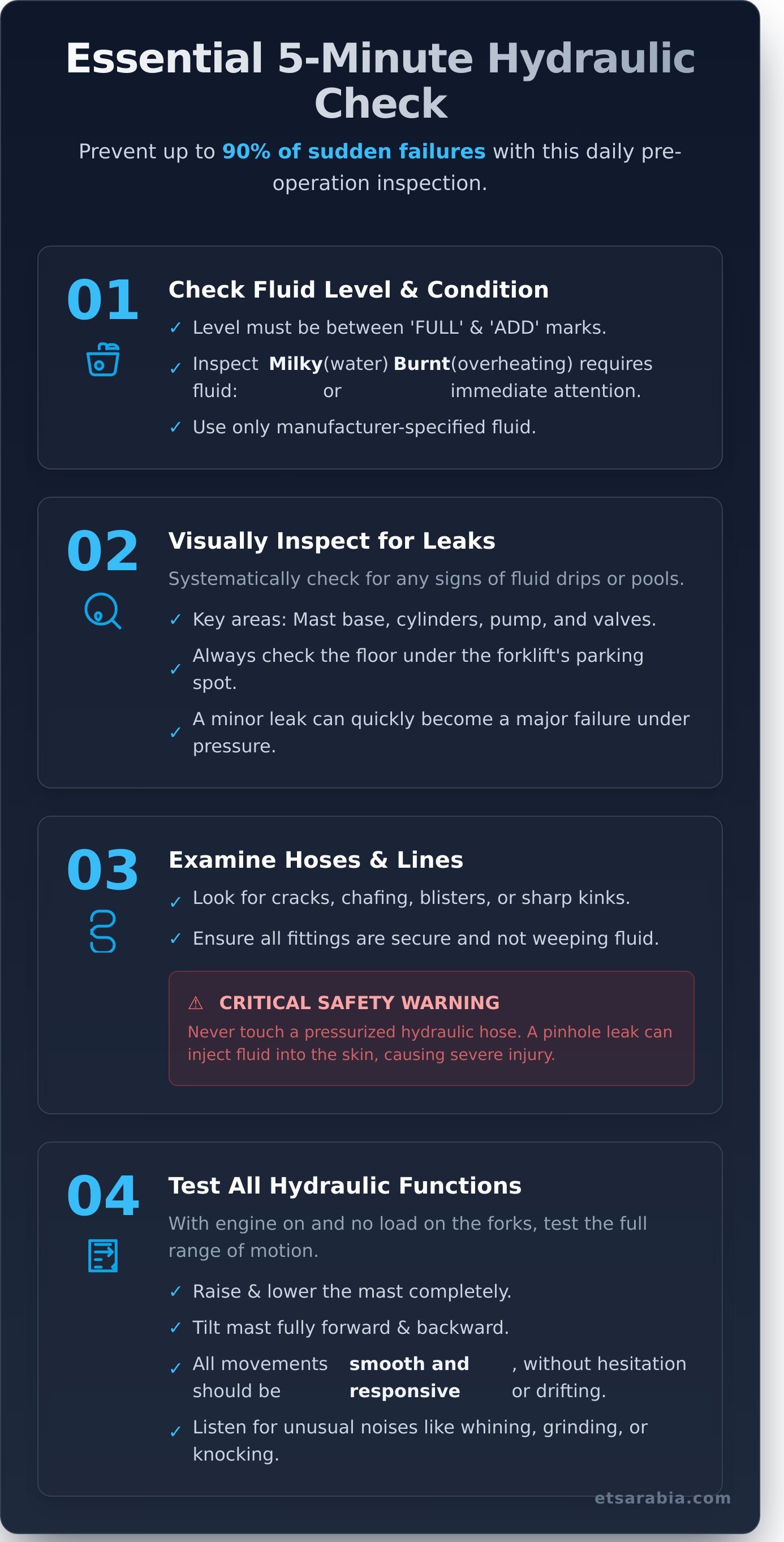
To minimize operational downtime and ensure safety, a daily pre-operation hydraulic inspection is a non-negotiable routine for every operator. This disciplined, five-minute check, performed before the engine is started and the system is warm, is your first line of defense. Proactive inspections are proven to prevent up to 90% of sudden hydraulic failures, saving you from costly interruptions and ensuring your equipment operates at peak performance.
Check Hydraulic Fluid Level and Condition
Begin by locating the hydraulic fluid reservoir, which is typically marked with a hydraulic symbol. Remove the dipstick, wipe it clean, reinsert it fully, and then remove it again to get an accurate reading. The fluid level must be between the 'FULL' and 'ADD' marks. More importantly, inspect the fluid's condition. If it appears milky (indicating water contamination) or has a burnt smell (a sign of overheating), do not operate the forklift and report it for maintenance immediately. If the level is low, top it up using only the manufacturer-specified hydraulic fluid.
Visually Inspect for Leaks
A thorough visual inspection is critical for identifying potential failures before they escalate. Systematically check for any signs of fluid leaks around key components:
- The base and channels of the mast
- Lift and tilt cylinders
- The hydraulic pump and control valve assembly
- The floor beneath the forklift's usual parking spot
Even a minor drip signifies a compromised seal or fitting that requires immediate attention. A small leak will invariably worsen under pressure, leading to performance loss and potential safety hazards.
Examine Hoses and Lines for Damage
Trace the paths of all visible hydraulic hoses and lines. Look for signs of wear and tear, such as cracks, chafing, blisters, or sharp kinks that could restrict flow. Ensure all fittings are secure and not weeping fluid. This proactive check aligns with global best practices for equipment safety, including the principles outlined in OSHA Standard 1910.178. Crucial Safety Warning: Never touch or run your hand along a hydraulic hose while the system is running or pressurized, as a pinhole leak can inject fluid into the skin, causing severe injury.
Test Mast, Tilt, and Attachment Functions
Once the visual checks are complete and it is safe to do so, start the engine. With no load on the forks, test the full range of hydraulic functions. Raise the mast to its maximum height and lower it completely, watching for smooth, consistent movement without hesitation. Tilt the mast fully forward and backward. Listen for any unusual sounds like grinding, whining, or knocking. All functions should be responsive to operator input and hold their position without drifting or sinking when the controls are released.
Proactive Maintenance: Your Weekly and Monthly Hydraulic Service Schedule
While daily operator checks are essential for immediate safety, a structured weekly and monthly service schedule is the key to ensuring long-term reliability and preventing costly downtime. These proactive tasks go beyond a simple visual inspection, requiring greater attention to detail and sometimes specialized tools. Adhering to a documented maintenance plan, as recommended by industry leaders like the Material Handling Institute (MHI), not only enhances safety but also provides a clear history of your equipment's health. Diligently recording all checks, fluid changes, and repairs in a logbook is a professional standard that guarantees compliance and optimizes performance.
Weekly Hydraulic Checks
These quick yet vital observations are designed to catch minor issues before they escalate into significant problems. Focus on cleanliness and component integrity.
- Clean the Reservoir Breather Cap: Dust and debris can clog the breather, creating a vacuum that pulls contaminants into the hydraulic system. A simple wipe-down prevents this.
- Inspect Cylinders and Rods: Wipe down the hydraulic cylinders and piston rods. This makes it easier to spot subtle fluid weeps, scoring, or pitting that indicate internal seal wear or contamination.
- Check Hose Routing: Ensure hydraulic hoses are not rubbing against the forklift frame, mast, or other components. Constant friction can wear through a hose, leading to a sudden and dangerous failure.
Monthly Hydraulic Tasks
These more involved tasks form the core of your preventative maintenance strategy, directly addressing system wear and ensuring your equipment operates within its specified limits.
- Inspect Hydraulic Fluid Filter: Following the manufacturer’s service manual, inspect the hydraulic filter. Clean or replace it as required to ensure optimal fluid purity and flow.
- Check System Pressure: Using a pressure gauge, verify that the hydraulic system is operating at the correct pressure. Note: This task may require a qualified technician to perform safely and accurately.
- Lubricate Pivot Points: Apply the recommended grease to all mast and cylinder pivot points. Proper lubrication reduces friction and prevents premature wear on critical moving parts.
When to Call for Professional Service
Even with a rigorous maintenance schedule, some issues require expert diagnostics and specialized tools. Attempting complex repairs without proper training can lead to further damage or safety hazards. You should seek professional assistance immediately if you notice:
- A sudden and significant loss of lifting or tilting power.
- Major hydraulic fluid leaks that create puddles beneath the machine.
- Consistently failed pressure tests or abnormal pressure readings.
- Loud whining or grinding noises originating from the hydraulic pump.
These symptoms point to serious internal problems that demand immediate attention. For expert diagnostics and repair in Dammam, contact the ETS service team. We provide reliable solutions to get your equipment back in operation swiftly and safely.
Troubleshooting Common Forklift Hydraulic Failures
Identifying the early warning signs of hydraulic system failure is critical to preventing catastrophic damage and minimizing operational downtime. This guide outlines common symptoms and their potential causes, empowering your team to perform initial diagnostics and understand when to call for expert assistance. Addressing these issues promptly ensures the safety and efficiency of your material handling operations.
Symptom: Slow or Jerky Lifting
When a forklift's mast lifts sluggishly or with erratic, jerky movements, it points to a loss of hydraulic power or pressure. This inefficiency can significantly slow down your workflow. The most common culprits include:
- Low Hydraulic Fluid: The system cannot generate sufficient pressure without enough fluid.
- Clogged Filter or Strainer: Contaminants can restrict fluid flow, starving the pump.
- Worn Hydraulic Pump: Internal wear reduces the pump's ability to build pressure effectively.
Your first step should be to safely power down the machine and check the hydraulic fluid level and the condition of the filter. If both are adequate, the issue likely stems from a more complex component, such as the pump or control valve, which requires professional diagnosis.
Symptom: Mast Drifting or Not Holding a Load
This is a critical safety failure that demands immediate attention. If the mast slowly lowers (drifts) on its own or cannot hold a raised load, the cause is typically an internal leak. This could be due to failing seals within the lift cylinders or a malfunctioning control valve that is allowing fluid to bypass. A forklift that cannot reliably hold its load poses a significant risk to operators, nearby personnel, and the cargo itself. The equipment must be removed from service immediately and locked out until it can be inspected and repaired by a qualified technician.
Symptom: Excessive Heat or Burnt Smell from Fluid
Overheating is a clear indicator of system distress, often accompanied by a distinct burnt smell from the hydraulic fluid. This symptom points to excessive friction or restriction within the system. Potential causes are low fluid levels, the use of an incorrect fluid type, or a blockage in a hydraulic line. Excessive heat rapidly degrades the fluid, reducing its lubricating properties and causing permanent damage to seals, hoses, and internal components. The root cause must be identified and rectified before performing a complete fluid and filter change to prevent recurring damage.
While preliminary checks can help identify the scope of a problem, hydraulic system repairs should only be performed by trained professionals. Attempting complex repairs without the proper tools and expertise can lead to further damage and create serious safety hazards. For expert diagnostics and reliable repairs in Saudi Arabia, trust the professionals. Contact Emdad Technical Services to ensure your equipment is serviced correctly and safely.
The Critical Role of Quality Parts and Fluids for Hydraulic Longevity
Effective troubleshooting resolves immediate issues, but the long-term reliability of your forklift hydraulic system depends entirely on the quality of the components and fluids you use. A meticulous maintenance routine can be completely undermined by substandard parts, leading to recurring failures, increased operational costs, and significant safety risks. Investing in high-quality supplies is not an expense; it is a crucial strategy for maximizing equipment lifespan and ensuring predictable performance.
Why Using the Correct Hydraulic Fluid is Non-Negotiable
The hydraulic fluid is the lifeblood of your system. Using the correct type is critical for protecting expensive components. Key factors like viscosity ensure proper lubrication across the wide temperature ranges experienced in Saudi Arabia, while specialized anti-wear additives prevent premature damage to pumps, valves, and cylinders. Mixing different types of hydraulic fluids is highly discouraged, as it can lead to chemical reactions, sludge formation, and seal degradation. The right fluid reduces friction, dissipates heat efficiently, and prevents internal corrosion, directly contributing to a longer-lasting, more reliable system.
The Risks of Low-Quality Replacement Hoses and Seals
A sudden hose failure under load is a major safety hazard and can bring operations to a standstill. Low-cost, non-certified hoses often lack the reinforcement and durability to withstand the system's peak pressure cycles, making them prone to bursting. Likewise, improper or low-quality seals are a primary cause of persistent leaks. These leaks not only waste costly fluid but also create an entry point for contaminants like sand and moisture, which can rapidly destroy precision components. Choosing OEM-specification hoses and seals is a direct investment in operational safety and reliability, preventing costly interruptions and protecting your assets.
Sourcing Reliable Hydraulic Components in Saudi Arabia
In a fast-paced industrial environment, minimizing downtime is paramount. Waiting for components to be shipped from overseas can halt production for days or weeks, costing thousands in lost productivity. Partnering with a responsive, local supplier in Saudi Arabia who understands your operational needs is a strategic advantage. A reliable local partner ensures you have fast access to a comprehensive inventory of high-quality hydraulic parts. At ETS, we provide the expertise and reliable components necessary to keep your systems running efficiently. Browse our inventory of hydraulic parts or contact us for sourcing.
Ensuring Peak Performance and Minimizing Downtime
As this guide has demonstrated, the reliability of your hydraulic system hinges on proactive, diligent care. Consistent daily inspections, a structured maintenance schedule, and the uncompromising use of high-quality fluids and parts are the cornerstones of preventing costly operational interruptions. This disciplined approach is your best strategy for ensuring your equipment performs safely and efficiently, day after day.
However, when a complex issue arises or you require specialized support, having an expert partner is critical to getting your forklift back in service swiftly. Emdad Technical Services (ETS) is your dedicated partner in maintaining operational efficiency. We provide fast, reliable hydraulic repair services in Dammam, backed by an extensive inventory of high-quality hoses, seals, and components. Our expert technical support is focused on one primary goal: minimizing your operational downtime.
For Expert Forklift Hydraulic Repair and Parts Supply, Contact ETS Today.
Take control of your maintenance schedule and keep your operations moving forward with confidence.
Frequently Asked Questions
How often should I change the hydraulic fluid in my forklift?
For optimal performance and to prevent costly downtime, it is essential to follow the manufacturer's recommended service intervals. Typically, hydraulic fluid in a standard forklift should be changed every 1,000 to 2,000 operating hours. However, demanding industrial conditions may require more frequent changes. Regular fluid analysis can help determine the precise interval, ensuring your system remains efficient and reliable. Adhering to this schedule is a critical part of any preventative maintenance program.
What type of hydraulic oil is best for a standard warehouse forklift?
The correct hydraulic oil is always specified in your forklift's service manual. Most standard warehouse forklifts operate efficiently with an ISO Viscosity Grade (VG) 32 or 46 anti-wear (AW) hydraulic oil. These fluids provide excellent lubrication and protection against wear for pumps, motors, and valves. Using the manufacturer-specified fluid is critical to guarantee system reliability and longevity, preventing premature component failure and ensuring your equipment functions at peak performance.
Can I repair a leaking hydraulic hose, or should it always be replaced?
For safety and operational integrity, a leaking hydraulic hose must always be replaced, never repaired. Attempting a repair creates a significant weak point that can fail under high pressure, leading to catastrophic equipment failure, potential injuries, and unplanned downtime. A proper replacement with a high-quality, correctly rated hose assembly is the only reliable solution. This ensures your system operates safely and efficiently, minimizing risk and maximizing productivity for your operations.
What are the most common causes of hydraulic pump failure in forklifts?
Hydraulic pump failure is most often caused by fluid contamination from dirt, water, or metal particles, which accelerates wear on internal components. Other primary causes include fluid aeration (air bubbles in the oil), cavitation (vapor cavities collapsing), and operating at excessively high temperatures. Proactive maintenance, including regular filter changes and using the correct fluid, is the most effective strategy to prevent these issues and ensure the long-term reliability of your forklift's hydraulic system.
How does cold or hot weather in Saudi Arabia affect forklift hydraulics?
In Saudi Arabia's extreme heat, hydraulic fluid viscosity decreases, meaning the oil becomes thinner. This can reduce lubrication, increase internal leakage, and lead to system overheating, which accelerates component wear. It is crucial to use a high-quality hydraulic oil with a stable viscosity index (VI) and ensure the cooling system is functioning optimally. While less common, cold morning starts in certain regions can temporarily thicken the oil, straining the pump until it reaches operating temperature.
Is a small hydraulic fluid leak a serious problem?
Yes, any hydraulic fluid leak, no matter how small, is a serious issue that demands immediate attention. A minor drip is often a symptom of a larger problem, such as a failing seal or a damaged hose. Left unaddressed, it can lead to major component failure, create a dangerous slip hazard, and result in costly fluid replacement, potentially costing hundreds of riyals over time. Prompt repair is essential to prevent expensive downtime and maintain a safe working environment.