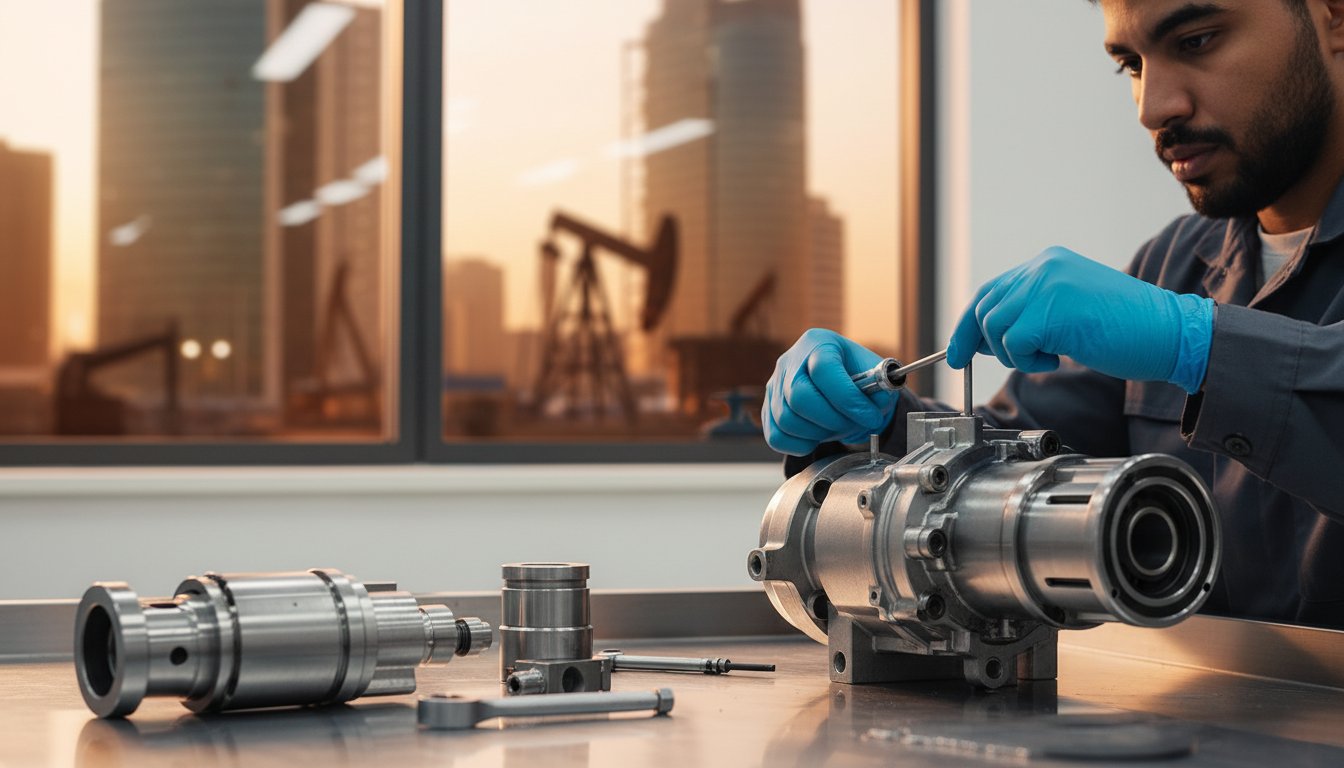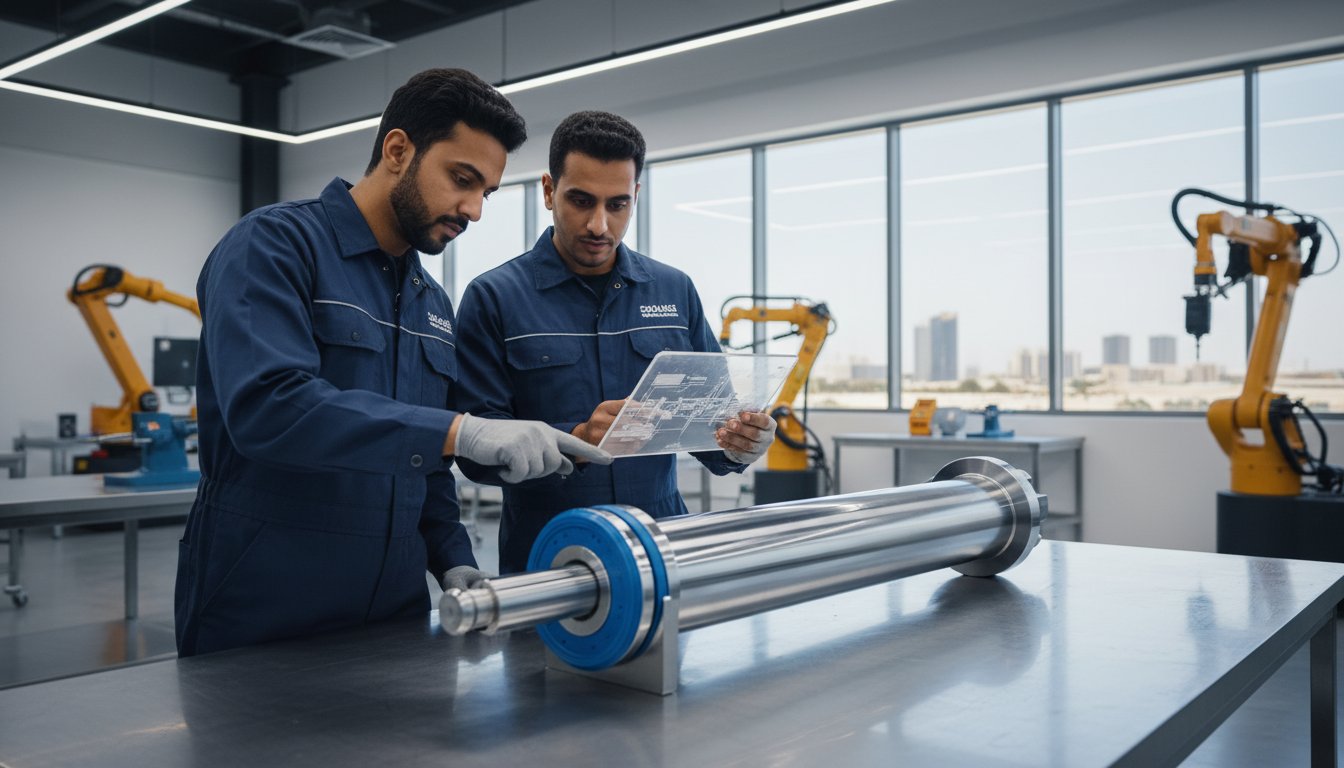
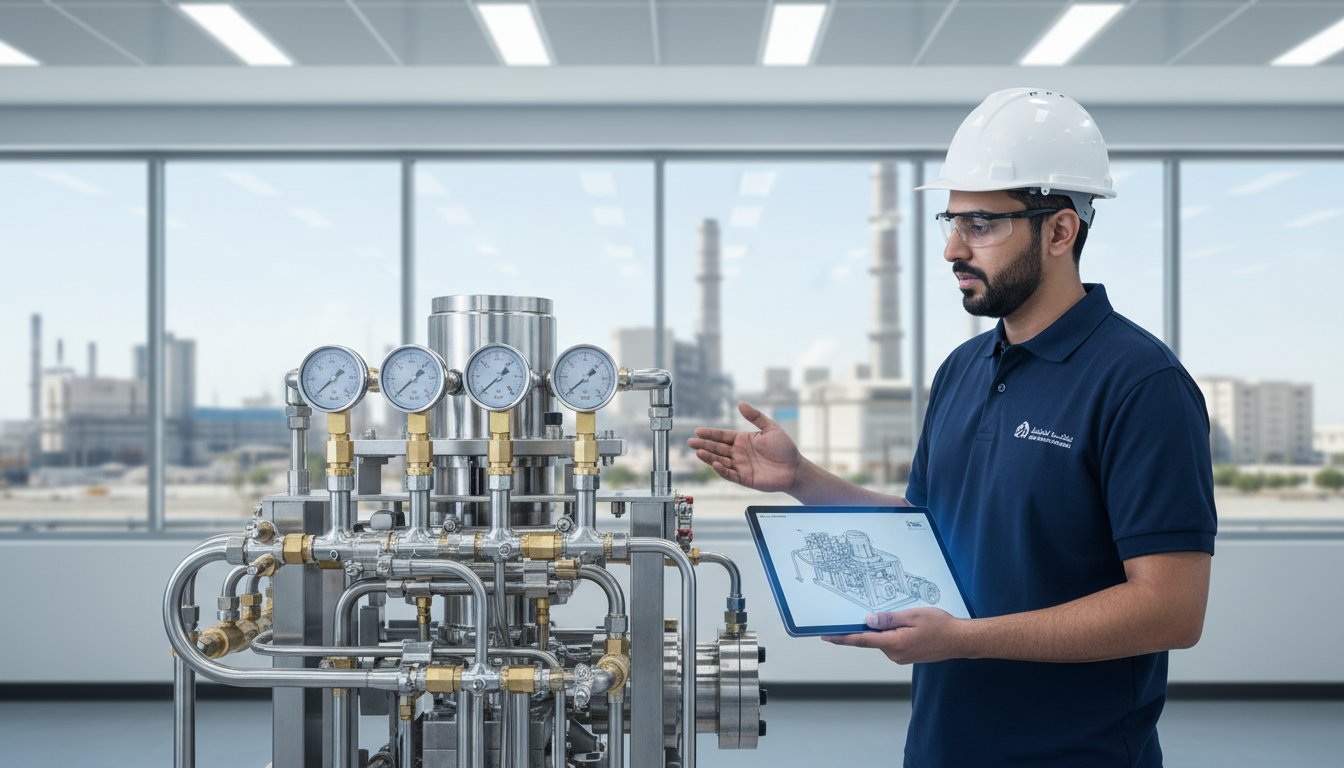
Can your current hydraulic setup survive a 50°C Riyadh afternoon without triggering a total system shutdown? Most industrial operators in the Kingdom realize too late that generic, off-the-shelf configurations aren't built for our extreme ambient temperatures. You understand that when a system overheats or fails to meet Saudi Building Code (SBC) requirements, the resulting downtime can cost your facility over 15,000 SAR per hour in lost productivity. Finding local experts who truly grasp GCC technical standards shouldn't be a constant struggle for your procurement team.
Investing in an expert hydraulic system design consultation is the most effective way to protect your bottom line and ensure continuous 24/7 operation. We'll show you how precision engineering eliminates common failure points, guarantees full compliance with KSA regulations, and slashes long-term maintenance expenses by up to 30 percent. This article breaks down the essential steps to building a high-performance system that keeps your operations moving forward without interruption. You'll discover how to transform your hydraulic infrastructure into a reliable asset that thrives in the harshest Saudi environments.
Key Takeaways
- Understand why transitioning from simple parts procurement to a strategic engineering process is essential for maximizing long-term ROI and system efficiency.
- Discover critical design strategies to maintain fluid viscosity and seal integrity when operating in extreme Saudi ambient temperatures exceeding 50°C.
- Learn how professional hydraulic system design consultation ensures your operations remain fully compliant with the Saudi Building Code (SBC) and GCC standards.
- Analyze the performance advantages of custom-fabricated Hydraulic Power Units (HPUs) over off-the-shelf solutions for specialized industrial applications.
- Find out how leveraging local expertise in Dammam 2nd Industrial City can eliminate costly downtime through rapid, end-to-end technical support.
What is Hydraulic System Design Consultation and Why Does It Matter?
Hydraulic system design consultation is a strategic engineering process that maps out precise fluid power requirements before a single wrench turns. It's the difference between a collection of parts and a high-performance asset. In the Saudi Arabian industrial sector, companies often make the mistake of simply purchasing components like pumps or valves in isolation. This transactional approach ignores how variables like ambient heat in the Eastern Province or high-pressure demands in offshore drilling impact the whole. Professional Hydraulic machinery consultation shifts the focus toward long-term ROI by ensuring the entire architecture is built for the specific rigors of your site.
Generic, "off-the-shelf" designs frequently fail in high-stakes environments like Oil & Gas or Mining. These sectors demand specialized parameters that standard configurations can't meet. A consultant's role is to balance pressure, flow, and safety factors to prevent system fatigue. They don't just look at what works; they look at what lasts. By analyzing duty cycles and environmental stressors, experts create a blueprint that maximizes uptime and protects your capital investment from day one.
The Cost of Poor Design in Industrial Operations
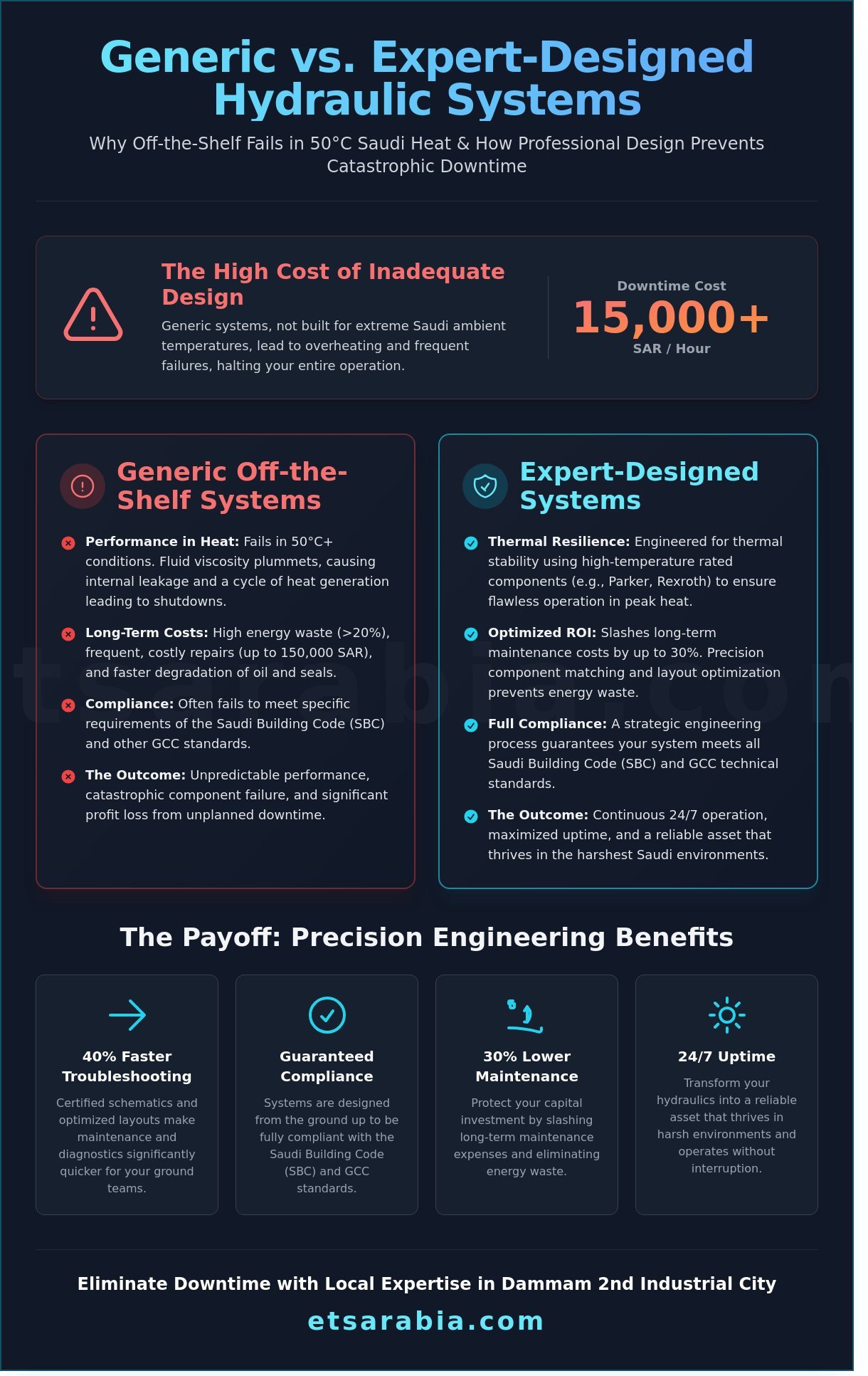
Inefficient design is a silent profit killer. When a system isn't optimized, it leads to massive energy waste; often exceeding 20% of total operational costs. Poorly planned layouts cause fluid turbulence and heat generation, which degrades hydraulic oil and seals faster than expected. In Saudi Arabia's 45°C summers, this heat gain can trigger a total system shutdown within hours. We've seen cases where a poorly sized pump caused system-wide cavitation, leading to a 150,000 ﷼ repair bill that could've been avoided with 10 hours of initial engineering oversight. Design flaws aren't just inconveniences; they're the primary cause of catastrophic component failure.
Benefits of Professional Engineering Oversight
- Component Matching: Every hose, valve, and fitting is selected to handle specific flow velocities, preventing "bottlenecks" that drain power.
- Layout Optimization: Reducing the number of bends and long hose runs minimizes pressure drops, ensuring more power reaches the actuator.
- Certified Schematics: You receive precise technical drawings that make future maintenance and troubleshooting 40% faster for your ground teams.
Investing in hydraulic system design consultation provides more than just a functional machine. It offers the peace of mind that comes from knowing your equipment meets international safety standards and local regulatory requirements. When every component is perfectly matched, the system runs cooler and quieter. This reduces the mechanical strain on the entire rig. Reliable performance isn't an accident; it's the result of rigorous engineering and a deep understanding of fluid dynamics. For operations looking to minimize downtime, starting with a professional design is the only logical path forward.
Designing for the Saudi Climate: Thermal Stability and Resilience
Operating industrial machinery in Saudi Arabia presents a unique set of challenges that standard equipment often fails to meet. Ambient temperatures frequently exceed 50°C in regions like the Empty Quarter and the industrial corridors of the Eastern Province. These extreme conditions aren't just uncomfortable; they're a direct threat to mechanical longevity. Heat is the primary enemy of hydraulic efficiency. It causes hydraulic fluid viscosity to plummet, leading to increased internal leakage and reduced lubrication. When oil thins out, pumps work harder to maintain pressure, creating a cycle of heat generation that eventually destroys seals and sensitive valves. Expert hydraulic system design consultation is the only way to break this cycle before it leads to a total system seizure.
Reliable performance guaranteed requires a deep understanding of how specific components react to the Arabian sun. We prioritize components from industry leaders like Parker and Rexroth because they offer parts specifically rated for high-temperature environments. These manufacturers provide data sheets that allow us to predict performance drops at 55°C, ensuring we don't just guess at the outcome. By integrating these high-performance parts, we reduce the risk of unexpected failures that can cost a facility upwards of 75,000 ﷼ per hour in lost productivity.
Thermal Management Strategies for KSA
In Dammam and Riyadh, cooling isn't an optional add-on; it's a core design requirement. We calculate cooling capacity with a 25% safety margin above the theoretical heat load to account for dust accumulation on heat exchangers. Reservoir design plays a massive role here. While a standard tank might be twice the pump's flow rate, we often design reservoirs to be 3 to 5 times the flow rate. This extra volume allows for better heat dissipation and air release. Choosing to "over-engineer" for heat is a proven cost-saving measure. It prevents the premature degradation of expensive synthetic fluids, which can cost 40 ﷼ per liter, and extends the life of your pump by years rather than months.
Material Selection for Harsh Environments
The coastal humidity of Jubail and Dammam introduces a secondary threat: rapid corrosion. Salt-laden air can pit standard steel fittings within 180 days of installation. Our hydraulic system design consultation process specifies stainless steel or specialized coatings for all exposed hardware. We also focus heavily on UV resistance. Standard rubber hoses can crack and fail under the intense Saudi sun in less than a year. We utilize hoses with high-density polyethylene (HDPE) or tough-cover outer layers that are specifically tested for UV stability.
Sand is the third pillar of environmental stress in the Kingdom. Fine silica particles act as an abrasive, destroying rod seals and contaminating valves. To combat this, we implement advanced filtration systems that exceed the requirements of ISO 4413:2010, which sets the international safety and general rules for hydraulic systems. By using multi-stage filtration and pressurized breathers, we keep the "desert" out of your oil. If you want to ensure your machinery survives the next summer peak, you should consult with our engineering team to audit your current thermal management strategy. We focus on providing solutions that keep your operations moving forward, regardless of the temperature outside.
Custom Hydraulic Power Units (HPUs) vs. Off-the-Shelf Solutions
Standardized "plug-and-play" hydraulic units often fall short when faced with the high-intensity demands of Saudi Arabia's industrial sectors. While an off-the-shelf HPU is cheaper upfront, it's rarely optimized for the 50°C ambient temperatures common in regions like Yanbu or Riyadh. These units typically lack the cooling capacity required for 24/7 operations; this leads to rapid fluid degradation and pump cavitation. By contrast, a hydraulic system design consultation allows for the integration of oversized heat exchangers and high-efficiency filtration systems that standard models omit. Custom fabrication also solves the "square peg in a round hole" problem. In a 2023 project for a manufacturing plant in Dammam, a custom-engineered L-shaped reservoir saved the client 35% in usable floor space compared to a bulky retail unit.
Modern industrial operations require more than just raw power. They need intelligence. Integrating specific control systems like Siemens or Rockwell PLCs into a custom HPU enables remote operation and real-time data logging. This is vital for remote desert sites where physical inspections are costly. These units can be programmed to monitor pressure spikes and oil clarity. If a parameter drifts, the system alerts the operator immediately. This proactive approach can prevent a 4,000 ﷼ component failure from escalating into a 250,000 ﷼ system overhaul. Custom units also simplify maintenance by placing high-wear components in accessible locations. Instead of struggling for three hours to reach a buried valve, a technician can complete the task in 20 minutes because the layout was designed with the end-user in mind.
When to Choose a Custom-Built HPU
You should opt for a custom HPU when your application requires unique pressure-flow combinations, such as 400 bar at 220 L/min. These specifications are rarely found in pre-assembled catalogs. Custom builds are also essential for mobile requirements in the Saudi oil and gas sector where weight and center-of-gravity are critical for trailer transport. If you're integrating new power into a legacy fleet of heavy equipment, a hydraulic system design consultation ensures the new unit communicates perfectly with existing actuators. This avoids the need for expensive, site-wide modifications that can stall production for weeks.
Long-Term Reliability and Maintenance Advantages
Designing for zero-downtime is a core benefit of custom engineering. We often specify dual-pump configurations where a secondary pump activates automatically if the primary unit sensors detect a drop in efficiency. This redundancy can reduce unplanned outages by as much as 90% per year. We also prioritize using standardized global brands like Bosch Rexroth or Parker. This strategy ensures that replacement parts are available in local Saudi markets within 24 hours. While the initial price of a custom HPU might be 25,000 ﷼ higher than a basic model, the total cost of ownership is much lower. Higher energy efficiency and reduced repair times mean the unit typically pays for its premium within the first 14 months of operation.
- Precision Sizing: Eliminates energy waste from oversized motors.
- Environmental Protection: Uses IP65-rated enclosures to keep out fine Arabian sand.
- Scalability: Custom manifolds allow for future hydraulic circuit expansions without replacing the entire unit.
Choosing a custom solution means you aren't fighting against your equipment. You're using a tool that's built for your specific workflow. It's an investment in stability that ensures your operations keep moving forward without the constant threat of technical bottlenecks.
Compliance and Standards: A Design Checklist for KSA Industries
Compliance isn't just a legal hurdle in Saudi Arabia; it's the foundation of operational continuity. Professional hydraulic system design consultation ensures your machinery aligns with the Saudi Building Code (SBC) and Gulf Building Code (GCC) frameworks. These regulations have become stricter since 2023, demanding higher precision in how fluid power is managed across industrial sites. If your system fails to meet these benchmarks, you risk heavy fines that can exceed 75,000 SAR per violation, along with immediate site shutdowns.
Safety protocols must be integrated at the blueprint stage. This includes installing pressure relief valves that trigger at exactly 10% above the maximum operating pressure. Burst protection is equally critical. In high-pressure environments, every hose requires a safety shroud or whip-check to protect operators. Emergency stops shouldn't just cut power; they must safely dissipate stored energy within 0.8 seconds to prevent "ghost" movements in cylinders. Documentation plays a vital role here. You'll need detailed schematics and maintenance logs to pass Civil Defense inspections and secure favorable industrial insurance rates. Most KSA insurers now offer up to a 15% discount on premiums for facilities that provide certified ISO-compliant design audits.
Key Standards Every Design Must Meet
Adhering to ISO 4413:2010 is non-negotiable for modern hydraulic systems. This standard governs general rules and safety requirements, ensuring that every component from the pump to the smallest seal is fit for purpose. For contractors working with Saudi Aramco, engineering standards like SAES-L-100 dictate specific piping and valve requirements that go beyond international norms. Environmental regulations in the Kingdom also demand rigorous leak prevention. Your design must include secondary containment systems capable of holding 110% of the total fluid volume to prevent soil contamination, a requirement that became a major focus of Saudi environmental audits in early 2024.
The Essential Design Review Checklist
A successful design review starts with a rigorous load cycle analysis. We examine the duty cycle to determine if the system can handle 24/7 operations in the harsh 50°C heat of the Eastern Province. If your pump runs at 85% capacity for more than 12 hours a day, your cooling system needs to be oversized by at least 20% to compensate for ambient temperatures. Safety factor calculations are the next priority. We apply a 4:1 safety ratio for hoses and a 3:1 ratio for rigid fittings to ensure they withstand pressure spikes without fatigue. Fluid Power Safety according to SBC 2026 standards is defined as the mandatory implementation of redundant pressure-control systems and secondary containment to eliminate risks to personnel and the environment. By checking these boxes during the hydraulic system design consultation, you eliminate the 40% of failures caused by undersized components or poor thermal management.
Emdad Technical Services (ETS) provides the technical depth needed to navigate these complex Saudi regulations. We don't just design systems; we engineer reliability that stands up to the strictest inspections. Our team ensures that your documentation is audit-ready from day one, reducing the time spent on approvals and getting your operations moving faster.
Ensure your next project meets every local and international safety standard by booking a professional hydraulic system design consultation with our expert engineers today.
ETS: Your Local Partner for Professional Hydraulic Consultation
Emdad Technical Services (ETS) operates from the heart of Dammam 2nd Industrial City, providing a strategic advantage to industrial operators across Saudi Arabia. We combine international engineering standards with deep local knowledge to ensure your machinery withstands the Kingdom's harsh environmental conditions. Our presence in Dammam means we aren't just a voice on the phone; we're a local partner capable of reaching your site within hours to address critical system failures. This proximity allows us to deliver global expertise from brands like Danfoss, Rexroth, and Parker with the speed that local operations demand.
Our "Optimizing Downtime" philosophy dictates every stage of our hydraulic system design consultation. We recognize that in sectors like oil and gas or heavy manufacturing, a single hour of halted production can result in losses exceeding 75,000 SAR. Because of this, we don't just design for performance; we design for serviceability and rapid recovery. By integrating high-quality components and logical layouts, we ensure that when maintenance is required, it's fast and predictable. Our facility maintains an inventory of over 12,000 individual line items, ensuring that the parts specified in your design are available for immediate assembly or future replacement.
The ETS Consultation Process
Our structured approach transforms complex operational requirements into high-performance hydraulic reality through three distinct phases:
- Phase 1: Needs Assessment: We conduct comprehensive on-site technical evaluations throughout KSA. Our engineers analyze your specific load requirements, duty cycles, and ambient temperature factors, which often exceed 50°C in summer months.
- Phase 2: Precision Engineering: We move into detailed sizing and schematic development. This stage focuses on circuit efficiency and heat dissipation, ensuring the hydraulic system design consultation results in a blueprint that minimizes energy waste.
- Phase 3: Custom Fabrication: Manufacturing takes place at our Dammam facility. Every power pack and manifold undergoes rigorous pressure testing at 1.5 times the rated operating pressure before it leaves our floor to guarantee safety and reliability.
Beyond Design: Ongoing Technical Support
At ETS, we believe the relationship truly begins after the system is commissioned. We provide 24/7 emergency repair and maintenance services because industrial needs don't follow a standard work week. During the initial consultation phase, we develop custom preventative maintenance programs tailored to your specific hardware. These programs include scheduled fluid analysis and component wear monitoring, which have been shown to extend equipment life by up to 40% in sandy, high-dust environments. We don't just sell parts; we provide the technical backbone that keeps your operations moving forward without interruption.
If you're looking to upgrade an existing system or develop a new project from the ground up, our team is ready to assist. We offer the precision and reliability required to keep Saudi Arabia's industrial sector at peak productivity. Contact ETS for a Hydraulic Design Consultation in Saudi Arabia today to discuss your technical requirements with our engineering team.
Optimize Your Industrial Performance with Precision Engineering
Industrial success in Saudi Arabia requires equipment that thrives under 50°C temperatures and meets strict Saudi Building Code (SBC) standards. Off-the-shelf components often fail to deliver the 99% uptime required by modern petrochemical and manufacturing plants. By choosing a professional hydraulic system design consultation, you ensure your machinery is engineered for the specific demands of the GCC region. Emdad Technical Services (ETS) operates a 1,500-square-meter fabrication facility in Dammam, providing local expertise that reduces lead times by 30% compared to international shipping. As an authorized supplier for global leaders like Rexroth, Parker, and Danfoss, we combine world-class components with local technical support. We don't just sell parts; we build resilient systems that minimize costly interruptions. Our team ensures every HPU and circuit design adheres to GCC safety regulations, protecting your investment and your workforce. It's time to move beyond standard solutions and invest in a system built for the Kingdom's future.
Request a Professional Hydraulic Design Consultation
Let's keep your operations moving forward with reliability you can trust.
Frequently Asked Questions
How much does a hydraulic system design consultation cost in Saudi Arabia?
A professional hydraulic system design consultation in Saudi Arabia typically ranges from 3,500 SAR for basic assessments to over 25,000 SAR for complex industrial layouts. These prices vary based on the scale of your machinery and the technical requirements of the project. We provide transparent, upfront quotes within 24 hours to help you manage your budget effectively while prioritizing system reliability.
Can you redesign an existing hydraulic system to improve efficiency?
We specialize in auditing and redesigning aging systems to boost performance and reduce energy waste. Our engineers often identify specific bottlenecks that, when corrected, improve system cycle times by 15% or more. By replacing outdated valves or optimizing pump configurations, we help you lower operational costs. This process is a cost-effective way to extend the life of your current equipment.
What information do I need to provide for a consultation?
You should prepare technical details such as required flow rates, maximum operating pressures, and specific load requirements for your machinery. It's also helpful to provide site photos or existing schematics if you're operating in Dammam or Jubail. This data allows our experts to tailor a hydraulic system design consultation to your unique environmental conditions, ensuring the final design handles the Saudi heat effectively.
How long does the custom design and fabrication process take?
The initial design phase generally takes 10 to 15 business days to complete. Once you approve the technical drawings, the fabrication and assembly stage typically requires another 6 to 8 weeks depending on component availability. We focus on a streamlined workflow to ensure your new system is commissioned as quickly as possible. Our team provides weekly updates so you can track progress against your project milestones.
Do you provide on-site technical support for hydraulic systems in Dammam?
We offer 24/7 on-site technical support across Dammam and the Eastern Province to resolve urgent hydraulic issues. Our mobile service teams usually arrive at your facility within 2 to 4 hours to minimize your operational downtime. Having local experts on the ground ensures that your systems receive immediate attention from technicians who understand the specific demands of the Saudi industrial sector.
What are the common signs that my current hydraulic system was poorly designed?
Excessive heat and unusual vibration are the primary indicators that your system wasn't designed correctly. If your hydraulic oil consistently runs above 65°C, it's a sign of circuit inefficiency or improper component sizing. You might also notice frequent hose bursts or a 20% increase in energy consumption compared to manufacturer benchmarks. Addressing these design flaws early prevents catastrophic failures and expensive emergency repairs.
Is it possible to integrate solar power into a hydraulic system design?
It's entirely possible to integrate solar power into your hydraulic system design, especially for remote sites in the Saudi desert. We develop hybrid systems that use solar energy to power control electronics or auxiliary cooling fans, which can reduce your grid dependency by 30%. This approach is highly effective for agricultural irrigation and remote oilfield installations. Our designs ensure that solar integration never compromises your primary pressure output.
How do you ensure compliance with the Saudi Building Code (SBC)?
We ensure every project complies with the Saudi Building Code by strictly following the mechanical and electrical standards in SBC 301 and SBC 401. Our certified engineers conduct thorough design reviews to meet all local safety and environmental regulations. We document every phase of the project to provide you with a full compliance trail. This commitment guarantees that your installation is safe, legal, and optimized for local industrial standards.