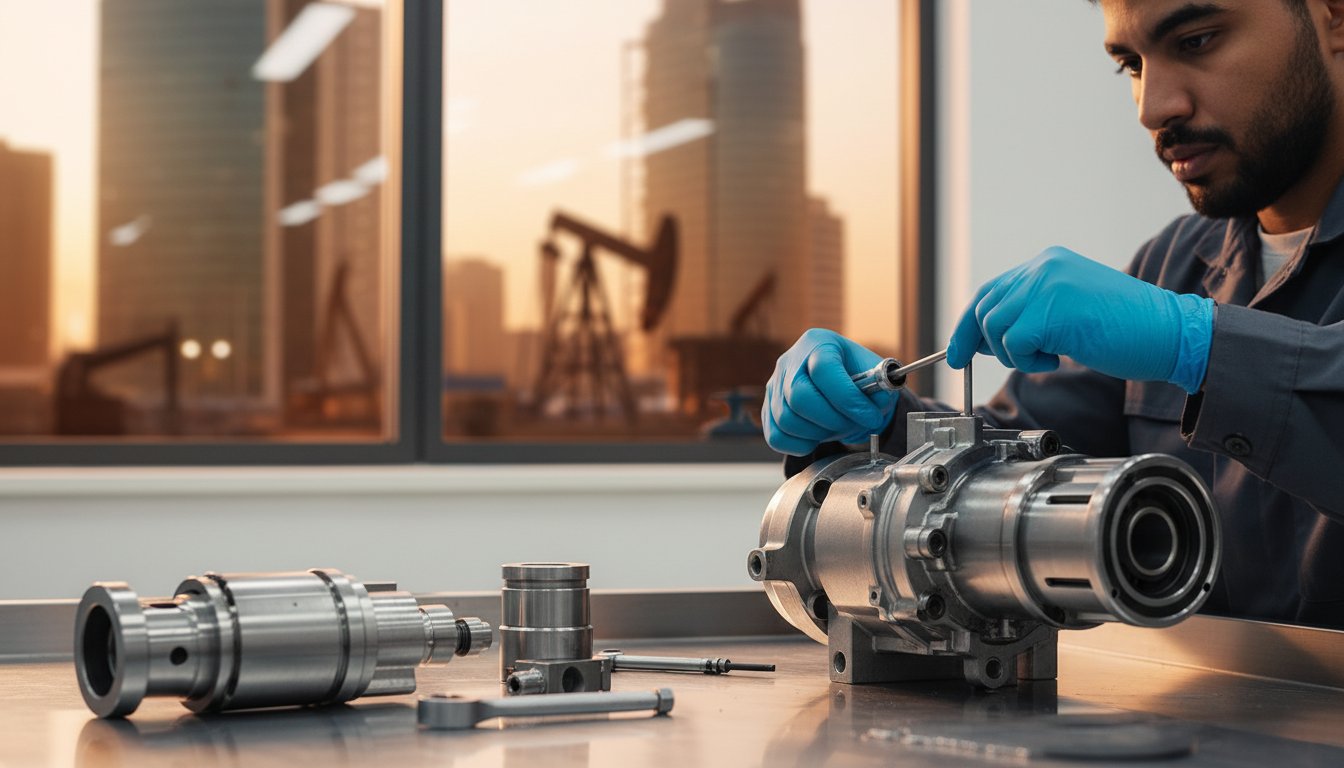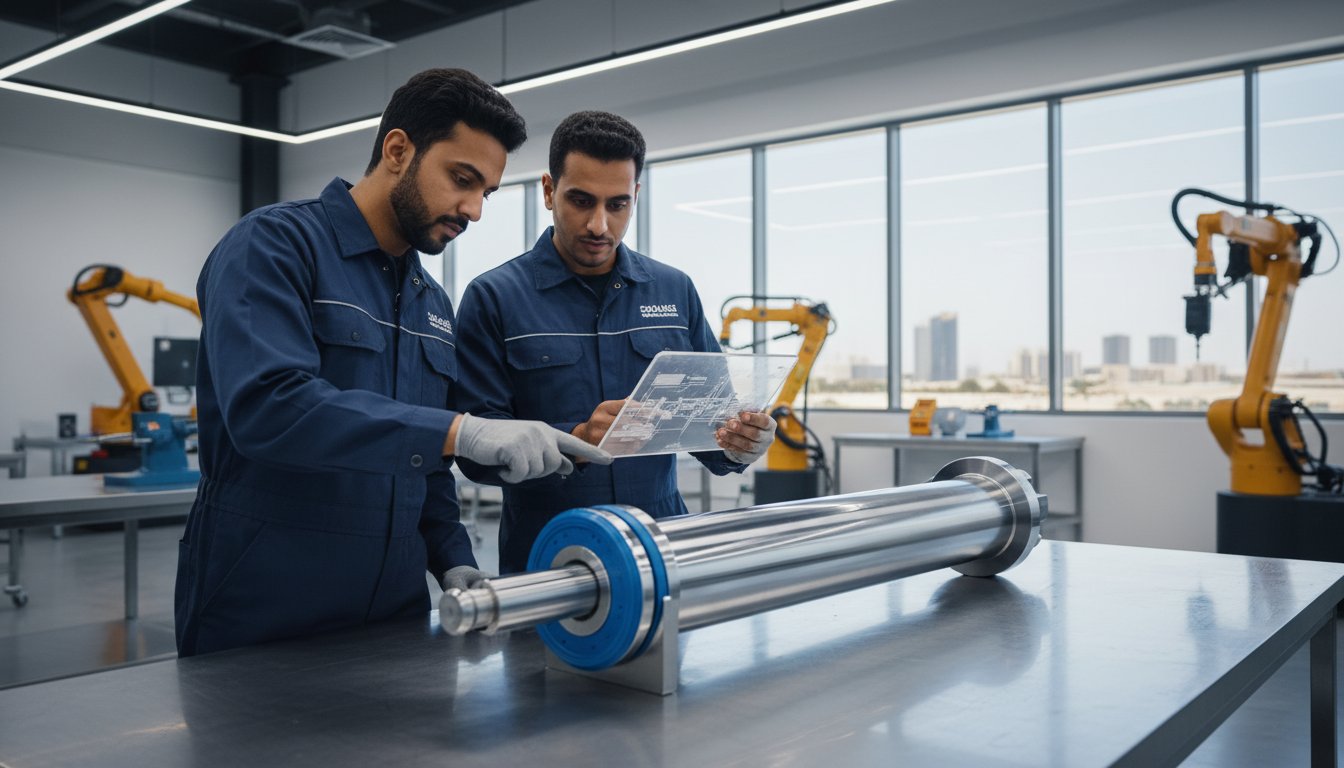

A failed hydraulic cylinder brings your operations to a grinding halt, and every hour of downtime means lost revenue measured in Saudi Riyals. You're faced with a critical decision that directly impacts your bottom line, forcing you to weigh the true cost of hydraulic cylinder repair vs replacement. This isn't just about the initial price tag; it's a complex calculation where a hasty choice can lead to prolonged operational interruptions and costly repeat failures. Making the wrong call can set your project back weeks and strain your budget unnecessarily.
This practical guide is engineered to provide the clarity you need. We will walk you through the key technical and financial factors-from assessing the extent of wear and sourcing lead times within Saudi Arabia to evaluating the long-term reliability of a repaired unit. Our goal is to equip you with the expert knowledge to confidently choose the most efficient and cost-effective solution, ensuring your systems are back in motion with minimal delay and maximum productivity.
Key Takeaways
- Evaluate cylinder failure based on its total impact, including operational downtime, not just the initial repair quote in Saudi Riyal.
- Repair is often the fastest, most cost-effective solution for common issues like leaking seals or light rod scratches, significantly reducing costly interruptions.
- Learn to identify non-negotiable signs of catastrophic damage, such as a cracked barrel, where replacement becomes the only safe and reliable long-term investment.
- Our guide provides a clear framework for calculating the true cost of hydraulic cylinder repair vs replacement to ensure you make the most profitable decision for your operations.
Understanding the True Cost of Cylinder Failure: Beyond the Price Tag
When a critical hydraulic cylinder fails, the immediate focus is often on the price of a repair or a new unit. However, this initial quote represents only a fraction of the total financial impact. A failed cylinder is not merely a broken component; it is a halt in production, a delay in projects, and a direct threat to your operational efficiency. To make the most cost-effective decision, you must look beyond the price tag and consider the Total Cost of Ownership (TCO). This guide provides a clear framework for evaluating the complete cost of hydraulic cylinder repair vs replacement, ensuring your decision optimizes both your budget and your uptime.
Calculating the High Cost of Unplanned Downtime
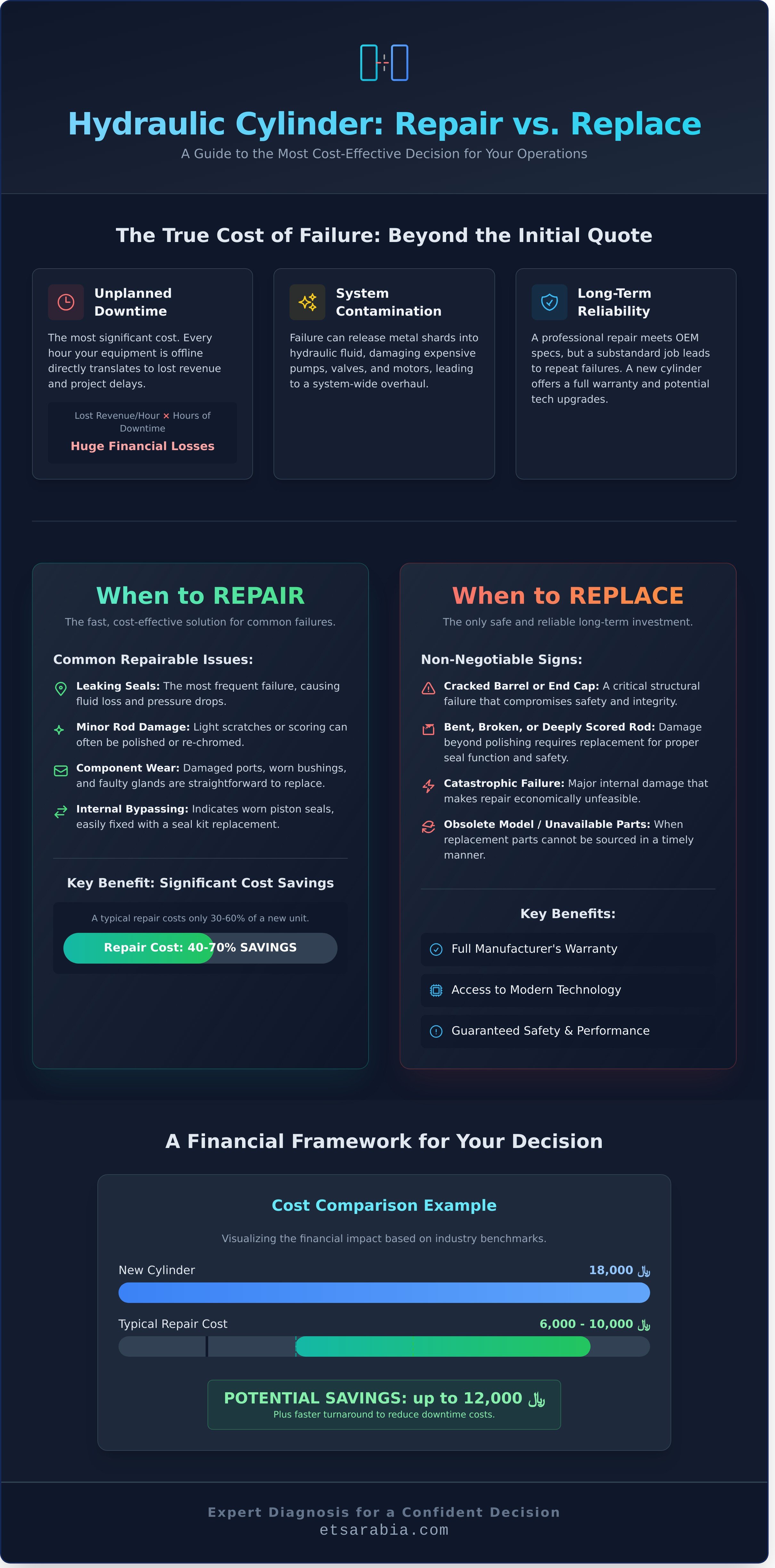
The most significant, yet often overlooked, cost of a cylinder failure is unplanned downtime. Every hour your equipment is offline translates directly into lost revenue and escalating operational costs. A simple calculation to quantify this is: Lost Revenue/Hour x Hours of Downtime. For a major construction project in Riyadh or an oil and gas operation in the Eastern Province, an 8-hour stoppage on a critical piece of equipment could easily result in losses exceeding ﷼100,000, not including idle labor costs and potential penalties for project delays.
Hidden Costs: Collateral Damage and System Contamination
A catastrophic failure can cause a devastating chain reaction within your machinery. When a Hydraulic cylinder fails, metal shards and other debris can be released into the hydraulic fluid, contaminating the entire system. This contamination can quickly damage expensive components like pumps, valves, and motors. The subsequent costs of a complete system flush, filter replacements, and repairs to other damaged parts can far exceed the initial cost of addressing the cylinder itself, turning a seemingly small problem into a major system overhaul.
Assessing Long-Term Reliability and Performance
The long-term performance of your solution is a critical factor in the cost of hydraulic cylinder repair vs replacement. A professionally repaired cylinder from an expert facility can meet or even exceed OEM specifications. However, a substandard repair can lead to recurring failures, creating a costly cycle of downtime and repeated service calls. Conversely, a new cylinder comes with a full manufacturer's warranty and may offer technological advancements-such as improved seal materials or integrated sensors-that enhance efficiency, extend service life, and ultimately deliver superior long-term value.
When to Repair a Hydraulic Cylinder: Key Scenarios and Benefits
In many industrial applications across Saudi Arabia, a malfunctioning hydraulic cylinder does not automatically require a full replacement. For non-catastrophic failures, a professional repair is the fastest and most economical path to restoring operational capacity. Understanding when to opt for repair is crucial for managers focused on optimizing uptime and controlling operational expenditures. The decision significantly impacts the overall cost of hydraulic cylinder repair vs replacement, often tipping the scales heavily in favor of expert refurbishment.
Common Repairable Issues
Most hydraulic cylinder failures stem from the wear and tear of specific components rather than a complete structural breakdown. Our expert technicians can efficiently resolve these common issues, restoring your equipment to OEM performance standards. These frequently include:
- Leaking Seals: Worn or damaged rod seals and piston seals are the most frequent cause of failure, leading to fluid loss and pressure drops.
- Minor Rod Damage: Light scoring, scratches, or pitting on the cylinder rod can often be polished or re-chromed, avoiding the high cost of a new rod.
- Component Wear: Damaged ports, worn bushings, and faulty glands are straightforward components to replace during a standard repair service.
- Internal Bypassing: When a cylinder drifts or fails to hold position, it often indicates worn internal piston seals, which are a core part of our comprehensive seal kit replacement.
The Financial and Operational Benefits of Repair
Choosing repair delivers tangible advantages that directly impact your bottom line. The primary benefit is cost savings; a professional repair typically costs only 30-60% of the price of a new cylinder. For example, a new unit costing 18,000 ﷼ could potentially be fully refurbished for 6,000-10,000 ﷼. While this is a reliable industry benchmark, sophisticated methods using financial modeling for cylinder replacement can further refine long-term maintenance strategies. Speed is another critical factor; repairs are completed in days, whereas sourcing and shipping a new cylinder to the Kingdom can take weeks or even months, drastically reducing costly downtime.
The Professional Repair Process Explained
At Emdad Technical Services, our repair process is methodical and transparent, designed to guarantee reliable performance. We follow a rigorous four-step process to ensure every repaired cylinder meets or exceeds original specifications.
- Disassembly and Inspection: We begin with a complete teardown and a thorough inspection of every component-rod, barrel, piston, and seals-to identify the precise cause of failure.
- Component Refurbishment: The cylinder barrel is honed to remove imperfections, and the rod is polished or re-chromed to restore its precise surface finish.
- Quality Parts Replacement: All seals, wipers, and wear bands are replaced with high-quality parts engineered for durability and performance in demanding environments.
- Reassembly and Rigorous Testing: The cylinder is meticulously reassembled and then subjected to rigorous pressure testing to ensure leak-free operation and confirm it performs to OEM standards.
When Replacement is the Only Smart Choice: Non-Negotiable Signs
While expert repair is often the most cost-effective solution, a thorough analysis of the cost of hydraulic cylinder repair vs replacement must include scenarios where repair is simply not a viable or safe option. At ETS, our primary goal is to ensure your operational integrity and safety. Recommending replacement in certain situations is a core part of our commitment to providing reliable, long-term solutions that protect your personnel and assets.
Signs of Catastrophic or Non-Repairable Damage
Attempting to salvage a cylinder with severe structural damage is a high-risk gamble that can lead to catastrophic failure and costly secondary damage. Replacement becomes the only responsible choice when you observe:
- A bent, cracked, or severely mushroomed cylinder rod: This indicates extreme stress or impact. A compromised rod cannot be safely straightened or repaired and will cause rapid seal failure and inefficient operation.
- A cracked or deeply scored cylinder barrel: The integrity of the cylinder tube is paramount for containing high pressures. Deep gouges or cracks prevent a proper seal and create a significant risk of a burst failure.
- Significant damage to mounting points: If the cylinder eye or clevis is cracked, deformed, or worn beyond tolerance, the entire unit is a structural liability.
- Obsolete models with no available parts: If quality seals, pistons, or glands are no longer manufactured, any repair attempted with substandard parts is guaranteed to fail prematurely.
The Risks of an Improper Repair
Pushing to repair a non-repairable cylinder introduces unacceptable risks. A cylinder failing under pressure can eject components at high velocity, posing a severe safety hazard. Furthermore, a failed repair leads directly to more unplanned downtime, often exceeding the initial cost of a new cylinder. An improper repair can also void equipment warranties and send metal contaminants throughout your hydraulic system, causing a cascade of failures in pumps and valves.
Sourcing a High-Quality Replacement Cylinder
When replacement is necessary, it's an opportunity to ensure or even enhance system performance. The choice between OEM and high-quality aftermarket cylinders depends on your application, budget, and availability. Our experts help you navigate these options, ensuring the replacement perfectly matches all critical specifications-bore, stroke, pressure rating, and mounting type. We help you make truly data-driven replacement decisions by analysing your operational needs. Whether you need a standard component or a custom-fabricated solution, ETS can source and supply the right replacement cylinder for your needs.
A Financial Framework: Calculating Your Repair vs. Replace Decision
Making an informed decision requires moving beyond initial quotes to a comprehensive total cost of ownership analysis. A proper evaluation of the cost of hydraulic cylinder repair vs replacement involves quantifying operational downtime, evaluating long-term performance, and understanding the full financial impact on your bottom line. This practical framework is designed to provide Saudi Arabian industrial operators with a clear, data-driven path to the most profitable and reliable choice for their specific situation.
The Cost Calculation Checklist
To accurately assess the financial implications, your first step is to gather precise data. A vague estimate can lead to costly errors, so we recommend a detailed breakdown. For an expert evaluation and a fast, accurate quote for your operations, you can always contact our technical team.
- Detailed Repair Quote: Request an itemized quote. This must include the cost of labor, all necessary seals and wear parts (e.g., ﷼500 - ﷼1,500), potential barrel honing or re-chroming of the rod, and any major hard parts that need replacement.
- Complete Replacement Quote: Secure a price for a new OEM or a high-quality aftermarket cylinder. Ensure this quote includes any necessary fittings or modifications for installation. Prices can range from ﷼7,000 for standard models to over ﷼50,000 for specialized units.
- Critical Downtime Cost: This is often the most significant, yet overlooked, expense. Calculate your revenue loss for every hour the machine is non-operational. Compare the estimated repair time (e.g., 2-4 days) with the lead time for a new cylinder (e.g., 2-6 weeks).
- Logistics & Shipping Costs: Do not forget to factor in the freight charges for transporting a heavy new cylinder to your facility, whether it's in Riyadh, Dammam, or Jeddah.
The Performance and Lifespan Factor
A simple quote doesn't reveal the full picture of future performance. You must consider the cylinder's operational history and expected service life. Is the component nearing the end of its typical 5-10 year lifespan, making a repair a poor long-term investment? If the failure stemmed from a fundamental design flaw, extreme contamination, or severe barrel damage, a repair might only be a temporary solution. While an expert repair from ETS will restore the cylinder to OEM specifications, a brand-new replacement guarantees 100% new performance, efficiency, and reliability from day one.
The Final Verdict: A Comparison Table
Use this table to visualize the critical trade-offs at a glance. This direct comparison helps clarify the true cost of hydraulic cylinder repair vs replacement, empowering you to make a decision based on your company's most important priorities, whether that is immediate cost savings or long-term operational security.
| Factor | Repair | Replacement |
|---|---|---|
| Upfront Cost | Typically lower (e.g., ﷼3,000 - ﷼10,000) | Significantly higher (e.g., ﷼7,000 - ﷼50,000+) |
| Downtime | Shorter (1-5 days) | Longer (2-8 weeks lead time) |
| Expected Lifespan | Variable; depends on repair quality and initial damage | New full lifespan as per OEM |
| Warranty | Often covers workmanship for a limited period (e.g., 6 months) | Comprehensive manufacturer's warranty (e.g., 12-24 months) |
The ETS Advantage: Expert Diagnosis for a Confident Decision
Navigating the decision between repairing and replacing a hydraulic cylinder involves more than just a surface-level price comparison. An incorrect choice can lead to extended downtime, repeat failures, and unexpected expenses that impact your bottom line. At Emdad Technical Services (ETS), we eliminate the guesswork. Our expert team provides the technical clarity you need to make a confident, cost-effective decision for your operations across Saudi Arabia.
As your trusted partner, we understand that the true cost of hydraulic cylinder repair vs replacement is measured in long-term reliability and operational efficiency. We leverage our deep expertise and state-of-the-art facilities in Dammam to provide a definitive recommendation tailored to your specific equipment and application.
Comprehensive Inspection and Failure Analysis
Our process begins with a meticulous diagnostic approach. We don't just address the symptoms; our technicians perform a complete failure analysis to identify the root cause of the issue, whether it's contamination, seal degradation, or mechanical stress. You receive a detailed inspection report outlining our findings and a clear, data-driven recommendation. All repaired cylinders undergo rigorous testing to ensure they meet or exceed original equipment manufacturer (OEM) specifications for performance and safety.
Access to OEM-Quality Parts and Components
The longevity of any hydraulic repair depends on the quality of the components used. Emdad Technical Services (ETS) maintains a robust supply chain, providing fast access to premium-grade parts from globally recognized brands.
- For Repairs: We use high-performance seals, rods, and pistons engineered for durability in demanding industrial environments.
- For Replacements: If a new cylinder is the most viable option, we leverage our extensive network to source the exact OEM or equivalent unit, ensuring perfect fitment and function.
Warranty-Backed Services for Your Peace of Mind
Your operational continuity is our primary goal. We stand behind the quality and reliability of our workmanship with a comprehensive warranty on all hydraulic cylinder repairs. This guarantee provides you with the assurance that your equipment is serviced to the highest standards, protecting your investment and minimizing future risks. When evaluating the long-term cost of hydraulic cylinder repair vs replacement, our warranty provides unmatched value and confidence. Minimize your downtime. Contact our experts in Dammam today.
The Smart Decision: Balancing Cost, Performance, and Downtime
Ultimately, the choice between repairing or replacing a hydraulic cylinder extends far beyond the initial quote in Saudi Riyal. It requires a strategic assessment of long-term performance, operational efficiency, and the critical impact of downtime. While repairing components is often a highly cost-effective strategy to extend asset life, catastrophic damage makes replacement the only secure path forward. Understanding the true cost of hydraulic cylinder repair vs replacement requires an expert diagnosis to protect your investment and ensure system reliability.
Don't leave this critical financial decision to guesswork. The expert technicians at ETS provide a comprehensive assessment to give you a clear, data-driven recommendation. With our fast turnaround times designed to minimize your operational downtime and a warranty on all hydraulic repair services for guaranteed reliability, we are the trusted partner for key industries in Dammam and across Saudi Arabia. Get an Expert Assessment & Quote for Your Hydraulic Cylinder today and make the confident choice that keeps your operations moving forward.
Frequently Asked Questions About Hydraulic Cylinder Repair
How much does it typically cost to rebuild a hydraulic cylinder?
The cost to rebuild a hydraulic cylinder in Saudi Arabia varies significantly based on its size, complexity, and the extent of the damage. A standard reseal for a small to medium-sized cylinder can range from 1,500 SAR to 4,000 SAR. For larger industrial cylinders requiring extensive work like rod repair or barrel honing, costs can exceed 15,000 SAR. A thorough inspection is always required to provide an accurate, reliable quote that ensures a cost-effective solution and minimizes operational downtime.
Is it cheaper to rebuild or replace a hydraulic cylinder in the long run?
In most scenarios, rebuilding a hydraulic cylinder is the more economical long-term solution. A professional repair often costs 50-70% less than purchasing a new OEM component, offering immediate savings. When evaluating the total cost of hydraulic cylinder repair vs replacement, a quality rebuild using superior seals and expert techniques can restore the cylinder to its original specifications, extending its service life and providing excellent value. This approach also reduces lead times and costly interruptions to your operations.
How long does a professional hydraulic cylinder repair take?
Our priority is to minimize your downtime with prompt and efficient service. A standard cylinder reseal can often be completed within 24 to 48 hours, depending on component availability. More complex repairs that involve machining, honing, or re-chroming the rod may take 3 to 7 business days. Our extensive local inventory of high-quality seals and parts in Saudi Arabia allows us to expedite the repair process and get your critical equipment back in service faster.
What is the most common cause of hydraulic cylinder failure?
The most common cause of premature hydraulic cylinder failure is fluid contamination. Particulates such as dirt, water, and metal fragments in the hydraulic oil act as an abrasive, accelerating wear on seals, scoring the cylinder barrel, and damaging the rod surface. This contamination leads to leaks, reduced efficiency, and eventual component failure. Proper fluid filtration and regular maintenance are the most effective measures to prevent this and ensure the reliability of your hydraulic systems.
Can a scored or scratched hydraulic cylinder rod be repaired?
Yes, a scored or scratched cylinder rod can almost always be repaired, offering a cost-effective alternative to a full replacement. The expert repair process involves grinding the rod surface down to remove all imperfections and then applying a new layer of industrial hard chrome plating. The rod is then polished to the precise surface finish required for optimal seal performance. This restores the rod to its original factory specifications, guaranteeing durability and reliable operation.
What is the difference between honing and re-chroming a cylinder?
Honing and re-chroming are two distinct repair processes for different parts of a hydraulic cylinder. Honing is a machining process performed on the inside surface of the cylinder barrel (tube). It removes light scratches and restores the cross-hatch pattern necessary for lubrication and proper seal function. Re-chroming is a surface treatment applied to the external cylinder rod, which restores the hard, corrosion-resistant chrome layer that protects it from damage and ensures a smooth, leak-free operation.