An unexpected hydraulic failure doesn't just halt a machine; it brings your entire operation to a standstill, costing thousands of Saudi Riyals in lost productivity with every passing hour. For many industrial facilities across Saudi Arabia, the fear is constant: a minor leak or an unusual noise quickly escalating into a catastrophic failure, posing significant safety risks and leading to major, expensive repairs. Without a clear strategy, you are left reacting to problems instead of preventing them. This reactive cycle is not only costly but unsustainable for long-term operational success.
The solution lies in shifting from reaction to prevention. This guide is your definitive resource for mastering industrial hydraulic systems maintenance. We provide the expert insights and actionable steps needed to implement a robust preventive maintenance plan. Prepare to enhance equipment reliability, significantly reduce long-term operational costs, and create a safer working environment for your personnel. It's time to take control of your systems and ensure your operations move forward with guaranteed efficiency and performance.
Key Takeaways
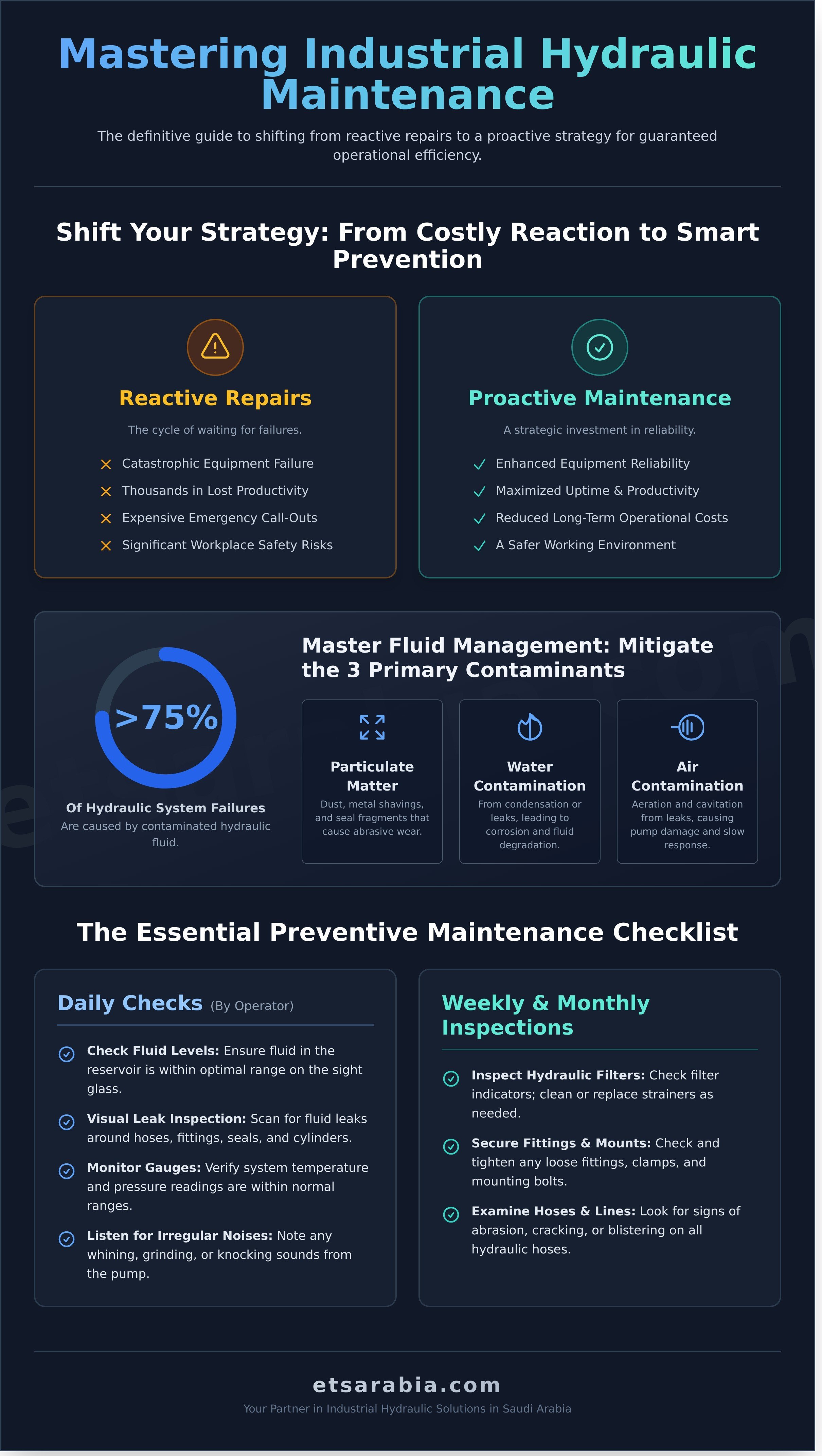
- Shift from costly reactive repairs to a proactive strategy to significantly reduce operational downtime and prevent catastrophic equipment failure.
- Master hydraulic fluid management by learning to identify and mitigate the three primary types of contamination that cause over 75% of system failures.
- Implement a structured checklist for routine industrial hydraulic systems maintenance to ensure consistent performance and enhance worksite safety.
- Recognize the early warning signs of common hydraulic problems to determine when to perform in-house adjustments versus calling for expert intervention.
Why Proactive Hydraulic Maintenance is Crucial for Your Operations
In the demanding industrial landscape of Saudi Arabia, waiting for equipment to fail is a costly strategy. The difference between proactive maintenance and reactive repair is the difference between controlled, scheduled servicing and chaotic, emergency shutdowns. Proactive industrial hydraulic systems maintenance involves consistent, planned checks to identify and correct issues before they escalate. These systems, which operate based on core Hydraulic machinery principles, rely on precise pressure and fluid dynamics; even a minor deviation can cascade into a major failure. For sectors like oil & gas and manufacturing, unplanned downtime can result in losses exceeding hundreds of thousands of Riyals per hour. Therefore, viewing maintenance as a strategic investment in productivity, rather than a mere operational expense, is critical for long-term success.
Maximizing Uptime and Productivity
Reliable equipment is the foundation of consistent production output. A proactive maintenance schedule ensures your hydraulic systems operate at peak efficiency, preventing unexpected breakdowns that halt your entire operation. Scheduled servicing is significantly faster and less disruptive than emergency repairs, allowing you to plan downtime on your terms. Furthermore, well-maintained systems consume less energy, directly lowering your operational costs and boosting overall productivity.
Enhancing Workplace Safety
The immense power of hydraulic systems also presents significant safety risks. A sudden failure, such as a burst high-pressure hose, can cause catastrophic equipment damage and severe injuries to personnel. A structured approach to industrial hydraulic systems maintenance includes regular inspections that identify potential hazards like worn hoses, faulty fittings, or minor leaks before they become critical safety incidents. Fostering this maintenance culture reinforces your commitment to overall workplace safety compliance.
Reducing Long-Term Operational Costs
Preventive care is a direct investment in the longevity of your assets. By addressing minor issues early, you extend the lifespan of expensive components like pumps, cylinders, and valves, deferring major capital expenditures. Catching a small fluid leak can save thousands of Riyals annually in hydraulic fluid costs and environmental cleanup. Most importantly, proactive maintenance helps you avoid the premium costs associated with emergency call-outs, express parts delivery, and overtime labor.
The Essential Preventive Maintenance Checklist for Hydraulic Systems
Proactive maintenance is the cornerstone of operational reliability. A structured checklist transforms routine inspections from a chore into a powerful strategy for minimizing downtime and extending equipment lifespan. Effective industrial hydraulic systems maintenance relies on a consistent schedule and meticulous record-keeping to identify potential issues before they escalate into costly failures. While this checklist provides a robust framework, it is crucial to adapt it to the specific demands of your machinery and the challenging operating conditions found in Saudi Arabia.
Daily Checks (Performed by Operators)
These quick, at-a-glance inspections should be part of the daily startup procedure to catch immediate problems. They are the first line of defense in ensuring system integrity and safety.
- Check Fluid Levels: Ensure the hydraulic fluid level in the reservoir is within the optimal range indicated on the sight glass.
- Visual Leak Inspection: Scan the system for any signs of fluid leaks around hoses, fittings, seals, and cylinders.
- Monitor Gauges: Verify that system temperature and pressure gauges are reading within the normal, specified operating ranges.
- Listen for Irregular Noises: Pay attention to any unusual sounds, such as whining from the pump, grinding, or knocking, which can indicate aeration, cavitation, or mechanical wear.
Weekly & Monthly Inspections
These more detailed checks require a technician's attention and should be scheduled to prevent the gradual degradation of system components. Diligent record-keeping of these findings is essential for trend analysis.
- Inspect Hydraulic Filters: Check filter indicators. Clean or replace strainers and return-line filters as needed to prevent contamination.
- Secure Fittings and Mounts: Check and tighten any loose fittings, clamps, and mounting bolts to prevent leaks and vibration-related damage.
- Examine Hoses and Lines: Inspect all hydraulic hoses for signs of abrasion, cracking, blistering, or kinking, which can lead to catastrophic failure.
- Take a Fluid Sample: Collect a hydraulic fluid sample for a basic in-house analysis or to be sent for professional evaluation.
Semi-Annual & Annual Major Services
These comprehensive tasks form the core of a predictive maintenance program, ensuring the long-term health and efficiency of your equipment. This level of professional industrial hydraulic systems maintenance is critical for high-value assets.
- Conduct Comprehensive Fluid Analysis: Send a fluid sample to a lab to test for viscosity, water content, particle count, and chemical composition.
- Drain and Replace Fluid: Based on the analysis or manufacturer's recommendations, drain the old fluid, flush the system, and replace it with new, clean hydraulic fluid.
- Calibrate System Controls: Test and calibrate pressure relief valves and other control components to ensure they function correctly and safely.
- Inspect and Clean the Reservoir: Drain and thoroughly clean the inside of the hydraulic reservoir to remove sludge, sediment, and contaminants.
Hydraulic Fluid Management: The Lifeblood of Your System
In any high-performance hydraulic system, the fluid is not just a medium for power transfer; it is the single most critical component for ensuring reliability and longevity. Industry data reveals a stark reality: over 75% of all hydraulic system failures are a direct result of fluid contamination. Ignoring fluid health is a direct path to costly downtime, premature component wear, and reduced operational efficiency. A proactive approach to fluid management is a cornerstone of effective industrial hydraulic systems maintenance.
Understanding Contamination and Its Effects
Contamination enters your system in three primary forms, each with a unique and damaging impact on performance:
- Solid Particles: Microscopic particles of metal, dirt, and seal material act like liquid sandpaper, causing abrasive wear on the precision-machined surfaces of pumps, valves, and cylinders. This leads to internal leakage, reduced efficiency, and eventual catastrophic failure.
- Water Contamination: Particularly in the humid coastal regions of Saudi Arabia, water ingress is a constant threat. It causes rust, accelerates fluid oxidation, depletes vital additives, and significantly reduces the fluid's lubricating properties.
- Air Contamination: Air can manifest as aeration (entrained bubbles) or cavitation (vapor bubbles imploding under pressure). Both conditions are destructive, causing component damage, fluid degradation, and loud, inefficient operation.
The Role of Filtration and Breathers
Your first line of defense against contamination is a robust filtration strategy. Effective industrial hydraulic systems maintenance relies on using the right filters in the right places, including pressure filters to protect sensitive downstream components and return line filters to clean fluid before it re-enters the reservoir. Filter performance is measured by its micron rating, which indicates the size of particles it can capture. Protecting critical components requires fine filtration, often in the 3 to 6-micron range. Furthermore, high-quality desiccant breathers on the reservoir are essential to stop airborne dust and moisture from entering the system as fluid levels fluctuate.
Best Practices for Fluid Sampling and Analysis
You cannot manage what you do not measure. Regular fluid analysis provides a clear diagnosis of your system's internal health, allowing you to move from reactive repairs to predictive maintenance. A proper sample must be taken from a turbulent point in the system while it is running to ensure an accurate reading. A comprehensive lab report will reveal critical data, including:
- Viscosity: Verifies the fluid is at its optimal thickness.
- Water Content: Measures moisture levels in parts per million (PPM).
- Particle Count: Quantifies fluid cleanliness according to ISO 4406 standards.
- Wear Metals: Identifies specific metals to pinpoint which components are wearing prematurely.
Using this data, your maintenance team can schedule targeted interventions-like changing filters or performing an off-line filtration-before a minor issue escalates into a major failure, saving thousands of Riyals in downtime and repairs.
Troubleshooting Common Hydraulic Problems: Early Warning Signs
A high-performance hydraulic system rarely fails without warning. Recognizing the early signs of trouble is a critical component of effective industrial hydraulic systems maintenance, allowing you to address minor issues before they escalate into catastrophic failures and costly operational downtime. By connecting specific symptoms to their likely root causes, your team can perform targeted checks and understand when expert intervention is required.
Symptom: System Overheating
Excessive heat is a primary enemy of hydraulic systems, accelerating fluid degradation and causing premature seal failure. If your system is running too hot, it's a clear signal that something is wrong. The most common culprits are low fluid levels, clogged or inefficient heat exchangers, or using a hydraulic fluid with the incorrect viscosity. Check the reservoir level and ensure coolers are clean and operational. Unchecked, high temperatures will drastically reduce the life of every component in your system.
Symptom: Slow Operation or Loss of Power
When actuators are sluggish or the system struggles under load, it often points to a loss of pressure or flow. This can be caused by internal leakage in a worn pump, failing cylinder seals, or an incorrectly set or malfunctioning pressure relief valve. A simple diagnostic step is to determine if the issue affects a single function (likely a cylinder or valve issue) or the entire system (often pointing to the pump). Accurate pressure testing is essential for a definitive diagnosis.
Symptom: Noisy System Operation
Unusual noises are a direct communication of system distress. It's crucial to distinguish between two common sounds:
- Aeration: A high-pitched whining or banging sound, caused by air entering the system through faulty seals or loose connections.
- Cavitation: A high-pitched screaming or rattling, caused by the fluid vaporizing due to a restricted intake line.
Both conditions are extremely damaging to the pump and must be addressed immediately. Other noises can indicate worn pump bearings or other mechanical failures.
Symptom: Visible Fluid Leaks
While seemingly minor, a fluid leak should never be ignored. Leaks can originate from hardened or worn seals, loose fittings, or damaged hoses. Beyond the cost of replacement fluid, leaks pose significant safety risks from slips and falls, as well as serious environmental hazards. Pinpointing the source of a persistent leak can be challenging. Can't find the source of the problem? Our experts at Emdad Technical Services (ETS) offer rapid diagnostics.
When to Call the Experts: Advanced Maintenance and Repair
While a consistent in-house checklist is the foundation of hydraulic system health, there are critical situations where specialized expertise is not just beneficial-it's essential. Recognizing the limits of internal capabilities and engaging a professional partner is a strategic move to prevent catastrophic failures, optimize performance, and protect your valuable assets. Effective industrial hydraulic systems maintenance often requires a blend of daily diligence and expert intervention for complex challenges.
Partnering with a specialist is not an operational expense; it is an investment in uptime. By outsourcing complex repairs and diagnostics, you avoid the high capital cost of specialized equipment and training, converting a potential liability into a predictable, value-driven service that reduces costly interruptions and saves significant SAR in the long run.
Tasks Requiring Professional Service
Certain high-stakes tasks demand precision tools, controlled environments, and certified expertise to ensure they are completed to OEM standards. Attempting these without proper resources can lead to component damage or premature system failure. Key services best left to experts include:
- Complete System Flushing: Professional flushing with high-velocity, temperature-controlled oil to remove contaminants that routine filtration cannot, ensuring total system purity.
- Hydraulic Pump and Motor Rebuilding: Disassembly, inspection, replacement of worn parts with genuine spares, and precision reassembly, followed by performance testing on a dedicated test bench.
- Precision Hydraulic Cylinder Repair: Expert honing, chroming, and resealing of cylinders, including pressure testing to guarantee leak-free performance under operational loads.
- Advanced On-Site Troubleshooting: Utilizing diagnostic tools like thermal imagers, flow meters, and particle counters to accurately pinpoint the root cause of complex performance issues fast.
Choosing a Maintenance Partner in Saudi Arabia
For operations in the Kingdom, selecting the right partner for your industrial hydraulic systems maintenance is crucial for minimizing downtime. Look for a provider who demonstrates a deep commitment to the local market and its unique demands.
- Local Presence: A partner with a physical workshop, like a facility in Dammam, guarantees rapid response times for on-site service and repairs.
- Industry-Specific Expertise: Verify their experience with key Saudi industries, such as petrochemical, manufacturing, and marine, to ensure they understand your operational pressures.
- Genuine Spare Parts: Ensure they have a robust supply chain for high-quality, genuine hydraulic components to maintain system integrity and reliability.
- 24/7 Availability: Critical operations don't stop. Your maintenance partner must offer round-the-clock support to address emergencies and prevent prolonged shutdowns.
At ETS, we deliver the expertise, reliability, and solutions that keep your operations moving forward. To learn how our specialized services can enhance your maintenance strategy, visit us at etsarabia.com.
Secure Your Operations with Expert Hydraulic Maintenance
Mastering the performance of your hydraulic systems hinges on a proactive, rather than reactive, approach. As this guide has shown, consistent preventive checks, meticulous fluid management, and the ability to troubleshoot early warning signs are the cornerstones of operational reliability. This comprehensive approach to industrial hydraulic systems maintenance is not just about preventing failures; it's a direct investment in protecting your most valuable asset: your operational uptime and productivity.
For operations across Saudi Arabia that cannot afford to stop, Emdad Technical Services (ETS) is your reliable partner. We deliver specialized expertise tailored for the region's demanding oil & gas and industrial sectors, offering 24/7 on-site support across the Kingdom to minimize downtime. Our access to genuine parts from global leaders like Danfoss and Rexroth guarantees quality repairs that last. Ensure peak reliability. Contact ETS for expert hydraulic maintenance and repair services.
Frequently Asked Questions About Hydraulic Maintenance
What is the difference between preventive and predictive hydraulic maintenance?
Preventive maintenance involves scheduled tasks based on time or usage, such as changing filters every 500 operating hours, regardless of their actual condition. This proactive approach helps avoid common failures. Predictive maintenance is a more advanced strategy that uses condition-monitoring tools like oil analysis and vibration sensors. This data helps predict when a component will fail, allowing for maintenance to be performed precisely when needed, optimizing uptime and resource allocation for your industrial hydraulic systems maintenance program.
How often should I change the hydraulic fluid in my system?
There is no universal schedule; frequency depends on operating conditions, temperature, and system design. Always start with the Original Equipment Manufacturer's (OEM) recommendation. However, the most reliable and cost-effective method is to implement a regular oil analysis program. This provides scientific data on the fluid's condition, including contamination levels and additive depletion, ensuring you change the fluid only when necessary to protect your investment and guarantee peak performance.
What are the most critical safety precautions when working on hydraulic systems?
Safety must be the top priority. Before any work, always completely de-pressurize the system and implement strict Lockout/Tagout (LOTO) procedures to prevent accidental machine startup. Never use your hands to check for leaks, as high-pressure fluid can easily penetrate the skin and cause severe injury. Consistently wear appropriate Personal Protective Equipment (PPE), including impact-resistant safety glasses and fluid-resistant gloves, to protect yourself from potential hazards.
Can I mix different types or brands of hydraulic oil?
No, you should never mix different types or brands of hydraulic oil, even if they have the same viscosity rating. Each manufacturer uses a unique additive package for anti-wear, anti-foam, and anti-corrosion properties. Mixing incompatible additives can lead to chemical reactions that cause sludge, clog filters, and degrade lubrication. This can result in premature component wear and catastrophic system failure. Always perform a complete system flush when changing oil types.
What is the ideal operating temperature for an industrial hydraulic system?
The optimal operating temperature for most industrial hydraulic systems is between 40°C and 60°C. Operating consistently above this range significantly accelerates oil degradation, reduces fluid viscosity, and can damage seals, hoses, and other critical components. High temperatures are often a symptom of an underlying issue, such as an undersized cooler or system inefficiency. Regular temperature monitoring is a key indicator of your system's overall health and operational efficiency.
How do I create a maintenance log for my hydraulic equipment?
An effective maintenance log provides a clear history of all service activities, which is invaluable for troubleshooting and planning. Your log should include the equipment identifier, date of service, machine operating hours, and a detailed description of the work performed. Be sure to record all parts replaced, fluid added, and key readings like pressure and temperature. This disciplined approach transforms routine tasks into valuable data that helps identify failure patterns and optimize your maintenance strategy.