In the demanding industrial sectors across Saudi Arabia, selecting the right heavy lifting equipment is not just a matter of efficiency-it’s a critical decision impacting project timelines, operational safety, and your bottom line. Choosing the wrong type of crane or experiencing an unexpected hydraulic failure can lead to costly downtime and significant operational delays. This uncertainty in equipment selection and reliability is a challenge that can compromise even the best-laid plans.
This comprehensive guide is engineered to provide the clarity and confidence you need. We will explore the diverse types of industrial cranes and their specific applications, from construction to petrochemicals. You will gain a clear understanding of the critical hydraulic components that power these machines, empowering you to enhance performance, diagnose issues more effectively, and ensure maximum uptime. Let's build the expert knowledge required to guarantee every lift is safe, efficient, and reliable.
An Introduction to Cranes: The Backbone of Modern Industry
In the rapidly advancing industrial landscape of Saudi Arabia, few machines are as fundamental as the crane. At its core, a Crane (machine) is a powerful piece of equipment designed for a single, critical purpose: lifting and moving heavy objects with precision and control. These mechanical giants are indispensable across key sectors, powering everything from ambitious giga-projects in construction to the demanding operations in oil & gas, manufacturing, and shipping. Their incredible power is derived from proven engineering principles, including levers for mechanical advantage, pulleys to multiply force, and advanced hydraulic systems for smooth, controlled movement. Understanding the different types is the first step toward optimizing their performance and ensuring operational reliability.
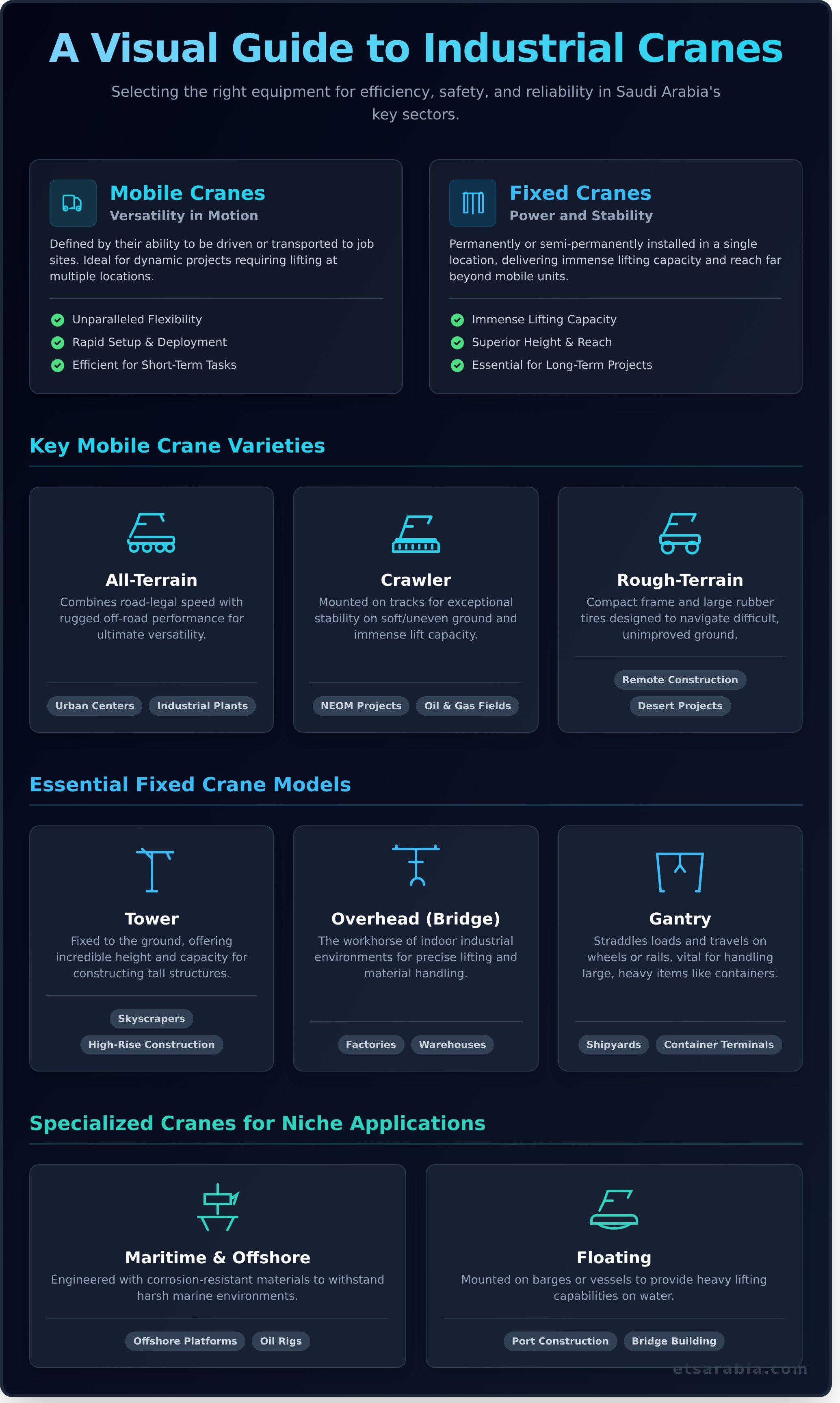
Cranes are broadly classified into two primary categories, each engineered for specific operational demands and environments. The choice between them directly impacts project efficiency, safety, and cost, making proper selection and maintenance crucial for minimizing downtime.
Mobile Cranes: Versatility in Motion
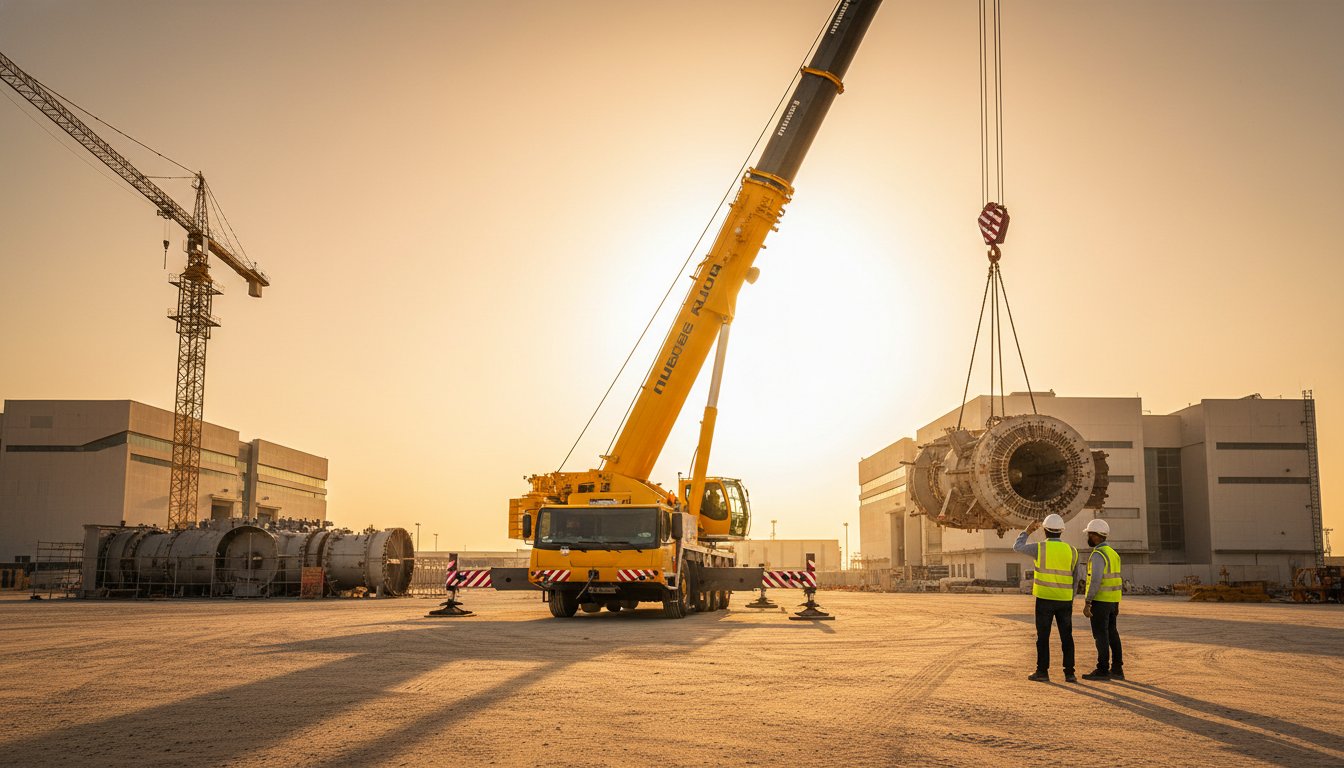
Mobile cranes are defined by their inherent ability to be driven or transported to a job site and maneuvered into position. Mounted on wheeled or tracked chassis, they offer unparalleled flexibility and rapid setup times. This mobility makes them the ideal solution for projects that require lifting at multiple locations, such as dynamic construction sites or short-term industrial maintenance tasks. Their versatility ensures that lifting power can be deployed precisely where it is needed, fast.
Fixed Cranes: Power and Stability
In contrast, fixed or static cranes are permanently or semi-permanently installed in a single location. This stability allows them to achieve immense lifting capacities and reach incredible heights, far exceeding the capabilities of most mobile units. You will find these powerful systems as permanent fixtures in locations requiring consistent, heavy-lifting operations, such as constructing skyscrapers in Riyadh, loading massive containers at Jeddah Islamic Port, or moving components within large-scale factories.
Common Types of Cranes and Their Industrial Applications
In Saudi Arabia's demanding industrial and construction sectors, selecting the correct crane is critical for maximizing operational efficiency and ensuring project success. Each type is engineered for specific environments and load requirements. Understanding the unique design and function of each machine is the first step toward implementing a robust maintenance program that complies with rigorous international guidelines, such as the OSHA crane inspection standards, guaranteeing both safety and asset longevity.
Key Mobile Crane Varieties
Mobile cranes offer unparalleled flexibility, which is crucial for dynamic project sites across the Kingdom. Their ability to move between locations or around a single site minimizes downtime and enhances productivity.
- All-Terrain Cranes: These versatile machines combine the high-speed capability of a road-legal vehicle with the rugged off-road performance needed for challenging sites. They are ideal for projects in urban centers like Riyadh and industrial plant maintenance where both mobility and power are required.
- Crawler Cranes: Mounted on a tracked undercarriage, crawler cranes provide exceptional stability on soft or uneven ground. Their immense lifting capacity makes them indispensable for large-scale infrastructure projects, such as those in NEOM, and heavy-duty operations in the oil and gas fields.
- Rough-Terrain Cranes: Built with a durable frame and large rubber tires, these compact cranes are specifically designed to navigate the difficult, unimproved ground common in remote construction zones and desert projects.
Essential Fixed Crane Models
For long-term projects requiring consistent, high-capacity lifting in a defined area, fixed cranes are the industry standard. They provide superior stability and lifting power for repetitive tasks.
- Tower Cranes: Dominating the skylines of growing cities, tower cranes are fixed to the ground and offer incredible height and lifting capacity, making them essential for constructing skyscrapers and other tall structures.
- Overhead (Bridge) Cranes: The workhorses of indoor industrial environments, these are found in factories and warehouses in cities like Jubail and Yanbu for precise lifting and material handling.
- Gantry Cranes: Supported by legs that travel on wheels or rails, gantry cranes straddle their loads. They are vital for operations in shipyards, container terminals, and precast concrete yards.
Specialized Cranes for Niche Applications
Certain high-stakes industries demand cranes engineered for extreme conditions and unique operational challenges.
- Maritime & Offshore Cranes: Designed with corrosion-resistant materials and robust hydraulic systems, these cranes are built to withstand the harsh marine environment of the Arabian Gulf, serving offshore oil and gas platforms.
- Floating Cranes: Mounted on barges or specialized vessels, floating cranes provide heavy lifting capabilities on water, essential for port construction, bridge building, and complex salvage operations.
The Power Behind the Lift: Core Crane Components Explained
Understanding the various types of cranes is only the first step. To truly optimize performance and ensure operational safety, a deeper knowledge of the core components is essential. These systems work in unison to provide the lifting power, stability, and mobility required on demanding job sites across Saudi Arabia. Recognizing their function is fundamental to diagnosing issues and implementing a proactive maintenance strategy that minimizes costly downtime.
Structural and Mechanical Components
The visible power of a crane comes from its robust mechanical and structural parts. Each element is engineered for immense stress and plays a distinct role in the lifting process.
- The Boom & Jib: Often considered the 'arm', the boom is the primary structural member that determines a crane's reach and lifting height. A jib is an extension fitted to the end of the boom to provide additional length and articulation for specific tasks.
- The Hoist & Wire Rope: The hoist is the winch mechanism, powered by motors, that spools the wire rope. This rope is the critical link that bears the load. Its integrity is paramount, and regular inspection for wear, corrosion, or fraying is a non-negotiable part of meeting rigorous OSHA crane safety standards and preventing catastrophic failure.
- Counterweights: These heavy blocks, strategically placed at the rear of the crane, provide the crucial stability needed to balance the load being lifted. Without correct counterweight configuration, the entire machine is at risk of tipping.
The Heart of the Machine: The Hydraulic System
Modern crane performance is defined by the power and precision of its hydraulic system. This system uses the principle of fluid dynamics-transmitting force through an incompressible, pressurized fluid-to generate the immense power required to lift multi-ton loads with precise control. A failure in any part of this network can bring operations to an immediate halt.
Key hydraulic components include:
- Hydraulic Pumps: Driven by the crane's engine, the pump is the source of power, creating the high-pressure flow of hydraulic fluid.
- Hydraulic Cylinders: These are the actuators that convert fluid pressure into mechanical movement, responsible for extending and retracting the boom sections and deploying outriggers for stability.
- Hoses, Valves & Seals: This intricate network directs, controls, and contains the high-pressure fluid. Hoses are common points of failure due to wear and exposure, making them a top priority in any maintenance schedule.
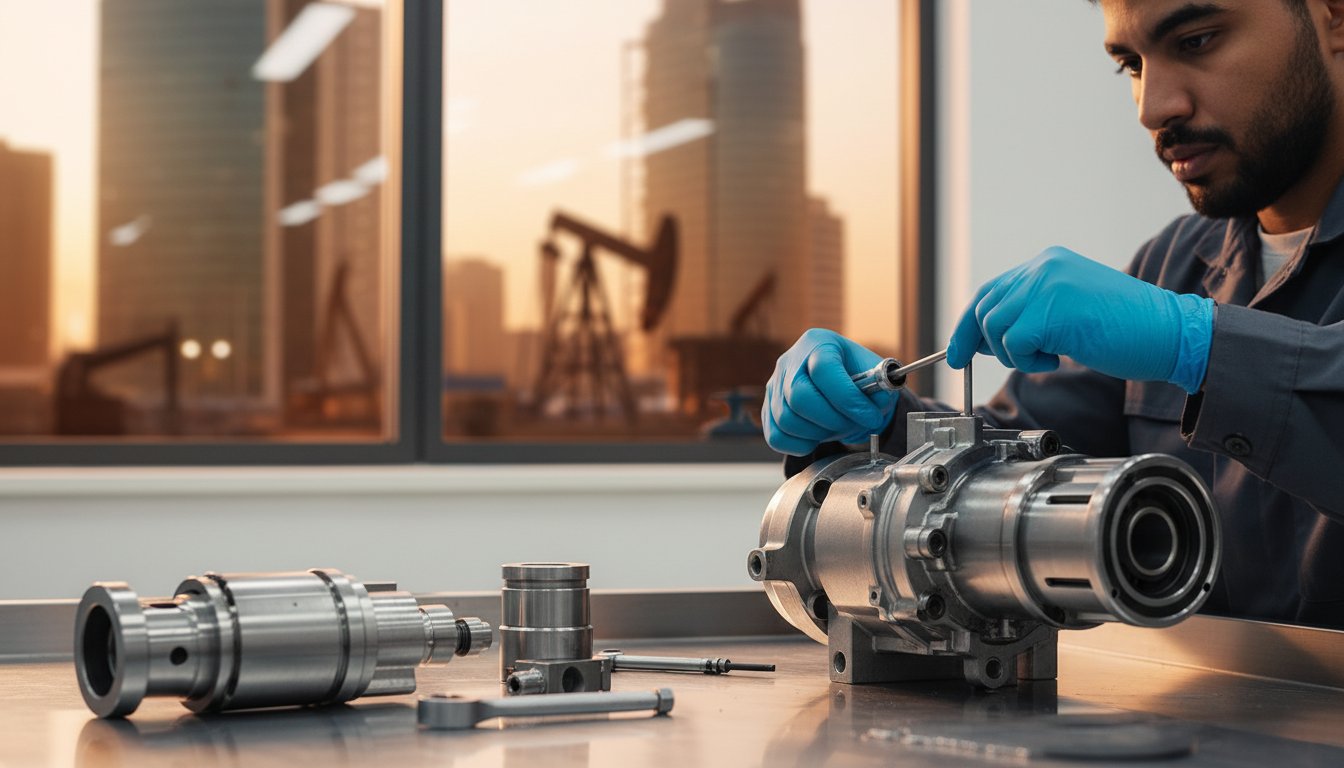
Ensuring the integrity of these hydraulic components is a core part of guaranteeing reliable performance. For expert hydraulic system diagnostics and repair services designed to keep your operations moving, visit etsarabia.com.
Why Crane Maintenance is Critical for Safety and Uptime
Understanding the individual components of your heavy equipment is the first step. The next is translating that knowledge into action that protects your most critical business outcomes: operational safety, project timelines, and profitability. Proactive maintenance is not an expense; it is a strategic investment in uptime and reliability. For every hour a machine is operational, it generates value. Conversely, every hour of unplanned downtime erodes your bottom line and reputation. At ETS, we provide the expert solutions that keep your operations moving forward.
The High Cost of Crane Downtime
The financial impact of a non-operational crane extends far beyond the cost of a replacement part. Consider a typical construction site in Saudi Arabia where a single hydraulic hose failure halts all lifting operations. The immediate costs accumulate rapidly: idle labor can cost over ﷼15,000 per day, project delays can incur contractual penalties exceeding ﷼50,000 daily, and the ripple effect on subsequent project phases can be catastrophic. A single, preventable failure can quickly turn a profitable project into a significant loss.
Common Failure Points in Crane Hydraulic Systems
The hydraulic system is the powerhouse of any modern crane, but it is also susceptible to predictable failures if not properly maintained. Our field data consistently points to three primary culprits that lead to performance degradation and sudden breakdowns:
- Leaking Hoses and Seals: Constant pressure, abrasion, and exposure to the elements make hoses and seals the most frequent cause of hydraulic fluid loss and system failure.
- Contaminated Hydraulic Fluid: Dirt, water, and metal particles in the fluid act like an abrasive, causing premature wear and damage to sensitive pumps, motors, and valves.
- Cylinder Wear and Tear: Over time, the internal seals and surfaces of hydraulic cylinders can degrade, resulting in reduced lifting power, loss of precision, and potential load-dropping hazards.
Partnering with Experts for Hydraulic Repair
Attempting in-house repairs on complex hydraulic systems without specialized diagnostic tools and expertise often leads to further damage and extended downtime. Professional technicians can accurately identify the root cause of a failure, ensuring the repair is done right the first time. This expertise saves you time, prevents repeat failures, and guarantees your equipment is returned to service meeting all safety and performance standards. Facing downtime? Contact ETS for expert hydraulic repair services.
Your Partner in Crane Reliability and Performance
From towering construction projects to essential industrial logistics across Saudi Arabia, the power and precision of cranes are undeniable. This guide has illuminated the diverse types available, their core components, and the absolute necessity of diligent, proactive maintenance. Ultimately, the uptime of your project and the safety of your team depend directly on the health of the intricate hydraulic systems at the heart of your equipment.
When performance is on the line, you need a partner whose expertise you can trust. At ETS, we provide expert solutions for the complex hydraulic systems that power every major crane type. Our commitment is to minimize your costly operational downtime through rapid, efficient response and the supply of high-quality, genuine hydraulic components from the world's most trusted brands. We ensure your machinery operates at peak performance.
Ensure your equipment's reliability. Contact ETS for expert hydraulic repair and parts.
Partner with ETS to keep your operations lifting higher and moving forward with unwavering confidence.
Frequently Asked Questions About Crane Maintenance
What are the main differences between a mobile crane and a tower crane?
The primary difference lies in mobility and application. Mobile cranes are versatile, vehicle-mounted units designed for rapid deployment and movement between various job sites. In contrast, tower cranes are static structures assembled on-site for long-term projects, offering superior height and lifting capacity essential for constructing high-rise buildings like those found in Riyadh and Jeddah. Mobile cranes provide flexibility, while tower cranes deliver unmatched vertical reach.
What is the most common cause of crane failure in industrial settings?
The most common cause of crane failure is inadequate or deferred maintenance. Neglecting scheduled inspections of critical systems, particularly hydraulic components, wire ropes, and structural welds, leads to accelerated wear and unexpected mechanical failure. While operator error is a factor, it is often compounded by underlying equipment faults that a robust, preventative maintenance program would have identified and corrected, ensuring operational safety and minimizing downtime.
How often should a crane's hydraulic system and hoses be inspected for safety?
For optimal safety, a crane operator should conduct a visual inspection of hydraulic hoses and key components daily before starting work. A more thorough, documented inspection by a qualified technician is essential at least monthly. Given the harsh operational conditions in Saudi Arabia, with high heat and dust, a comprehensive expert evaluation every quarter is strongly recommended to prevent premature component failure and ensure system reliability.
What are the signs of a failing hydraulic pump on a crane?
Key indicators of a failing hydraulic pump include a noticeable decrease in the crane's operational speed and lifting power, unusual whining or grinding noises, and an increase in hydraulic fluid temperature. You may also spot fluid leaks around the pump's housing or seals. Promptly addressing these signs is critical to preventing a complete system breakdown, avoiding costly emergency repairs, and ensuring the safety of your operations.
Can a hydraulic cylinder on a crane be repaired, or does it need to be replaced?
This depends entirely on the nature of the damage. Minor issues such as worn seals or small leaks can often be repaired efficiently, saving both time and money. However, significant structural damage like a bent piston rod or deep scoring inside the cylinder barrel compromises safety and performance, making a full replacement the only reliable solution. A professional assessment is required to determine the most secure and cost-effective course of action.
Why is using high-quality hydraulic components important for crane reliability?
Using high-quality, OEM-specification hydraulic components is a direct investment in operational reliability and safety. Premium parts are engineered to withstand extreme pressures and temperatures, guaranteeing a longer service life and predictable performance. Cheaper, non-certified parts often fail prematurely, leading to catastrophic equipment damage, significant downtime, and repair costs in SAR that far exceed the initial savings on the component.