
When your heavy machinery begins to lag or lose power, every moment of reduced performance translates directly into operational losses. This slowdown is more than an inefficiency; it's a critical alert. Recognizing the early signs of hydraulic pump failure is the first and most vital step in preventing a minor issue from escalating into catastrophic downtime that cripples your production schedule. Uncertainty in diagnostics can lead to costly delays and incorrect repairs, further compounding the problem and impacting your bottom line.
This comprehensive technician's guide provides the clarity you need. We will detail the seven key warning signs-from excessive heat and strange noises to fluid contamination and pressure loss. By understanding these indicators, you will be empowered to confidently diagnose a failing pump, understand its root cause, and take decisive action to minimize downtime and protect your valuable assets. This is your essential resource for ensuring your systems in Saudi Arabia remain reliable, efficient, and always in motion.
Key Takeaways
- Train your operators to recognize and report abnormal noises and visual anomalies; this is your first and most effective defense against unexpected equipment failure.
- A noticeable drop in equipment speed or system temperatures exceeding 82°C are critical indicators that directly impact productivity and demand immediate investigation.
- Understanding the key signs of hydraulic pump failure empowers your team to act decisively before minor issues escalate into major operational disruptions.
- Implementing a swift and correct response protocol can prevent catastrophic system contamination, saving your operation thousands of Riyals in repair costs and downtime.
Audible Warnings: What a Failing Hydraulic Pump Sounds Like
In any industrial setting in Saudi Arabia, from Jeddah to Dammam, the first and most common indicator of a developing issue within a hydraulic system is a change in its operating sound. A hydraulic pump is a precision-engineered component designed for smooth, consistent operation (for a technical overview, see What is a Hydraulic Pump?), so any new or unusual noise is a critical alert. Training your machine operators to recognize and immediately report these audible warnings is one of the most effective strategies to prevent catastrophic failure. Ignoring these early signs of hydraulic pump failure almost guarantees more severe damage, leading to extended operational downtime and significantly higher repair costs in Saudi Riyal.
High-Pitched Whining or Screaming
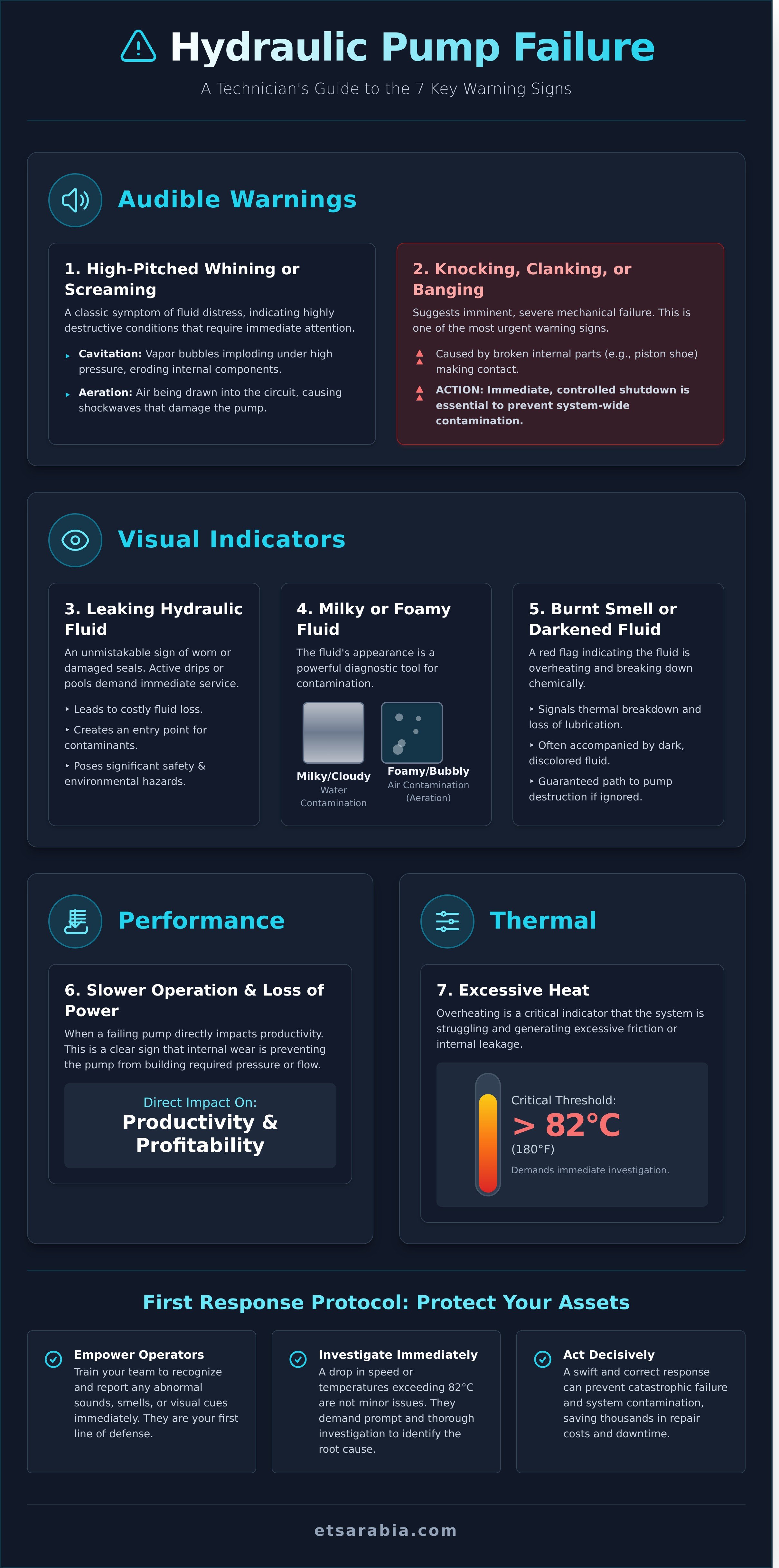
A high-frequency whining or screaming sound is a classic symptom of fluid-related distress, typically indicating either cavitation or aeration. Both conditions are highly destructive to the pump's internal components and must be addressed promptly to prevent irreversible damage.
- Cavitation: This occurs when vapor bubbles form in the hydraulic fluid in a low-pressure area and then violently implode as they enter a high-pressure zone. This implosion erodes critical internal surfaces.
- Aeration: This is the process of air being drawn into the hydraulic circuit, often through a faulty seal or loose connection. Air bubbles in the fluid compress and decompress, causing shockwaves that damage the pump.
Knocking, Clanking, or Banging
If you hear sharp, metallic knocking or banging sounds, it suggests a severe mechanical failure is imminent. This is one of the most urgent signs of hydraulic pump failure, often caused by solid parts making contact inside the pump housing. Potential causes include a broken piston shoe, a failing swashplate, or large solid contaminants circulating in the system. An immediate and controlled shutdown of the equipment is essential to prevent the pump from disintegrating and sending metal fragments throughout the entire hydraulic system, which would result in a system-wide contamination event and an extremely costly repair.
Visual Indicators: What to Look For During Inspections
A commitment to preventative maintenance begins with routine visual inspections. These checks are your first line of defense, enabling your team to identify the early signs of hydraulic pump failure long before they lead to costly operational downtime. The condition of the hydraulic fluid is the single most important visual clue, as it is the lifeblood of your entire system. A change in its appearance or the presence of leaks provides direct insight into the health of the pump and its related components.
Leaking Hydraulic Fluid
Visible fluid leaking from the pump's housing, fittings, or shaft seal is an unmistakable sign of a problem. This issue is typically caused by worn or damaged seals, which not only lead to costly fluid loss but also create an entry point for contaminants to enter the system. It is critical to distinguish between a minor weep, which may require monitoring, and an active leak forming drips or pools, which demands immediate service. Beyond the operational risk, leaks pose significant safety and environmental hazards in any industrial facility.
Milky or Foamy Hydraulic Fluid
The appearance of the fluid in the reservoir is a powerful diagnostic tool. A milky or cloudy look indicates water contamination, which severely degrades the fluid's lubricating properties. Foamy or bubbly fluid is a clear sign of aeration-air entering the system. Both aeration and emulsification are among the most common hydraulic problems that directly lead to catastrophic failure by causing rapid component wear, overheating, and eventual pump seizure.
Burnt Smell or Darkened Fluid
Your sense of smell can also detect serious issues. A distinct burnt odor around the hydraulic pump is a red flag that the fluid is overheating beyond its specified operating temperature. This is often accompanied by fluid that has darkened significantly from its original color. This discoloration signals thermal breakdown or severe contamination from internal wear particles. Operating a system with burnt, degraded fluid is a guaranteed path to pump destruction, as it no longer provides the necessary lubrication and heat dissipation.
Performance Degradation: When Your Equipment Can't Keep Up
While subtle changes like noise or heat are early warnings, a drop in performance is when a failing pump directly impacts your productivity and profitability. These are often the first signs of hydraulic pump failure that your skilled operators will notice, as they have an intimate feel for the equipment's normal behavior. When a machine struggles to perform its core functions, it's a clear indication that the hydraulic pump can no longer generate the required fluid flow or pressure to meet operational demands.
Ignoring these performance issues leads to significant financial consequences. Consider the cost of inefficiency in a typical Saudi Arabian industrial or construction setting: a 15% increase in a crane's lift cycle time doesn't just slow down one task; it creates a cascade of delays across the entire project. This loss of productivity can translate into thousands of Saudi Riyals in extended labor costs, project penalties, and lost revenue each day. Addressing performance degradation promptly is essential to protecting your bottom line.
Slower Machine Operation and Reduced Speed
One of the most common performance-related symptoms is a noticeable decrease in operational speed. This is typically caused by reduced fluid flow from the pump, often due to progressive internal wear and leakages. You will observe this as:
- Hydraulic cylinders on an excavator or loader extending and retracting more slowly than usual.
- Hydraulic motors, such as those on a conveyor or drill rig, losing their rotational speed and torque.
- Overall cycle times increasing, directly harming operational efficiency and output.
Loss of Power or Inability to Build Pressure
When your equipment struggles with tasks it once handled with ease-like a forklift failing to lift its rated load or a press being unable to achieve its target tonnage-it points to a severe loss of power. This is a classic indicator of significant internal pump leakage (bypass). The pump is still circulating fluid, but it cannot create the necessary pressure to generate force. The most definitive way to diagnose this is to have a qualified technician check the system's operating pressure with a calibrated gauge, confirming that it falls below the manufacturer's specifications.
Thermal Signs: Is Your Hydraulic System Overheating?
In any high-performance hydraulic system, excessive heat is a formidable adversary. It is one of the most definitive signs of hydraulic pump failure, acting as both a symptom of existing problems and a direct cause of future ones. A pump that is operating inefficiently converts valuable energy into waste heat instead of mechanical power. In the demanding climate of Saudi Arabia, high ambient temperatures can accelerate this process, making thermal monitoring essential for operational reliability.
As a rule, hydraulic fluid temperatures should not exceed 82°C (180°F). Beyond this critical threshold, the fluid begins to degrade rapidly, losing its lubricating properties. This heat also hardens and damages vital seals and hoses, leading to leaks and a loss of system integrity. For safe and accurate diagnostics, your maintenance teams should use a non-contact infrared thermometer to check the temperature directly on the pump casing.
Causes of High Pump Temperature
An overheating pump is a clear indication that it is working too hard to perform its function. This inefficiency is typically rooted in one or more underlying issues that demand immediate attention. Understanding these causes is the first step toward a reliable solution and minimizing costly interruptions.
- Internal Wear and Friction: As components like pistons, vanes, or gears wear down, internal leakage increases. This forces the pump to work harder to maintain pressure, generating significant excess heat.
- Incorrect or Contaminated Fluid: Using hydraulic fluid with the wrong viscosity, or fluid that is contaminated with water or particulates, compromises its ability to lubricate and cool the system effectively.
- System-Level Faults: The problem may not be the pump itself but another system component. A blocked or inefficient cooler (heat exchanger), or a relief valve that is stuck partially open, can cause system-wide overheating that manifests at the pump.
The Destructive Cycle of Overheating
Once a hydraulic system begins to overheat, it can enter a devastating feedback loop that quickly leads to catastrophic failure. This thermal runaway cycle accelerates wear and can destroy a pump in a very short time. The process is predictable and destructive:
Heat thins the hydraulic fluid, severely reducing its viscosity and lubricating film strength. This poor lubrication results in increased metal-to-metal contact and friction between the pump's precision components. This friction, in turn, generates even more heat, creating a vicious cycle that rapidly degrades both the fluid and the pump's internal parts, often culminating in complete pump seizure.
Ignoring these thermal signs of hydraulic pump failure is a direct path to unexpected and expensive downtime. If your equipment is running hot, it requires expert diagnosis. For a comprehensive system evaluation to protect your assets, contact the technical specialists at Emdad Technical Services (ETS) today.
Immediate Steps to Take When You Suspect Pump Failure
Once your equipment displays the clear signs of hydraulic pump failure, your immediate actions are critical. The primary goal is to prevent catastrophic damage and stop metallic contamination from spreading throughout the entire hydraulic system. A prompt and correct response can be the difference between a targeted repair and a complete, system-wide overhaul, potentially saving your operation tens of thousands of Saudi Riyals and minimizing costly downtime.
Step 1: Safely Shut Down the Equipment
Continuing to operate a machine with a failing hydraulic pump is the single most damaging action you can take. Immediately and safely shut down the equipment, following all proper lockout/tagout procedures established for your facility in Saudi Arabia. This crucial step isolates the problem, protects other vital components like valves and cylinders from contamination, and ensures the safety of all personnel. Do not attempt to restart the machine until it has been professionally assessed.
Step 2: Document the Symptoms
Before calling for service, take a moment to record the specific issues you observed. This information is invaluable for the repair technician, helping to accelerate the diagnosis and ensure an accurate, first-time fix. Note down details such as:
- The specific sounds (e.g., whining, grinding, knocking)
- The location and severity of any leaks
- Performance issues (e.g., slow operation, loss of power)
- Operating temperature and pressure readings, if available
Step 3: Contact a Hydraulic Repair Specialist
Hydraulic systems are complex and require specialized knowledge and tools for accurate diagnosis and repair. Attempting to fix the pump yourself without proper training can lead to further damage or incorrect assembly, compounding the problem. A certified specialist can perform advanced diagnostics to pinpoint the root cause of the failure-not just the symptom-and advise whether a repair or full replacement is the more cost-effective solution for your operation. For immediate, professional assistance, ETS provides expert diagnostics and fast repairs in Saudi Arabia.
From Diagnosis to Solution: Securing Your Hydraulic Systems
Recognizing the early signs of hydraulic pump failure-from unusual noises and fluid leaks to performance degradation and overheating-is the first critical step in protecting your valuable equipment. These are not minor inconveniences; they are direct warnings of potential system-wide damage. Proactive monitoring and swift action can make the difference between a minor repair and a catastrophic system breakdown that brings your operations to a halt, costing you valuable time and resources.
When you suspect a problem, don't wait for it to escalate. The expert technicians at Emdad Technical Services (ETS) are your reliable partners in hydraulic system integrity. We provide expert diagnosis for all major pump brands, including Rexroth and Parker, and offer fast on-site support in Dammam and across Saudi Arabia. Our primary focus is minimizing your downtime with reliable, guaranteed repairs that keep your operations moving forward.
Don't Let Pump Failure Halt Your Operations. Contact ETS for an Urgent Repair Quote.
Frequently Asked Questions About Hydraulic Pump Failure
What is the most common cause of hydraulic pump failure?
The most common cause of hydraulic pump failure is fluid contamination. Particulates like dirt, metal shavings, and water in the hydraulic fluid act as an abrasive, accelerating wear on critical internal components like pistons, vanes, and gears. This leads to reduced efficiency, internal leaks, and eventual catastrophic failure. Proactive fluid analysis and maintaining strict filtration standards are essential to maximizing pump life and ensuring reliable system performance, thereby minimizing costly operational downtime.
Can a noisy hydraulic pump be fixed, or does it need to be replaced?
A noisy pump is a critical warning sign that requires immediate expert diagnosis. The noise often indicates issues like aeration, cavitation, or worn bearings. In many cases, if the root cause is addressed promptly-such as fixing a suction line leak or replacing a bearing-the pump can be professionally repaired. However, if the noise is ignored and severe internal damage occurs, a full replacement may be the only reliable solution to restore system integrity and prevent further downtime.
How long should a typical industrial hydraulic pump last?
The operational lifespan of an industrial hydraulic pump varies significantly based on application, load cycles, and maintenance quality. A well-maintained pump operating within its designed parameters can reliably perform for 10,000 to 20,000 hours or more. However, factors like fluid contamination, excessive heat, and operating above rated pressure can drastically reduce this lifespan. Consistent preventative maintenance is the key strategy to achieving maximum service life and predictable performance from your hydraulic assets.
What's the difference between cavitation and aeration?
While both cause noise and damage, they are distinct issues. Cavitation occurs when hydraulic fluid vaporizes in a low-pressure area (forming vapor bubbles) and then violently collapses back into a liquid as pressure increases. This implosion erodes internal components. Aeration is the introduction of external air or gas into the fluid, typically through leaks in the suction line. These air bubbles are then compressed, causing a spongy response, overheating, and loud pump operation.
How much does it cost to repair a hydraulic pump versus buying a new one?
In the Saudi Arabian market, a professional repair is often the more cost-effective solution, typically costing 40-60% of a new pump's price. For example, a standard gear pump repair might range from 2,000 to 5,000 SAR, while a new unit could exceed 8,000 SAR. For complex piston pumps, repairs can save tens of thousands of riyals. A thorough inspection by our technicians is essential to determine the extent of damage and provide a precise, reliable quote for your operation.
Is it possible to test a hydraulic pump to confirm it's failing?
Absolutely. Professional testing is the definitive way to confirm if a pump is failing and to diagnose the root cause behind the signs of hydraulic pump failure. At our facilities, we use specialized test benches to measure critical performance metrics like flow rate (LPM), pressure (bar), and volumetric efficiency. This data is compared against the manufacturer's specifications to precisely identify internal leakage, wear, or setting drift, allowing for targeted, effective repairs before a complete failure occurs.